
Trump’s latest announcement marks a sharp escalation in trade tensions between Washington and Brussels.
Talks about how to move forward on last summer’s deal had stalled over a dispute on steel and aluminium, with major European economies like Germany and France rejecting U.S. plans to adjust tariffs on a wide range of goods.
Cars are a vital industry for Europe, so it marks a particularly sensitive target for Trump to pick.
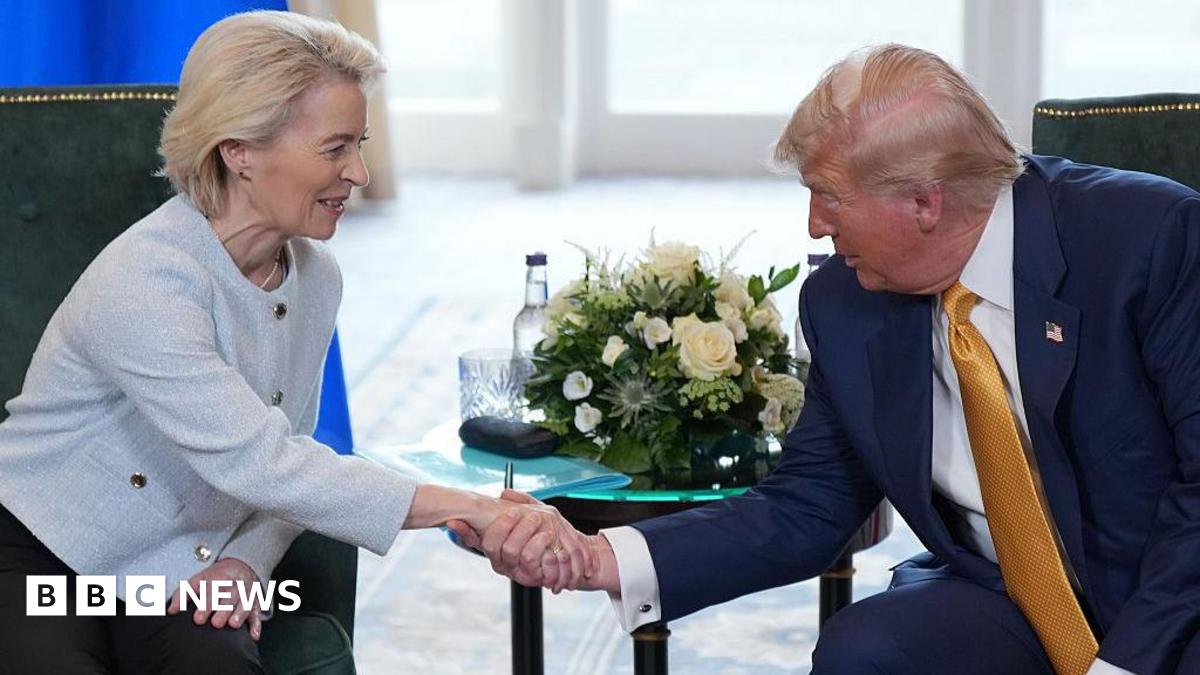
The trade deal agreed between the EU and US, at Trump’s Turnberry golf course in Scotland, set levies on most European goods at 15%.
It was a reprieve for the EU from the 30% tariffs Trump had threatened to impose as part of his “Liberation Day” wave of tariffs that April.
In exchange, Europe had agreed to invest in the US and make changes on the continent expected to boost US exports.
As tensions mounted over President Trump’s threats to annex Greenland, a self-governing Danish territory, the European Parliament in January suspended the approval of the deal.
It later included a clause stating the deal can be suspended if the Trump administration is deemed to have “undermined the objectives of the deal, discriminated against EU economic operators, threatened member states’ territorial integrity, foreign and defence policies, or engaged in economic coercion”.
It was approved by the European Parliament in March, following the dispute.