
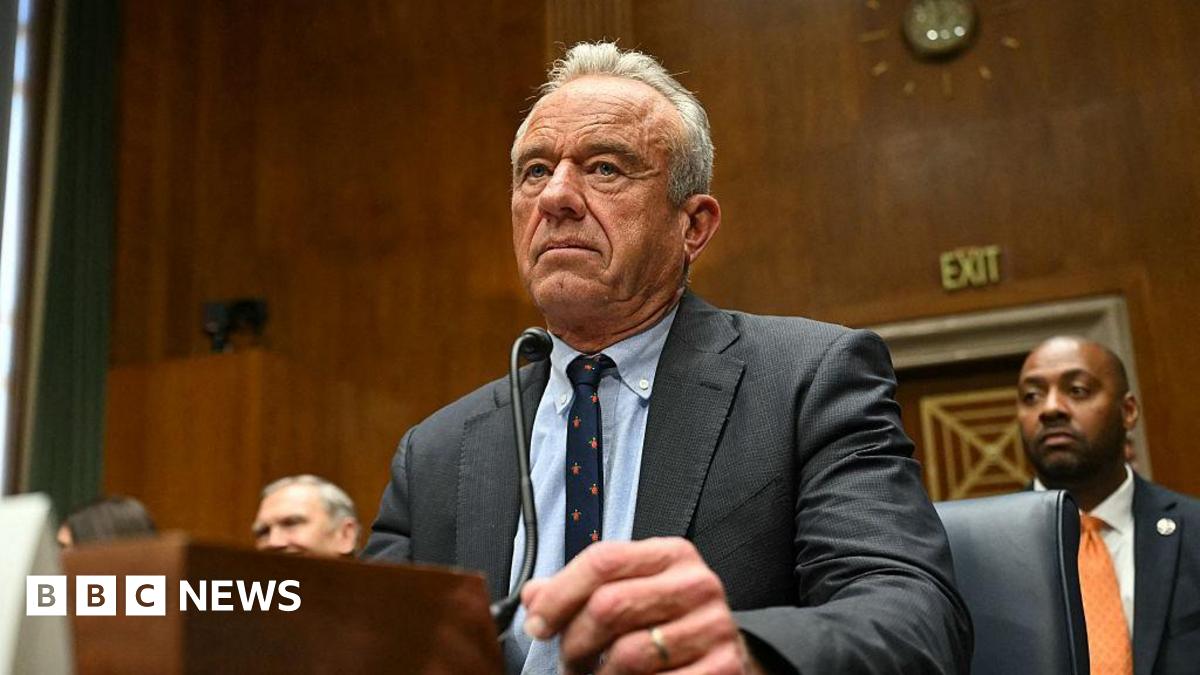
A year ago, US President Donald Trump pledged to let Robert Kennedy Jr “go wild” on health after tapping him to lead the Department of Health and Human Services (HHS).
Kennedy and Trump had forged a unique coalition during the 2024 presidential campaign. As the face of the “Make America Healthy Again” (MAHA) movement – a riff on Trump’s slogan “Make America Great Again” – Kennedy brought in a diverse slice of the American electorate, including mothers, tree-huggers and health enthusiasts, who felt passionately about issues like vaccine hesitancy, nutrition, environmental safety and chronic disease.
But cracks in this relationship have begun to show, especially this week after Kennedy was grilled in Congress for several days by lawmakers from both sides of the aisle.
Several raised a statement from Kennedy supporting Trump’s executive order to increase domestic production of glyphosate, an herbicide that Kennedy’s health-conscious base has long fought, arguing it causes cancer.
“This seemed like an opportunity for you to really stand up for your agenda,” Brian Schatz, a Democratic senator from Hawaii, prodded.
“I’ve got a lot of friends back in Hawaii who supported you because of issues such as this, and they were hurt, shocked, confused when you were explicitly in favour of Trump’s executive order,” Schatz said. “What do you say to those folks?”
“I was very clear with the president about my own displeasure with the executive order,” he responded. “The president felt it was necessary for national security.”
The tense exchange came as Kennedy tries to make progress with his own, oftentimes controversial, agenda amid several setbacks – including some from the White House itself.
A year into his post, some of Kennedy’s allies and supporters say he has not been given the free rein he expected, leading to fewer concrete accomplishments. Some Republican strategists, meanwhile, believe Trump is missing an opportunity to connect with Kennedy’s base on less controversial policy goals while the president’s favourability rating is at a low.
“Kennedy only has so much authority at HHS,” said Jeff Hutt, a former national field director for the MAHA Institute.
“He himself is more of a spokesperson at the end of the day more than anything else,” Hutt added, meaning “the change is going to come much slower”.
In a statement responding to a question from the BBC about frustrations from MAHA voters, HHS said Kennedy’s team remained “focused on the priorities Americans consistently say matter most to them, including chronic disease prevention, childhood nutrition, food quality, and affordable health care”.