

Food price rises and gaps on supermarket shelves could last well into 2027 even if the US-Iran war ends soon, shoppers have been warned.
UK fruit and veg growers have warned that soaring energy costs mean higher prices and shortages of of goods such as tomatoes and peppers could start hitting home this spring.
Milk and potatoes prices are expected to increases sharply later this year, say supply chain experts, while meat, chicken, fizzy drink and beer prices could also soar.
Shorts – Quick stories
Scroll to previous short
Scroll to next short

ROYAL FAMILY
Princess Eugenie pregnant with third child
 Princess Eugenie and Jack Brooksbank have moved into Frogmore Cottage, the Grade II listed home of Meghan and Harry. It is understood the Sussexes will retain the residence near Windsor Castle but Eugenie and Mr Brooksbank, who married in 2018, will share the property. (Photo: David Mirzoeff/PA Wire)
Princess Eugenie and her husband Jack Brooksbank are “very pleased” to be expecting their third child to be born this summer, Buckingham Palace said.
The King is “delighted” with the news, while the couple’s sons August, five, and Ernest, two, are “very excited” to welcome a younger sister or brother to the family.
What you need to know
In a photograph shared by Eugenie, 36, Ernest and August can be seen holding a picture of a baby scan. In a statement, Buckingham Palace said: “Her Royal Highness Princess Eugenie and Mr Jack Brooksbank are very pleased to announce that they are expecting their third child together, due this summer.”

Analysis
3 min read

OPINION
3 min read
Could the new baby be king or queen?
 Caption: Sarah, Duchess of York with her daughters Princess Beatrice and Princess Eugenie during a visit to the Teenage Cancer Trust unit at University College Hospital, London. Picture date: Wednesday April 23, 2025. PA Photo. See PA story ROYAL Sarah. Photo credit should read: Aaron Chown/PA Wire
Photographer: Aaron Chown
Provider: Aaron Chown/PA Wire
Source: PA
Copyright: PA
The baby, who will not be an HRH, will be born 15th in line to the throne, with the Duke of Edinburgh moving down to 16th place.

NEWS
4 min read
Fifth grandchild for Andrew
The new arrival will be the fifth grandchild of Andrew Mountbatten-Windsor, following the birth of Princess Beatrice’s daughter Athena Mapelli Mozzi in January last year.
 Caption: (L-R) Britain’s Princess Eugenie of York, Britain’s Princess Beatrice of York and Britain’s Prince Andrew, Duke of York leave Buckingham Palace to meet guests at the Patron’s Lunch, a special street party outside Buckingham Palace in London on June 12, 2016, as part of the three day celebrations for Queen Elizabeth II’s official 90th birthday. Up to 10,000 people are expected to attend the Patron’s Lunch along with the monarch, her husband Prince Philip, Prince William and Prince Harry. (Photo by JUSTIN TALLIS / AFP) (Photo by JUSTIN TALLIS/AFP via Getty Images)
Photographer: JUSTIN TALLIS
Provider: AFP via Getty Images
Source: AFP
Copyright: AFP
 Andrew Mountbatten-Windsor has been mostly laying low since his move to Marsh Farm (Photo: Kirsty Wigglesworth/AP)
UK POLITICS
What to expect from the imminent local elections
 Caption: CARDIFF, WALES – MAY 06: A box of ballot papers at the election count at the House of Sport on May 6, 2022 in Cardiff, Wales. Every council seat in Scotland, Wales and London is being contested in the local elections and there are polls across much of the rest of England to fill around 6,900 council seats. 91 seats or around 1% of the seats are uncontested due to only one candidate being put forward. Labour is expected to strengthen its hold in Wales. (Photo by Matthew Horwood/Getty Images)
Photographer: Matthew Horwood
Provider: Getty Images
Source: Getty Images Europe
Your guide to the local elections on Thursday, which are set to reshape the political landscape of the UK and potentially threaten Sir Keir Starmer’s leadership.
What you need to know
Elections are being held across Scotland, Wales and England on 7 May.
In Wales, voters will choose members of the Senedd (Welsh parliament).
Voters in Scotland will elect MSPs to the 129-seat parliament at Holyrood.
In England, 136 local authorities will hold elections.
There are also a handful of local mayoral elections in London.

Big Read
6 min read
How will the results unfold?
Polling stations open at 7am on Thursday 7 May. Voters in England will need to show photo ID to be able to cast a vote.
Millions of people will take to the polls before they close at 10pm.
In England, 46 of the local authorities will count and declare overnight, with results expected between in the early hours of the morning on 8 May.
The results in Scotland and Wales are expected to trickle in from Friday afternoon.
The remaining English authorities begin counting ballots on Friday morning, with results announced throughout the day.
Status quo upended
 Caption: LONDON, ENGLAND – APRIL 30: Prime Minister Keir Starmer gives a media statement on the government’s response to a stabbing in which two Jewish men were wounded at 10 Downing Street on April 30, 2026 in London, England. On Wednesday, two Jewish men aged 76 and 34 were stabbed in the Golders Green area of north London. The suspect, aged 45, was tasered and arrested. Police have declared the attack a terrorist incident. The two victims were taken to hospital and are said to be in stable condition. (Photo by Jack Taylor – WPA Pool/Getty Images)
Photographer: WPA Pool
Provider: Getty Images
Source: Getty Images Europe
A poll for The i Paper by BMG Research predicted Labour and the Conservatives will see heavy losses with the two insurgent populist parties making major gains.
Reform is on 28 per cent, nine points ahead of Labour on 19 per cent.

Exclusive
3 min read
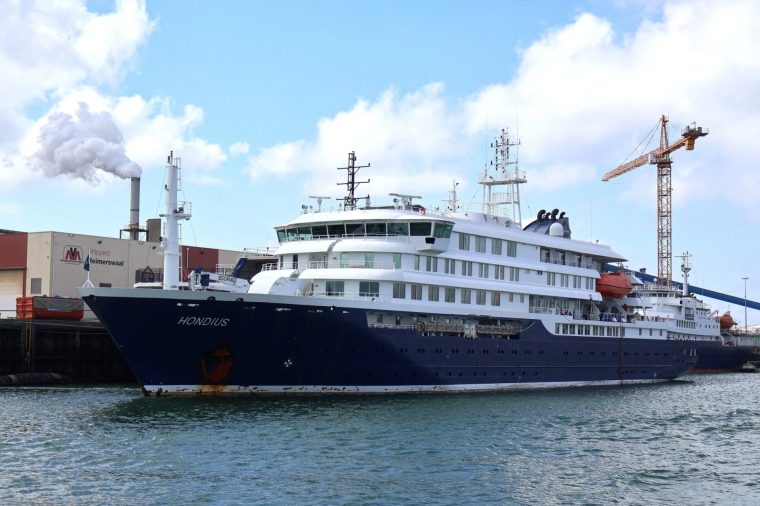 Caption: An archive image of the cruise ship Hondius, in Vlissingen, Netherlands May 17, 2025. IMAGE OBTAINED BY REUTERS/Handout via REUTERS THIS IMAGE HAS BEEN SUPPLIED BY A THIRD PARTY NO RESALES. NO ARCHIVES VERIFICATION: – Reuters confirmed the location from the shipyard, signage and fuel depot which matched file and satellite images. – Coordinates of the shipyard: 51.461283930722175, 3.6998162498897433. – The date when the pictures were taken was verified by original file metadata.
Photographer: IMAGE OBTAINED BY REUTERS
Provider: via REUTERS
Source: Handout
health
What caused the fatal cruise ship outbreak?
A rare outbreak of hantavirus, transmitted by rodents, has killed three on a cruise ship in the Atlantic Ocean, leaving one Briton in intensive care.
What’s the situation?
A suspected hantavirus outbreak has left three people dead and one in intensive care.
It occurred on the MV Hondius cruise liner, which was travelling from Argentina to Cape Verde.
The ship is now grounded in South Africa, and five more suspected cases are under investigation.
One British national is reportedly in intensive care and tested positive for the virus.

NEWS
3 min read
What is hantavirus?
Hantavirus cases are usually linked to environmental exposure, such as contact with waste from infected rodents.
In rare cases they can spread between people, resulting in severe respiratory illness.
It can cause two diseases, one that primarily affects the lungs and the other that attacks the kidneys.
Hantavirus pulmonary syndrome, the respiratory illness, is most commonly found in the Americas.
What are the symptoms?
 Photographer: ljubaphoto
Provider: Getty Images
So it begins
At the outset, it has flu-like symptoms, such as fatigue and fever, one to eight weeks after exposure.
Respiratory effects
Four to ten days later, coughing, shortness of breath and fluid in the lungs appear.
 Caption: Adult man wearing a yellow hoodie in a living room, coughing or sneezing into elbow.
Photographer: ti-ja
Provider: Getty Images
Source: E+
 Young women patient’s hand receiving IV drip medicine after surgery – stock photo. (Photo: Getty)
No known treatment
There is no specific therapy, so treatment includes rest and fluids. Some may be put on a ventilator.
One-minute jab on
the NHS could treat
tens of thousands of patients
The immunotherapy injection works by telling the body’s immune system to recognise
and kill cancer cells.
 Caption: EMBARGOED TO 0001 MONDAY MAY 4
Screen grab taken from PA Video dated 27/04/26 of a nurse preparing a new one-minute injection for more than a dozen cancers, at the Mount Vernon Cancer Centre in Hertfordshire. The immunotherapy injection, being rolled out on the NHS, works by telling the body’s immune system to recognise and kill cancer cells and is powerful against several types of the disease, including lung, breast, head and neck, and cervical cancer. Issue date: Monday May 4, 2026. PA Photo. Until now, patients have had to spend long periods on a drip to get the drug pembrolizumab (Keytruda) into their system. Photo credit should read: Shivansh Gupta/PA Wire
NOTE TO EDITORS: This handout photo may only be used in for editorial reporting purposes for the contemporaneous illustration of events, things or the people in the image or facts mentioned in the caption. Reuse of the picture may require further permission from the copyright holder.
Photographer: Shivansh Gupta
Provider: Shivansh Gupta/PA Wire
Source: PA
How it works
The new pembrolizumab injection is effective against multiple cancers, including lung, breast and cervical. It is given every three weeks as a one-minute injection or every six weeks as a two-minute injection.
The immunotherapy jab works by helping the body recognise cancer cells and destroy them.
 Caption: Screen grab taken from PA Video dated 27/04/26 of Stephen Friend, 67, who received a new one-minute injection for melanoma at the Mount Vernon Cancer Centre in Hertfordshire. The immunotherapy injection, being rolled out on the NHS for more than a dozen cancers, works by telling the body’s immune system to recognise and kill cancer cells and is powerful against several types of the disease, including lung, breast, head and neck, and cervical cancer. Issue date: Monday May 4, 2026. PA Photo. Until now, patients have had to spend long periods on a drip to get the drug pembrolizumab (Keytruda) into their system. Photo credit should read: Shivansh Gupta/PA Wire
NOTE TO EDITORS: This handout photo may only be used in for editorial reporting purposes for the contemporaneous illustration of events, things or the people in the image or facts mentioned in the caption. Reuse of the picture may require further permission from the copyright holder.
Photographer: Shivansh Gupta
Provider: Shivansh Gupta/PA Wire
Source: PA

Analysis
4 min read
Who will benefit?
Previously, patients had to spend up to 45 minutes on a drip to be administered the cancer drug.
The new injectable form means treatment time can be slashed by up to 90 per cent.
Roughly 14,000 patients start pembrolizumab therapy each year in England. Most will now switch to the jabs.
NHS national clinical director for cancer, Professor Peter Johnson, said: “It will help free up vital appointments for NHS teams.”
Analysis suggests the injection cuts the amount of time staff spend on preparing treatment by 44 per cent.
Just in time for spring
I feel appreciative, really. I mean, we don’t have to pay for it. It’s been wonderful. Now I can spend more time on gardening, especially now spring is here.
Shirley Xerxes, 89, first Nhs patient to receive the new injection
 Caption: Screen grab taken from PA Video dated 27/04/26 of Shirley Xerxes, 89, who was one of the first patients to receive a new one-minute injection for bowl cancer at the Mount Vernon Cancer Centre in Hertfordshire. The immunotherapy injection, being rolled out on the NHS for more than a dozen cancers, works by telling the body’s immune system to recognise and kill cancer cells and is powerful against several types of the disease, including lung, breast, head and neck, and cervical cancer. Issue date: Monday May 4, 2026. PA Photo. Until now, patients have had to spend long periods on a drip to get the drug pembrolizumab (Keytruda) into their system. Photo credit should read: Shivansh Gupta/PA Wire
NOTE TO EDITORS: This handout photo may only be used in for editorial reporting purposes for the contemporaneous illustration of events, things or the people in the image or facts mentioned in the caption. Reuse of the picture may require further permission from the copyright holder.
Photographer: Shivansh Gupta
Provider: Shivansh Gupta/PA Wire
Source: PA
Experts also warned of smaller portions – so-called “shrinkflation” – when it comes to treats like chocolate, biscuits and fish and chips, as producers look to cut rising costs.
Darren Jones, No 10’s chief secretary, warned last week that “long tail” impact of the Iran conflict could last up to eight months after any deal to reopen the Strait of Hormuz.
But food producers and experts told The i Paper that the negative effects may last even longer – predicting that higher prices and possible shortages could run deep into 2027.
Why some price hikes are still months away
The Food and Drink Federation (FDF) has warned of 9 per cent UK food inflation by the end of 2026. It would add £470 to average annual shopping bills, according to recent analysis.
Britain’s fruit and veg growers reliant on glasshouses have been hit by both higher fertiliser prices and soaring energy prices.
Some may have to decide to cut short their season soon to minimise losses – sparking warnings of price rises and possible gaps on the shelves for tomatoes, cucumbers and peppers from May.
 Gaps may soon start appearing on fruit and veg shelves, growers have warned (Richard Baker/Getty)
The National Farmers Union (NFU) has warned the price of milk and products from arable crops – like bread, potatoes and cereals – could start increasing in the next three to six months because of higher fertiliser and red diesel prices.
NFU president Tom Bradshaw said farmers were “understandably worried” about getting enough red diesel and fertiliser for their combine harvesters and to boost crop growth over the summer.
Red diesel, a cheaper fuel for farmers to use in agricultural vehicles was 76p per litre last year, latest figures put it at 104p.
Shipments of fertilisers have largely stopped since the war with costs across the board up on pre-war prices. Yara International, one of the world’s biggest fertiliser producers, has warned a lack of fertiliser could drop yields by up to 50 per cent.
“Focus is also rapidly turning to longer-term impacts from the autumn onwards,” Bradshaw told The i Paper. He said farmers would have to make “critical decisions” are made about how much to plant for next year.
Soaring shopping bill set to continue in 2027
Scott Walker, chief executive GB Potatoes, warned this week that the “inevitable” price rises for his own industry may not happen until next year. He told Sky News that farmers’ 2027 contracts with supermarkets would have to reflect a doubling of red diesel and some fertiliser prices.
Professor Aled Jones, director of the Global Sustainability Institute at Anglia Ruskin University, said the problems facing farmers meant the price hikes would continue in 2027.
“For farmers, some of the impacts from red diesel and fertiliser costs will have a longer tail, so the impact on prices on the things like bread, cereals, potatoes may not come until autumn, [and continue] into next year,” he told The i Paper.
 Farmers may not see problems hit home until later in the year – pushing up prices in 2027 (Photo: Monty Rakusen/Getty)
Dr Derek Watson, an associate professor in cultural management at the University of Sunderland, said the difficulties faced by farmers meant “we will see reduced yields this year – but next year it could be worse”.
He told The i Paper: “What’s happened already [with the Iran crisis] is going to have reverberations in the medium to long term. Mostly definitely food price increase will continue well into 2027.”
Why CO2 shortages would make things even worse
Supply of carbon dioxide (CO2) could be disrupted should the Iran conflict last into the summer, under the Government’s “reasonable worst-case scenario” leaked last month.
CO2 is required for the slaughtering of pigs and chickens, and in the production of beer and fizzy drinks. It is also needed for the plastic packaging needed to prolong the shelf life of baked goods and salads.
Jones said extra cost of getting CO2 “could feed into meats, chicken, beer and fizzy drinks getting more expensive”.
There could even be shortages of some red meat and chicken products. Dr Watson said major CO2 disruption “could mean less meat and poultry products in the worst-case scenario”.
Why fish portions are suffering from ‘shrinkflation’
Dr Watson warned that that some manufacturers and outlets could turn to “shrinkflation” – smaller portions or cheaper ingredients – to deal with rising cost pressures.
“With chocolate bars and biscuits, you could see further shrinkflation,” he said.
Some chocolate manufacturers have previously cut the amount of cocoa content and added cheaper ingredients such as fruit and fillings when their own costs have increased.
 Portion sizes could be cut at fish and chip shops (Photo: Getty)
Andrew Crook, president of National Federation of Fish Friers (NFFF), told The i Paper that some fish and chip shops that used to sell large portions of fish “will have had to cut down”.
He said fish and chip prices would rise this year because of multiple cost pressures: energy bills, delivery, packaging and “cod prices being at an all-time high”.
There was the risk of further closures in the sector, Crook warned – though he said fish and chip shops appreciate that “we are still being supported by our customers” since the Iran war began.
Yara International warned last week that the Iran war could lead to the “dramatic consequence” of food shortages in some of Africa’s poorest communities.
The FDF has said British shoppers should not be concerned about shortages at the moment since manufacturers remained “agile”. But the body has warned that Iran-related disruption will push up prices.
Ministers have said CO2 supplies are not currently a concern. The Government has helped restart a bioethanol plant in Teesside so Britain produce more CO2 of its own.
While the Government has attempted to calm fears, Sir Keir Starmer has warned that even when the Strait of Hormuz reopens, it will not be a return to normal.
A Government spokesperson said it was taking the effects of the Iran war “very seriously” and is “actively monitoring the potential impact of the conflict on the food and farming sector”.
They added: “The UK has a resilient food system and we do not expect any change to food availability. We are continuing to meet with stakeholders including farmer’s unions to share information on rising fuel and oil prices.”