Claudia Birtles made a referral for a Mental Health Act Assessment on August 31, 2021, describing Calocane as “very unwell and struggling with delusional beliefs and feels there is a conspiracy with police and hospital who have created technology which creates voices”.
Ms Birtles also noted Calocane had stopped taking his medication, was not willing to discuss anything and was “very suspicious, paranoid and confrontational”.
Amie Staples then applied for a warrant under Section 135 of the Mental Health Act as she couldn’t locate Calocane. This was granted on the same day.
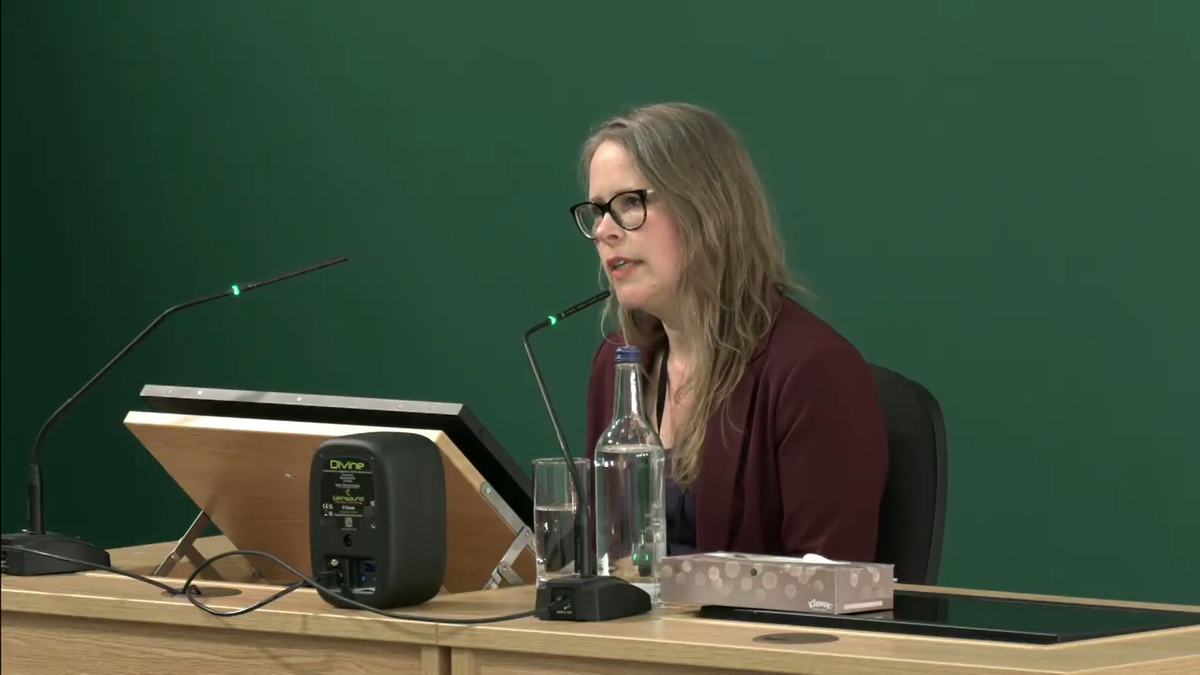
Ms Staples also spoke to Calocane’s mother Celeste and her impression was that the family were concerned for him and there had been a change in behaviour.
She told the inquiry: “My impression was that he’d withdrawn from them a little bit and he’d been reluctant to engage.
“I also interpreted that as a possible sign that he was deteriorating and perhaps feeling more paranoid.”
When Ms Staples attended Calocane’s address in September 2021 to conduct the mental health assessment, along with Dr Lomas and Dr Manzar, Calocane noticed them standing outside.
Although initially “polite”, he then turned violent when he attacked one of the attending police officers, PC Pritchard.
Ms Staples said: “He was very polite with us throughout the interaction. I didn’t have a sense that he was angry in any way.
“He just didn’t seemingly accept what we were saying about the need to do an assessment.
“I had the impression that he was frightened by what we were intending to do with him and that he didn’t really believe we were taking him for an assessment.”
However, the mental health professional told the inquiry that Calocane felt he had no other option when he attacked PC Pritchard.
She said: “I think from his perspective, he was fighting against being removed from his home. It was my impression he didn’t want to harm anyone.
“I don’t think he was wanting to attack anyone. I think he wanted to stay in his home and he felt he had no option.”
Nick Jones, inquiry counsel, challenged Ms Staples, asking her if her view didn’t underplay the level of violence used by Calocane.
She said: “I don’t think I’m underplaying the level of violence. It was a really serious attack and it was obviously very distressing for the police.
“I’m sure it was traumatic for VC, too. It’s one of the most distressing Mental Health Act assessments I’ve ever seen.”
Following the assessment, Calocane was detained under Section 2, which allows for the compulsory detention of a person in hospital for up to 28 days for assessment and treatment of a mental disorder, which cannot be extended.
Ms Staples was questioned about whether detention under Section 3 would have been more appropriate.
This would have allowed detention for up to six months, with further renewals.
Ms Staples said: “We’re always asked to consider whether or not there are things that need to be assessed, as part of someone’s admission to hospital.
“Where someone has been out of hospital for a year, seemingly functioning okay, and then concerns have started to arise and it’s clear they may or may not have stopped their treatment, it’s not clear what the future plan is.”
Ms Staples was also asked if she found it surprising that Calocane didn’t have a community treatment order (CTO).
She said: “I think with VC it’s more difficult. It’s less common to use a CTO where someone is only on their second episode of psychosis. It tends to be reserved for people with more frequent admissions.”