
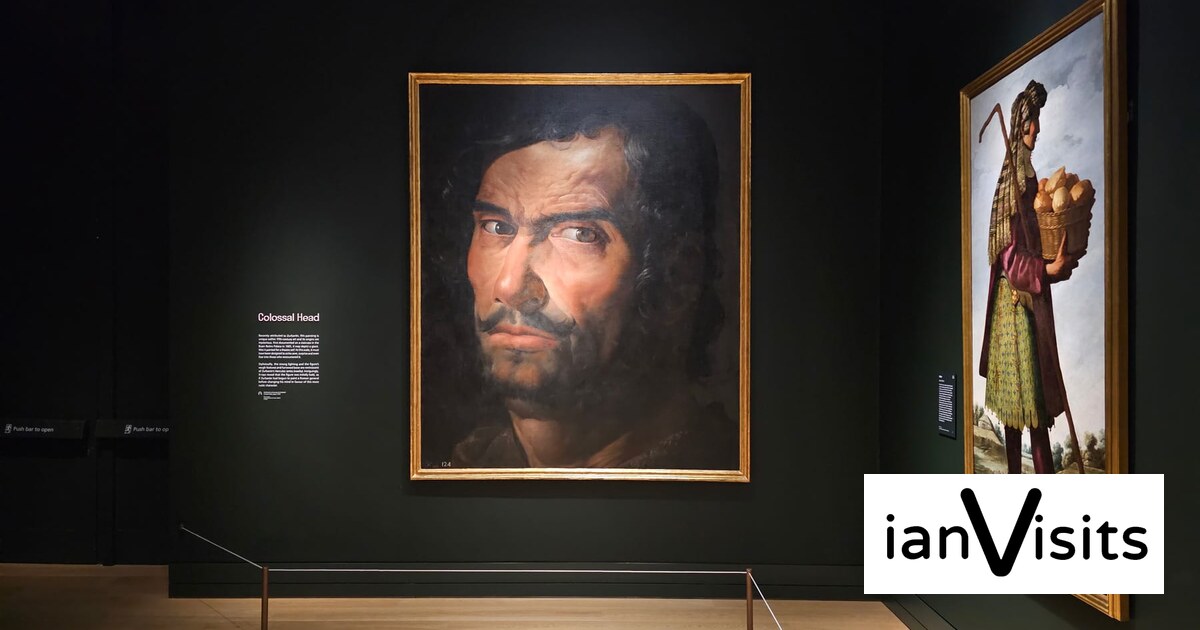
Of Spain’s triumvirate of great painters, Velázquezm Murillo and Zurbarán, it’s the last who is least known in the UK, and at long last the National Gallery is hosting the first full exhibition of his often very moody religious art.
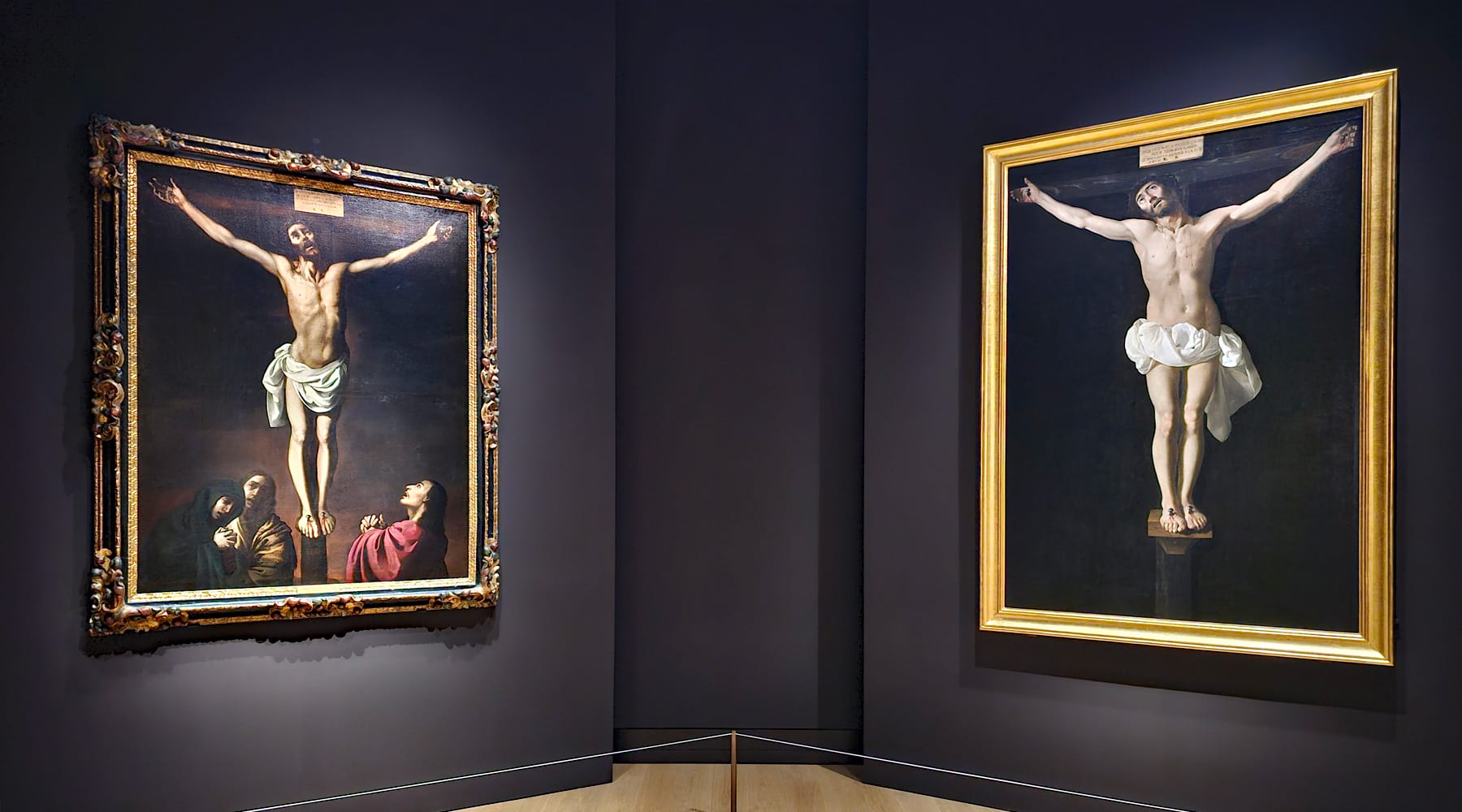
Based mainly in Seville, he specialised in religious artworks for wealthy patrons and churches, often with very strongly contrasting light and darkness. However, it was his earlier work in still life paintings, which are often overlooked, that led to the striking levels of detail and accuracy in his later paintings of the crucifixion.
It’s said that his crucifixion, painted for the monastery of San Pablo el Real in Seville, seemed so lifelike in its gloomy interior that people often assumed it was a sculpture.
The exhibition itself opens with two crucifixions, of St Paul upside down alongside Jesus (the correct way up)

From there, it’s a trip through Spanish art, religious and secular, but all very moody.
One of the most striking slowly reveals itself at the end of a gallery – a huge singular head, called simply “colossal head”, which may have been for a theatre, but no one really knows for sure. It’s probably the best-named painting ever, though.

One of the odder paintings is yet another crucifixion, but with the image of a painter rather than the usual figures, and there’s a possibility that this could be a self-portrait of Zurbarán himself. Towards the end, a painting of the Veil of Veronica, which was a cloth said to bear the image of Jesus actually reminded me of the (in)famous Ecco Homo restoration.

As an exhibition its a chance to see work by one of Spain’s great and moody painters who is rarely seen in the UK.
The exhibition, Zurbarán, is at the National Gallery until 23rd August 2026.
Tickets are available from here.
