
 Play Brightcove video
The truce between Iran and the US hangs by a thread, as ITV News Correspondent Robert Moore reports
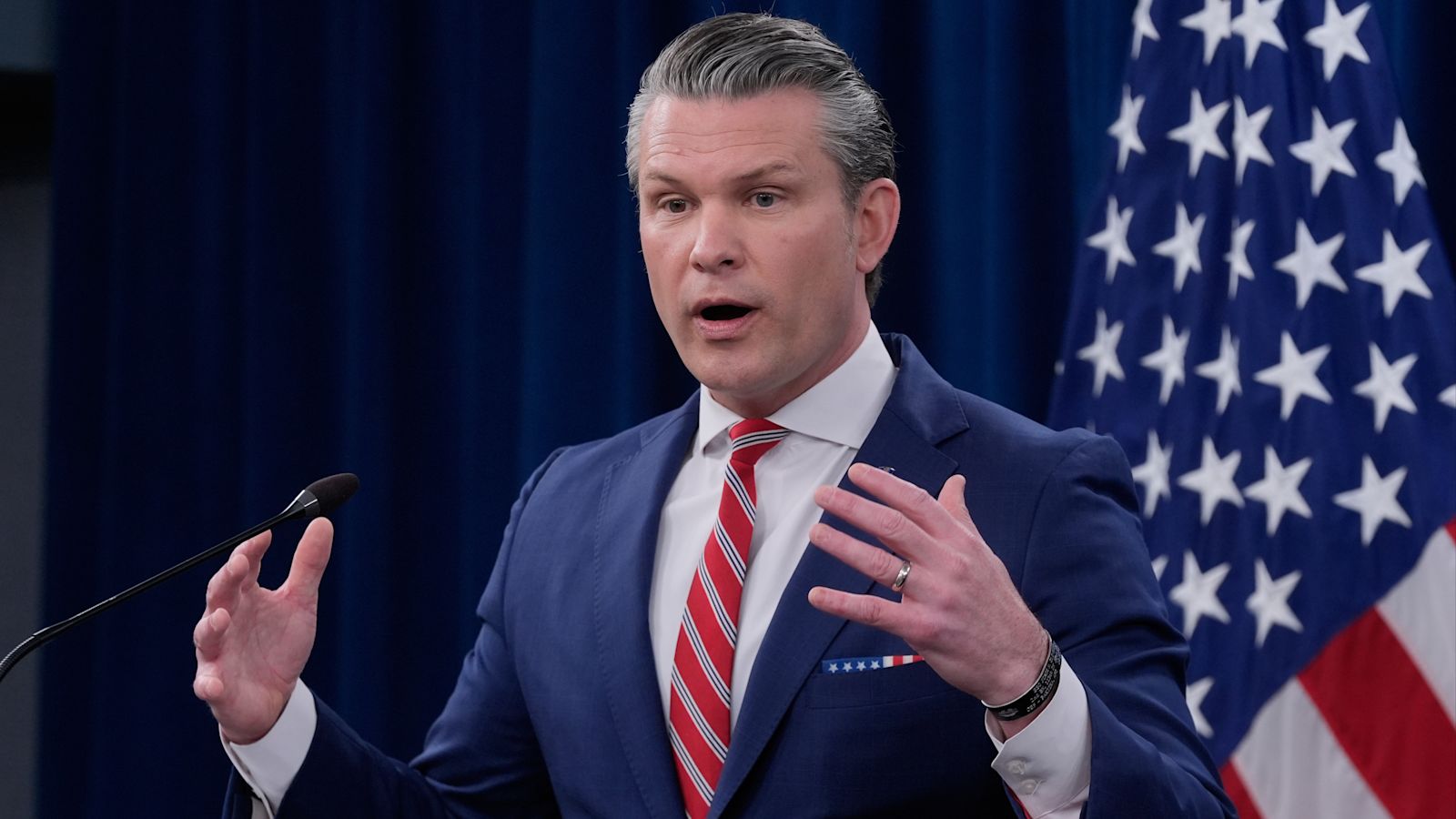
Pete Hegseth has warned Iran against threatening shipping in the Strait of Hormuz, but insisted the truce is still in effect
Keir Starmer has called on Iran to engage “meaningfully in negotiations” after violence erupted in and around the Strait on Sunday and Monday
Iran has warned, ‘we have not even begun yet’ as tensions over the critical shipping channel remain at their highest since a ceasefire deal came into effect in early April
Conflicting reports over attacks between the US and Iranian navies have emerged, while oil infrastructure in the UAE has also been attacked by Tehran
US President Donald Trump has launched ‘Project Freedom’ – an initiative to get ships through the strait and guide over 2,000 stranded vessels out of it, but progress appears to be slow
The US defence secretary has insisted the truce between Iran and Washington remains in effect, despite efforts to force the reopening of the Strait of Hormuz, leading to escalating rhetoric between the two sides.
Pete Hegseth said US operations were “defensive in nature,” adding “we’re not looking for a fight” as he referenced Project Freedom, a recently launched initiative to force the reopening of the Strait.
He added that Iran “cannot be allowed to block innocent countries and their goods from an international waterway.”
Joint Chiefs Chairman Dan Caine said the safety corridor in the key waterway for oil and gas transport involves guided-missile destroyers, more than 100 aircraft and 15,000 service members.
Ships in the Strait of Hormuz. Credit: PA
But when speaking to reporters, Hegseth also reaffirmed previous statements by US officials that the “ceasefire is not over.”
Also speaking on Tuesday, US President Donald Trump said Iran’s navy had been “reduced to little boats with a machine gun on the front of them” and repeated his claims that “Iran has no chance”.
The comments from Hegseth come as Iran has begun lashing out in response to the increased US presence around the Strait.
The US denied a report by Iranian media that one of its warships was hit by Iranian missiles as it tried to enter the Strait of Hormuz.
The US military also said it had destroyed six Iranian small boats and intercepted cruise missiles and drones fired by Tehran on Sunday. However, Tehran disputes that six of its vessels were sunk.
Tehran launched attacks on oil infrastructure in the UAE on Monday, the first time since the ceasefire took hold on April 8, which was condemned worldwide, including by Prime Minister Keir Starmer.
Keir Starmer has said stability in the Gulf directly affects the UK. Credit: PA
Pakistan, which has acted as a key mediator in the conflict, also urged both sides to show restraint after the recent escalation.
The Pakistani military said in a statement that lasting peace depends on collective restraint, responsibility and respect for sovereignty.
No major pickup in shipping despite Trump’s ‘Project Freedom’
A US military commander said American forces were helping restore the flow of international shipping while Iran was doing all it could to “terrorise and threaten” vessels.
Admiral Brad Cooper, who heads up Central Command, said his military had “the clear advantage” with an “enormous amount of capability and firepower” in and around the Strait of Hormuz.
Pro-government demonstrators gather at the Enqelab-e-Eslami, or Islamic Revolution, square in Tehran on Monday. Credit: AP
Vowing to break the chokehold on Hormuz, Trump launched a new initiative on Monday, dubbed “Project Freedom” to “guide” ships through the critical oil and gas shipping channel.
There were no major pickups in shipping traffic, however, with only four ships crossing the strait on Monday, according to S&P Global Market Intelligence.
Washington said two US-flagged cargo ships were among those to pass through the waterway following Trump’s latest push.
Before the war, more than 120 ships a day on average passed through the vital waterway.
Trump’s move also seeks to free some 2,000 vessels stranded in and around the strait, many of which are loaded with sailors who have been trapped since the start of the war.
UAE comes under attack for first time since ceasefire
The UAE condemned what it called “renewed treacherous Iranian aggression” and called for an immediate halt to the attacks.Four missile alerts were issued Monday urging UAE residents to find shelter – the first such alerts since the ceasefire began nearly a month ago, forcing commercial planes bound for the country to turn around midair.
The extent of the attack on Fujairah was unclear, but it is the terminus of a pipeline the UAE has used to avoid shipping some of its oil through the strait. The British Armed Forces reported two cargo vessels ablaze off the UAE.
The emirate on the Gulf of Oman is home to extensive oil storage facilities and is the UAE’s main sea access outside the strait.
“These attacks represent a dangerous escalation and an unacceptable violation,” the UAE’s Foreign Ministry said in a statement on X. In Oman, authorities said a residential building near the strait “was targeted,” resulting in two foreign workers wounded, four vehicles damaged and nearby windows shattered, according to a report by state-run media.
Subscribe free to our weekly newsletter for exclusive and original coverage from ITV News. Direct to your inbox every Friday morning.
From Westminster to Washington DC – our political experts are across all the latest key talking points. Listen to the latest episode below…