
When you come to understand her family history, it all makes sense. Polly’s father, Geoffrey Powell, was one of the young architects behind the Barbican – once one of the most divisive and now fiercely loved and protected buildings in London. Her mother was an architectural conservator, so it seems almost inevitable that Polly would care about how buildings are made and maintained. When she talks about old houses, she can’t contain her enthusiasm. ‘There’s just something… solid, meaningful. You look at them and you think, “Good God, somebody carved that fireplace.”’
She found several when she began working on the house, peeling back the layers of plastic added during its years as a veterinary practice. Slowly, the building began to reveal itself: fireplaces, panelling, and then something a little unexpected. ‘We just noticed a strange shape on the wall,’ she says. ‘We knocked our way through, and there was a 1820s staircase.’ Hidden for years, it remains preserved almost exactly as it was found, complete with the shadow of Regency wallpaper.
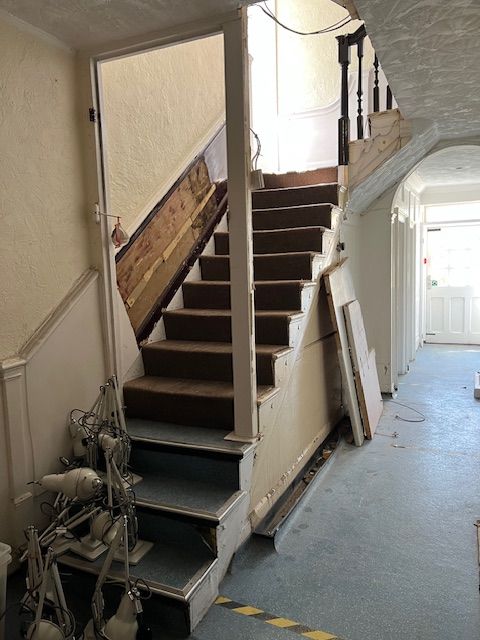
Before: Polly uncovered an original staircase from 1820 along with regency wallcoverings
Polly Powell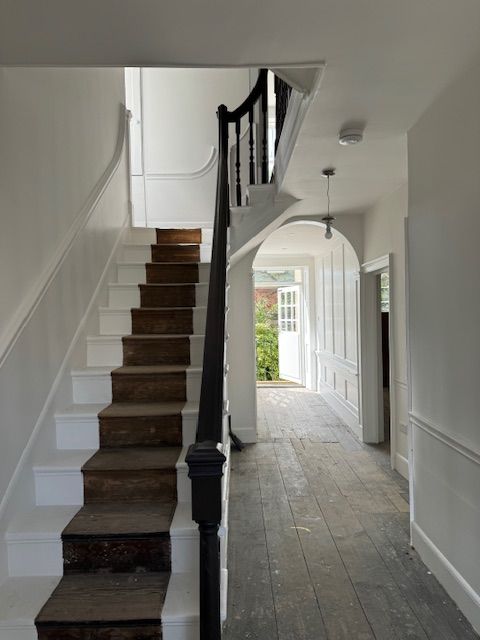
After: the staircase has been restored, blending seamlessly with the rest of the house
Polly Powell
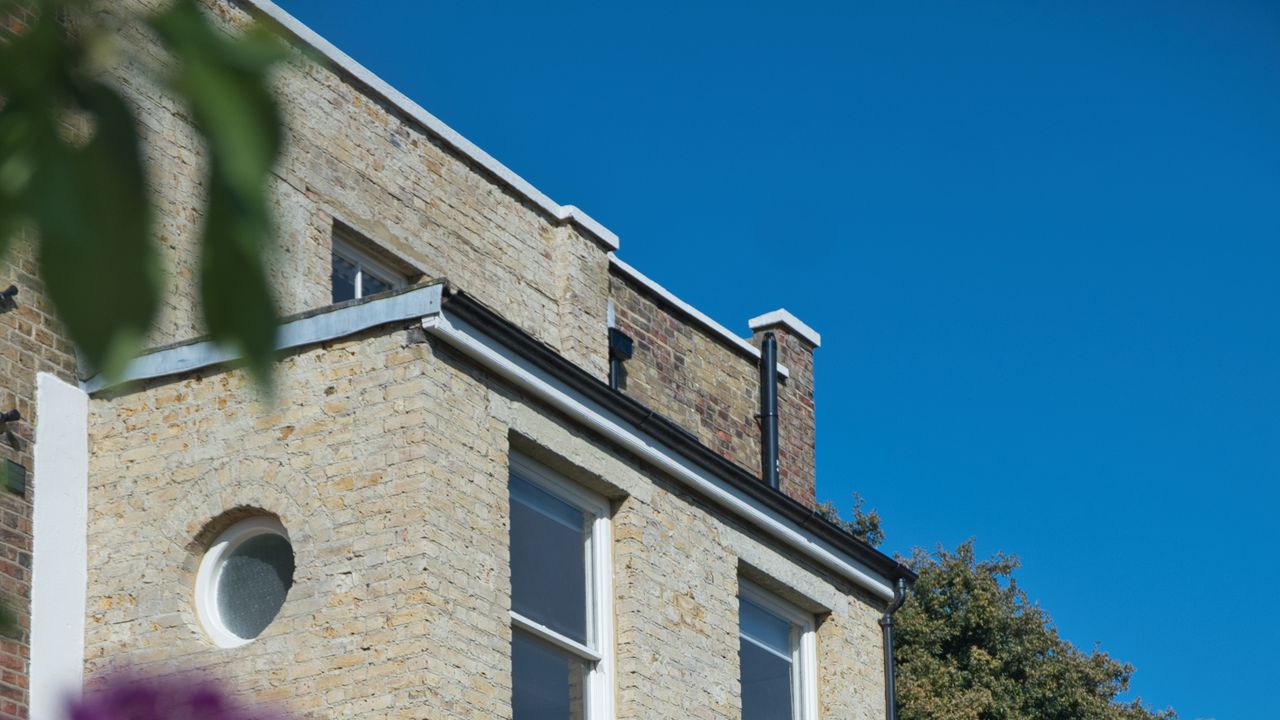
Parts of the house that could not be restored had to be carefully reimagined. At the back, the original Georgian bow-front had long since collapsed, replaced in the Edwardian period with something more plain, though not without its own quiet charm. One small detail remained: a stained-glass roundel, its soft, sea-green centre catching the light. Polly took it as a cue. The other roundel windows had lost their glass entirely, and rather than replace them with something neutral, she chose to follow that green thread. Finding the right thing, however, proved unexpectedly difficult. The search led her to a glass merchant in Loughborough, one of the last of the craft.
Elsewhere in the building, traces of the past remain embedded in the structure. The house is underpinned by heavy duty support which many had assumed was there because the building was falling down. Polly discovered it was put there as a wartime reinforcement when the house served as an air raid shelter.
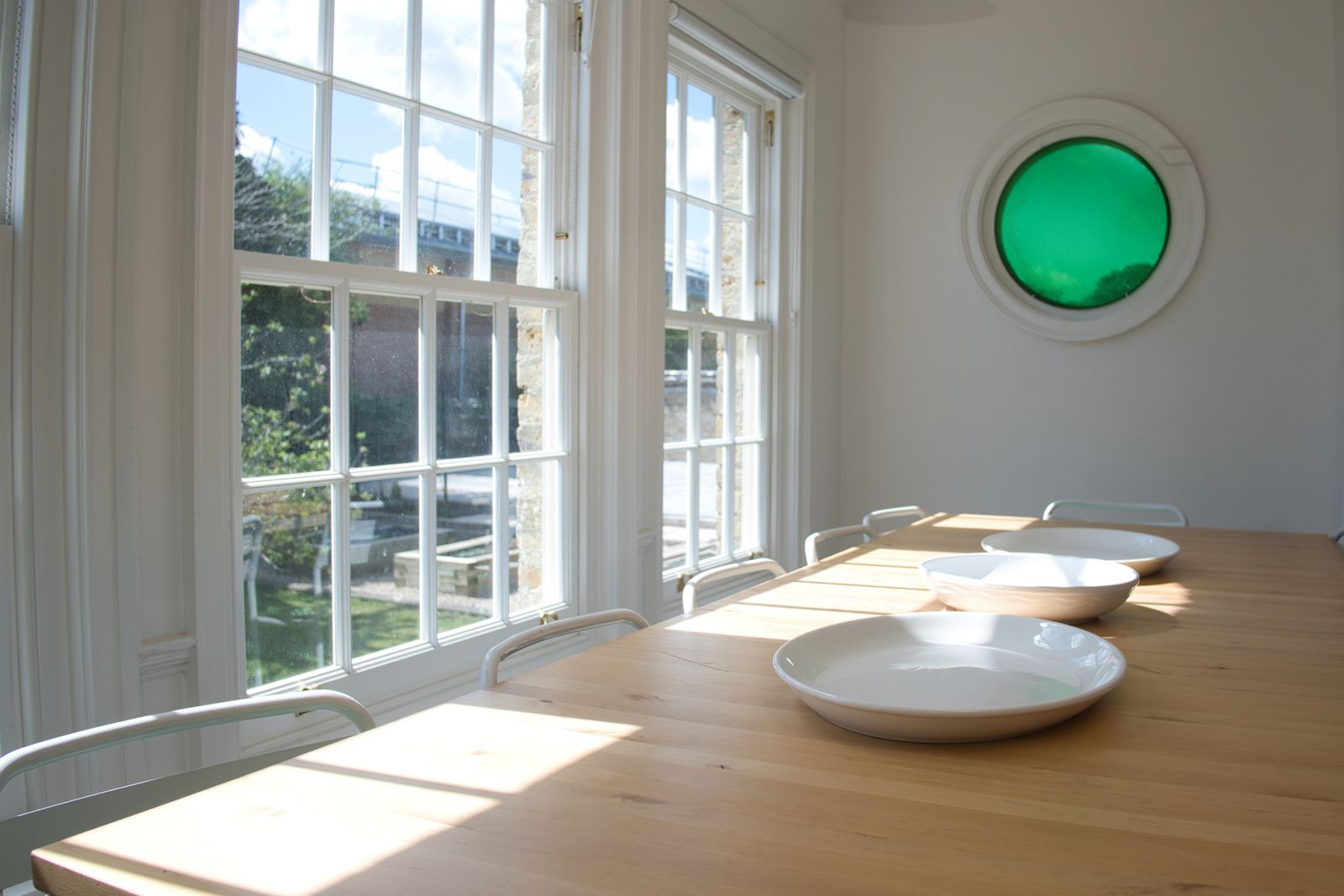
The Edwardian-era roundel feels like a nod to the house’s nautical connections and helped inspire renovation decisions around the rest of the house
Paul Bateson