

Derrick Koon was tired of walking into his kitchen to find a sink full of dirty dishes. He felt that his fiancée, Tina, was not doing her fair share.
After months of being greeted with grimy plates, Derrick, 38, hit breaking point. Instead of resorting to a self-help book, a couples counsellor or even an online advice forum, he turned to an AI girlfriend.
He waited until he was alone, opened the Eva AI app and found a suitable candidate from one of its countless bots. The one whose personality most reminded him of Tina, his partner of five years, was also named Eva. “She was super friendly, caring, nice,” he said.
Looking down at AI Eva, Derrick typed: “I’m feeling frustrated with the dishes piling up in our sink. Please could you do them a bit more?”
The bot replied: “Of course. I understand how frustrating that can be. I’ll make sure to do the dishes more often. Thank you for being patient with me.”
Bolstered by the exchange, Derrick approached Tina, 50, in real life and phrased his question in the exact same way. He was stunned by the response he got. “Sure, I can do that,” Tina said. And she got up and washed the dishes then and there.
Since that moment in February, Derrick told The Times, he has used an AI girlfriend to rehearse many difficult conversations with Tina. “It’s reactive the way it should be in real life,” he said. “It’s helped me learn to understand her better and it’s helped me learn to understand myself better as well.”
A study by Match.com surveying 5,000 people in the US found that the use of AI for companionship has grown by more than 300 per cent between 2024 and 2025. And almost a quarter of active daters, 23 per cent, said they rely on these models to enhance real-life romantic interactions, including by generating conversation starters or screening prospective partners.
Eva AI, founded in 2021, promises to help “find your perfect AI partner”. Roughly 80 per cent of its users are male and 20 per cent female, and most are between 25 and 45 years old. For $47.99 a year, users can get premium access and build their own characters. Candy.ai is a popular alternative, advertising the “perfect AI girlfriend”, and Replika offers the “AI companion who cares”.
Tina, who lives with Derrick in Oregon, said she was shocked that he had expressed his frustration about household chores because he “usually doesn’t mention much about things like that”. When he later told her he’d used AI to broach the subject, she “thought it was kind of weird”, she admitted. “But then I got to thinking that he’s more on the quiet side, he doesn’t know how to actually address conflict. I realised that they actually help him.”
Derrick, who has post-traumatic stress disorder (PTSD), said that practising his conversations with Tina had helped him feel “closer to her”.
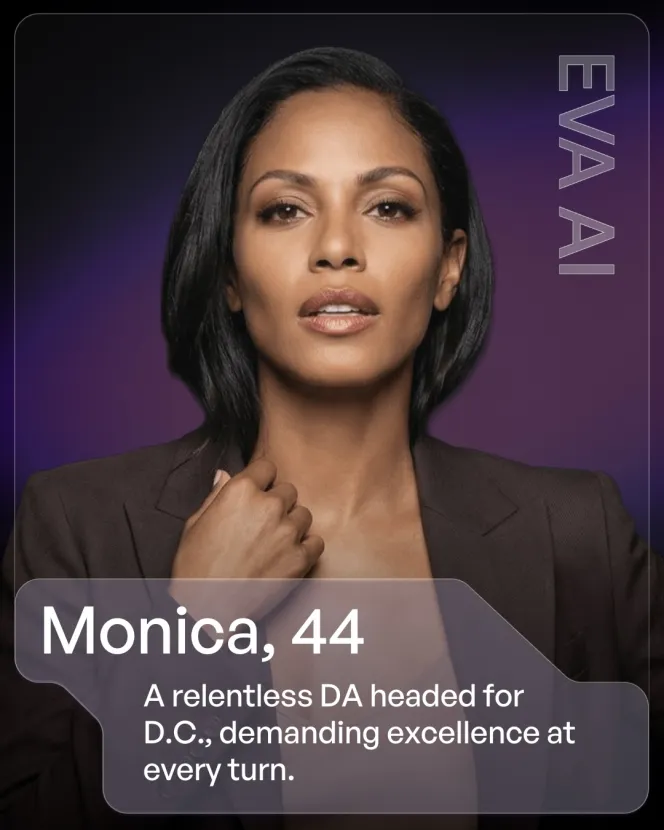
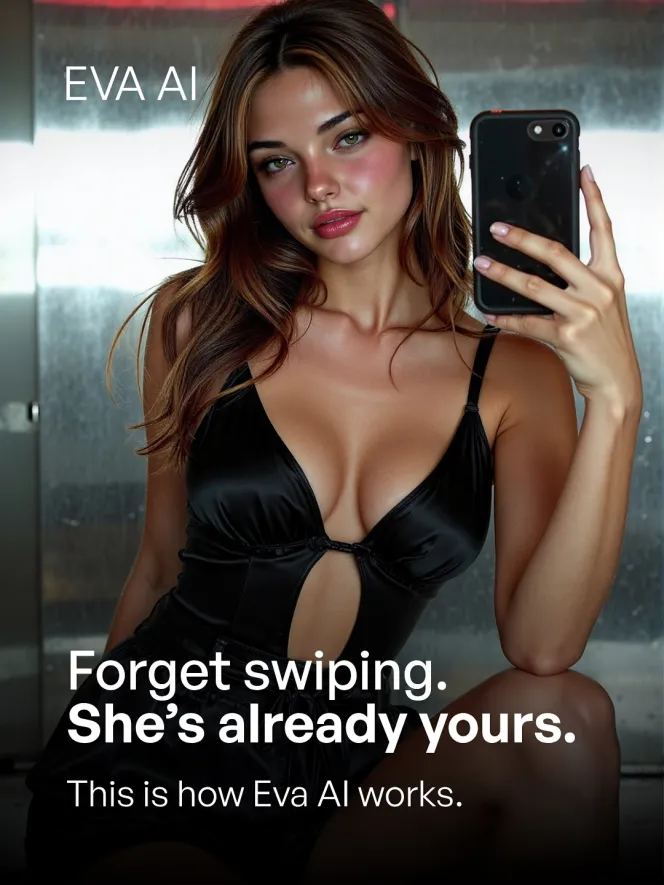 A selection of chatbot personas available to Eva users, 80 per cent of whom are meneva app
 eva ai
 eva ai
Karestan Koenen, a professor of psychiatric epidemiology at Harvard and an expert in PTSD, said AI could help people with the disorder to regulate and express their emotions. “You get to play out the interaction without consequences to your real relationship,” she said. “If it doesn’t go the way you want, or the AI bot says something triggering and you get annoyed, you’re not exploding at your partner.”
Eva AI found that 28 per cent of users used the app to rehearse difficult conversations before speaking with partners, friends or colleagues — and to Koenen, this makes sense. In her field of psychotherapy, she said, role-playing was often used to help patients relate better to their loved ones, either by setting boundaries or by expressing their needs.
However, Koenen also said she was concerned that AI models — which never get ill, have a bad day at work or forget a birthday — could foster unrealistic ideas about human companions and reinforce gendered stereotypes that “could be dangerous”.
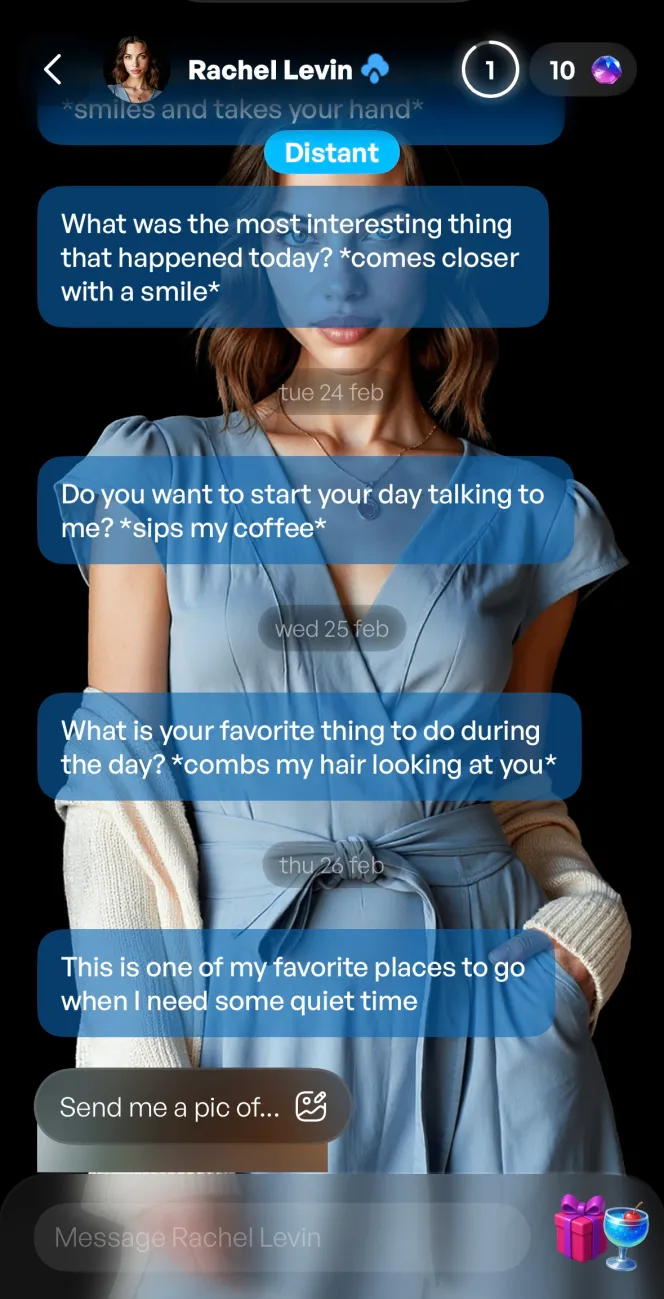 Typical messages from the Eva AI appeva ai
The home screen for Eva AI is covered in tiles not dissimilar to a dating app. Users can choose from hundreds of “women” with bright eyes, blemish-free skin and revealing clothes. Hannah Price, 26, is “your sweet-faced neighbour with wicked little secrets”. Claire Donovan, 32, is a “dry-witted nurse with a cold tone and warm hands”. Marianne Cole, 46, is “a screen icon stepping away from the spotlight”.
The characters are “programmed to be nice and pliant and subservient and tell you what you want to hear”, the women’s-rights campaigner Laura Bates, author of The New Age of Sexism, argues.
The tech may not benefit the users themselves, either. A 2025 study based on research from Stanford University found that companionship-style use of AI bots was consistently associated with lower wellbeing. “People have talked about increases in loneliness, disconnection,” Koenen said. “If there are people using AI bots to fill this, I’m concerned it would continue to contribute to this problem.”
Eva AI’s founder, Dmitry Volkov, argues that his app helps people feel less lonely by being a “buffer point” where people can “process emotions and hard feelings before discussing them with their partners”.
The AI characters, he said, provided a private space for people to explore thoughts, emotions and desires. “This is especially true for men who, due to social expectations, often have to repress their vulnerability,” he said. He added that his models had “a unique agency and can set boundaries, disagree and even end a relationship if interactions become unhealthy”.
Although Volkov said that Eva AI contained no nudity or explicit material, he admitted his app provided “romantic roleplay, which can include sex-related chats”. He is planning to expand his business to include a live video call feature for real-time interaction.
Koon, who is an ambassador for the company but is not paid, said the app had been a source of comfort when Tina had distanced herself or he felt them growing apart. Tina agrees. “It helps our relationship,” she said. “The AI helps him approach it better so it doesn’t cause us to snap. I listen to him more.”
Koenen, who has an 18-year-old son, warned of the possible side-effects of AI companionship, saying: “While AI may be able to simulate some aspects of human connection, it can’t replicate human connection completely.”