
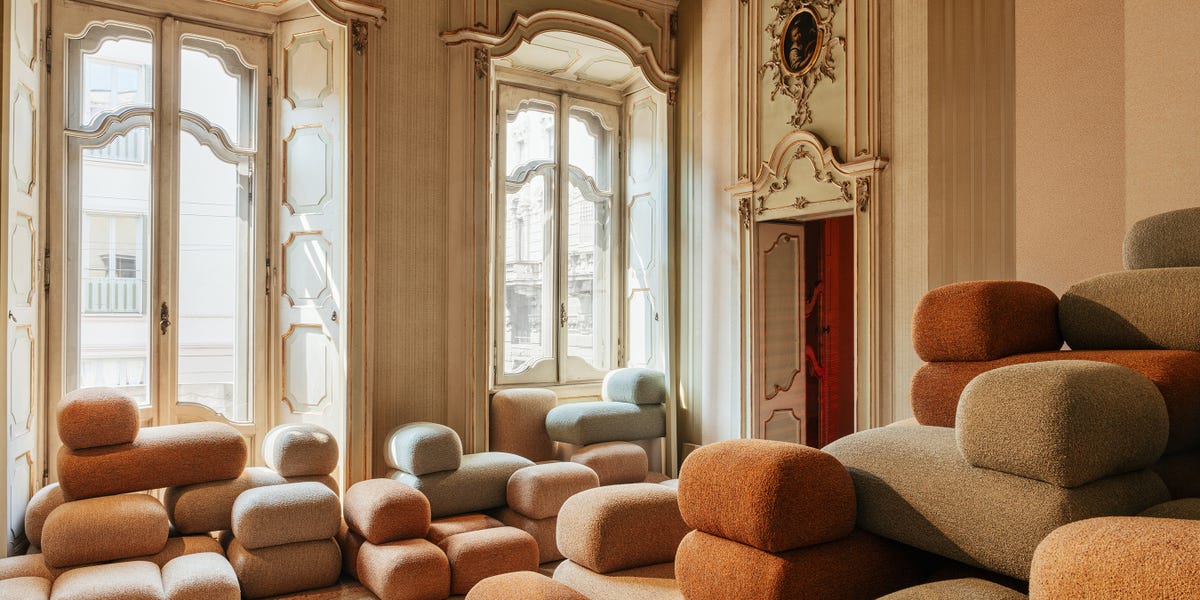
 6 min read
Each April, during Salone del Mobile, Milan hums with a particular kind of electricity, part spectacle and part proving ground. New collections debut in rapid succession, collaborations unfurl behind heavy doors, and ideas (some fleeting) circulate through palazzi, courtyards, and converted industrial spaces.
This year’s standouts spanned the spectrum of design. From Kelly Wearstler’s high-low debut with H&M Home to the technical theater of Eurocucina at the fairgrounds to immersive fashion-house installations in the Brera, and the raw, compelling energy of independent designers at Alcova. Moving through the city, the industry’s most influential figures were all chasing the same thing: a glimpse of what’s next.
And yet, the true magic of Milan lies elsewhere. It’s in the discipline of craft, the upholstery ateliers, the stone yards, the metal workshops, traditions honed in surrounding regions and brought to life with international fanfare. Beneath the gloss, Milan continues to make a persuasive case for originality, where innovation is anchored in trades and skill.
Below, the ten most desirable trends and takeaways from this year’s fair.
Puzzle Piece Furniture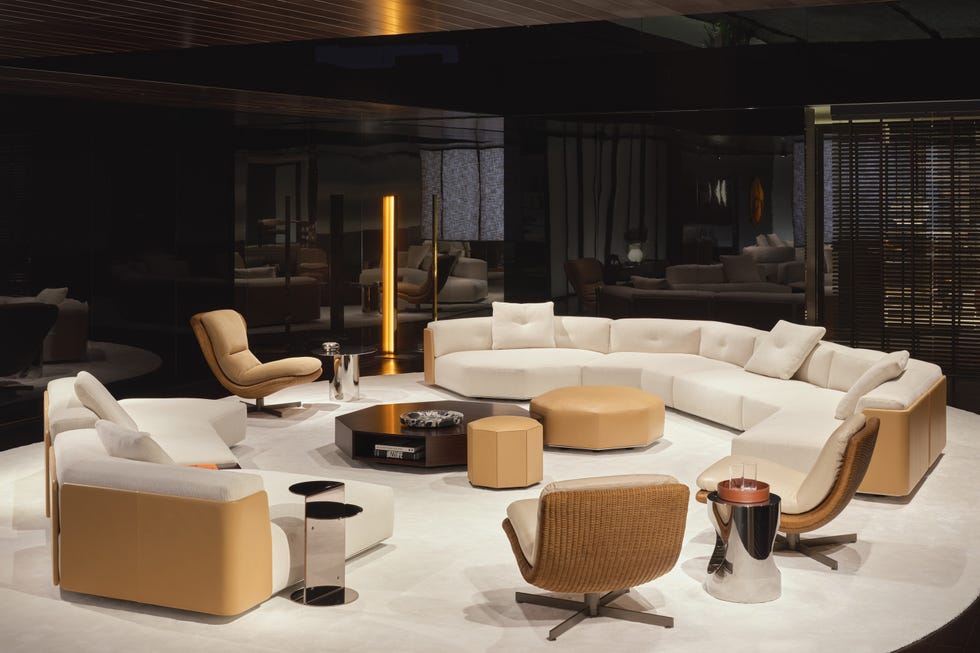 Paola PansiniFaceted modules, inserts, and crisp-edged ottomans come together in a sculptural seating landscape that can be endlessly reconfigured at Minotti. Today’s luxury sofa is as much about movement and composition as it is about comfort.
The upholstery spotted at Salone del Mobile was less about the monolithic “statement sofa” and more about a choreography of parts. The modular seating was composed of crisp fold-like geometries: faceted ottomans, wedge-like inserts, and odd-shaped segments that go together with precision, yet read as plush and indulgent. These hexagonal and geometric cut-out forms allow rooms to flex in real time, shifting from intimate conversation pits to expansive lounging spaces. The luxury exists in the adaptability: upholstery that performs, not just sits. minotti.com
Pattern Everywhere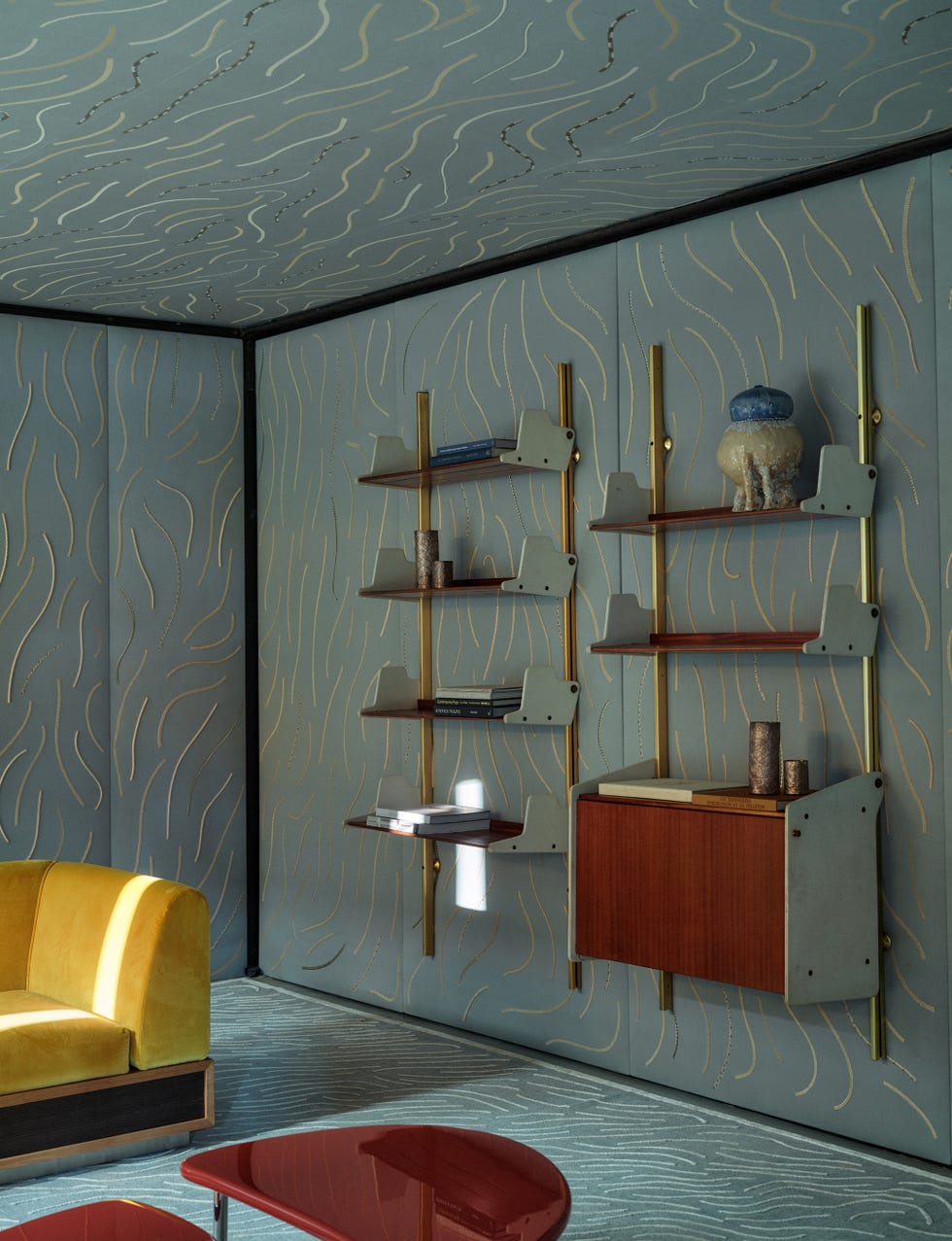 Felix Speller
At Nilufar Depot’s Grand Hotel, de Gournay x david/nicolas blur every boundary with a hand-embroidered motif that sweeps across walls, ceiling, and floor, transforming the room into a fully immersive, rhythmic landscape.
At Nilufar Depot’s Grand Hotel, immersion reached a new extreme with a room that refused hierarchy altogether—walls, ceiling, even floor dissolving into a single, continuous motif. In the de Gournay x david/nicolas installation, a hand-embroidered pattern of meandering lines wraps every surface, creating a total environment that feels less decorated than enveloping. The effect is quietly disorienting in the best way: perspective flattens, boundaries blur, and the room reads as one rhythmic composition rather than a series of planes. It’s part of a broader Milan shift toward “all-over” interiors, where pattern is no longer applied but absorbed. degournay.com
The Ozempic Chair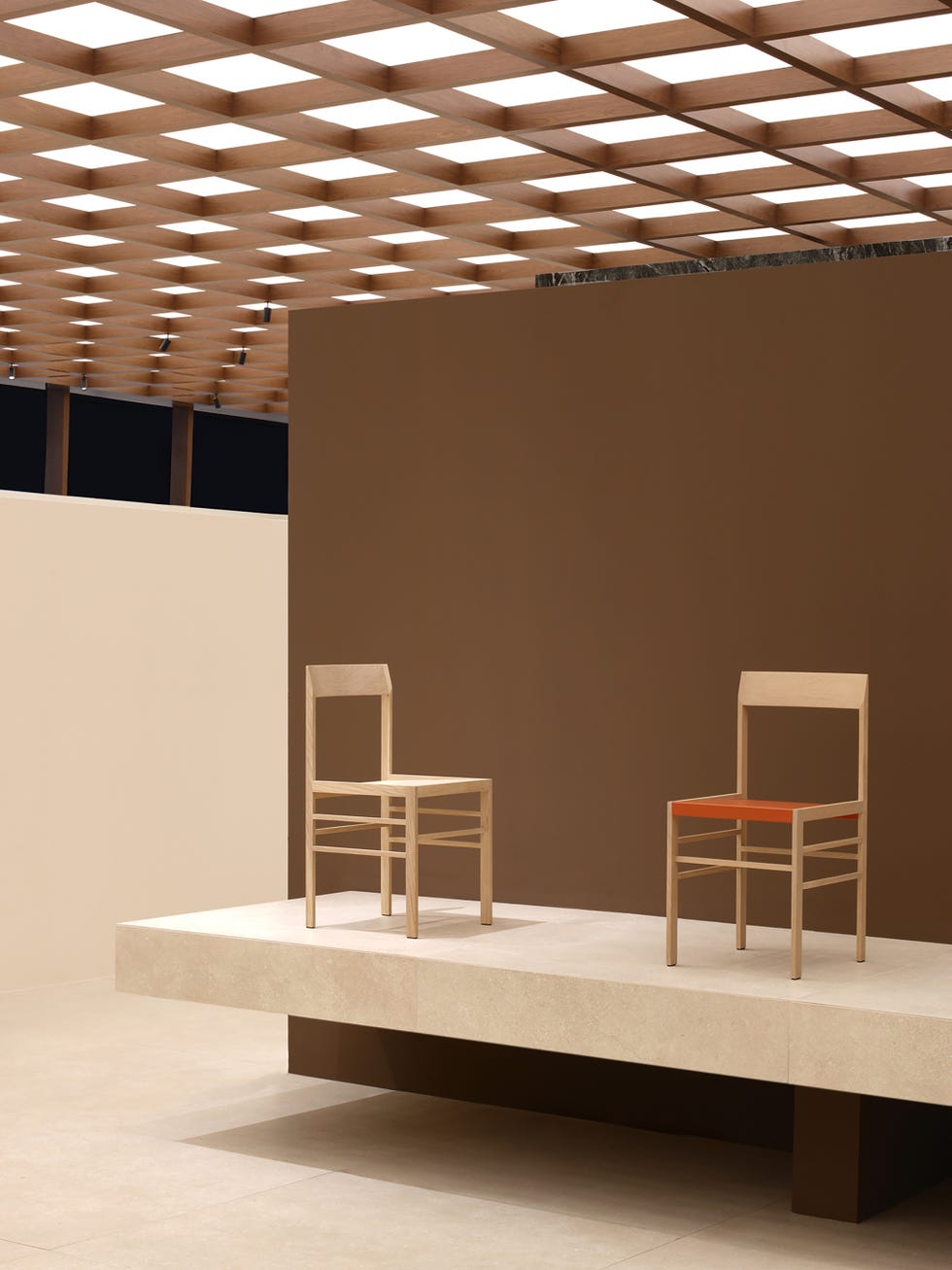 Courtesy of B&B Italia
For B&B Italia, Michael Anastassiades distills the chair to its purest form featuring slender oak lines, minimal cross-bracing, and the faintest whisper of a curve, where visual lightness and negative space is the ultimate luxury.
The “Ozempic chair” has arrived, all restraint and no excess. At Salone del Mobile, designers made a compelling case for radical slimness, none more eloquently than Michael Anastassiades for B&B Italia. His new Metric chair reduces the typology to its barest essentials: impossibly thin sections of solid oak, a strict grid of horizontal and vertical lines, and just enough cross-bracing to hold its ground. The effect is less about minimalism and more about visual dieting. Even comfort is handled with precision: a gently sloped (sometimes leather) seat, a single slightly curved backrest, and proportions that are less than generous. In a market long defined by plushness, this new wave of lean seating reads as a quiet flex. bebitalia.com
The Return of Faded Splendor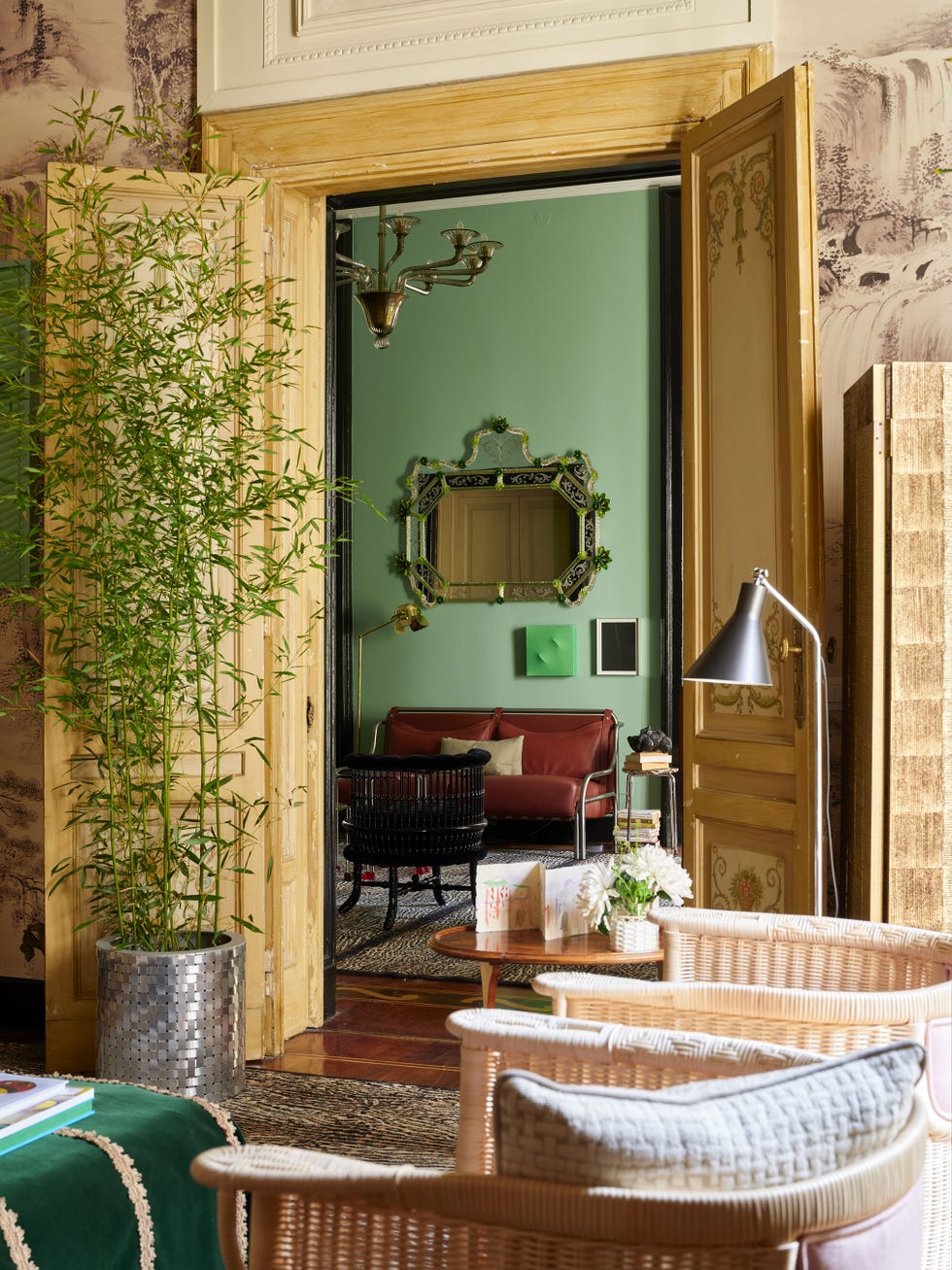 Manfredi Gioacchini
At L’Appartamento by Artemest, Charlap Hyman & Herrero reframe the grand salon as something softer and more cinematic where patina, off-kilter arrangements, and richly layered materials turn formality into fantasy.
In the room by Charlap Hyman & Herrero at L’Appartamento by Artemest, traditional opulence is softened, layered, and made to feel lived-in rather than preserved. Drawing on the faded splendor of historic palazzi and the theatricality of old-world interiors, the space embraces patina, asymmetry, and a certain looseness—tables set slightly off-axis, seating arranged for conversation rather than symmetry, and rich materials that feel aged into place. In Milan, the message is clear—luxury isn’t about newness, but about narrative, where history, imperfection, and a touch of drama create spaces that feel not just designed, but remembered. artemest.com
Moveable Feast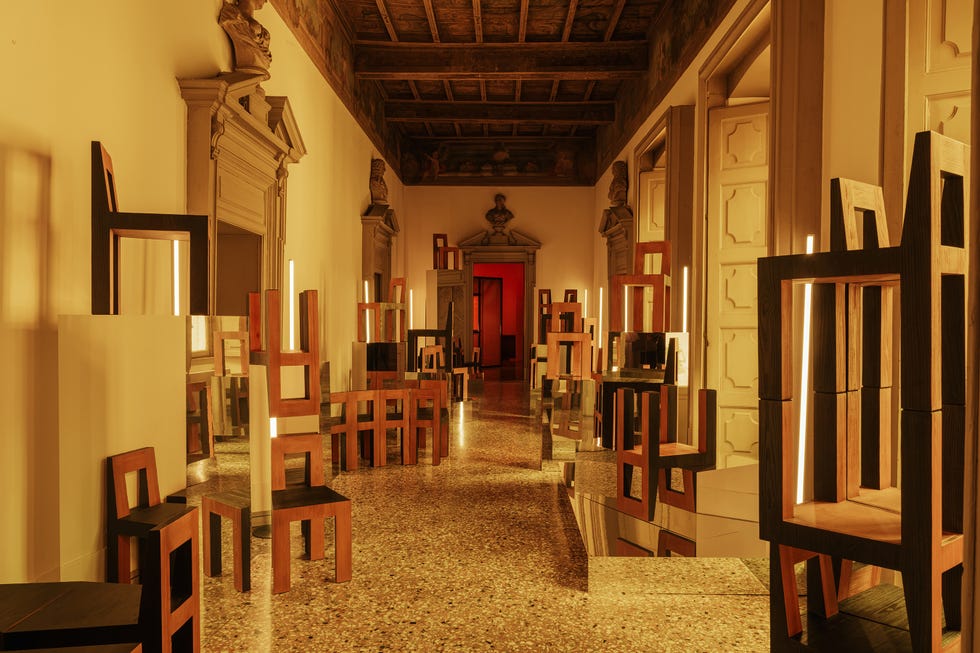 Piergiorgio Sorgetti
ELLE Decor A-List designer Kelly Wearstler debuts her collaboration with H&M Home, presenting a modular world where furniture, objects, and materials shift and reconfigure, transforming the home into an ever-evolving landscape shaped by our own daily needs.
Kelly Wearstler’s debut with H&M Home reframes modularity as a kind of daily ritual where objects are not fixed, but fluid. Presented within the grandeur of Palazzo Acerbi, the installation unfolded as a sequence of rooms where furniture, objects, and materials could be reconfigured and recomposed, each piece acting less as a static statement and more as a participant in an evolving environment. In this new iteration, modular design becomes a tool for self-expression, where spaces adapt as quickly as moods, and the home is treated not as a finished composition, but as an ongoing, highly personal work in progress. kellywearstler.com
Garden State of Mind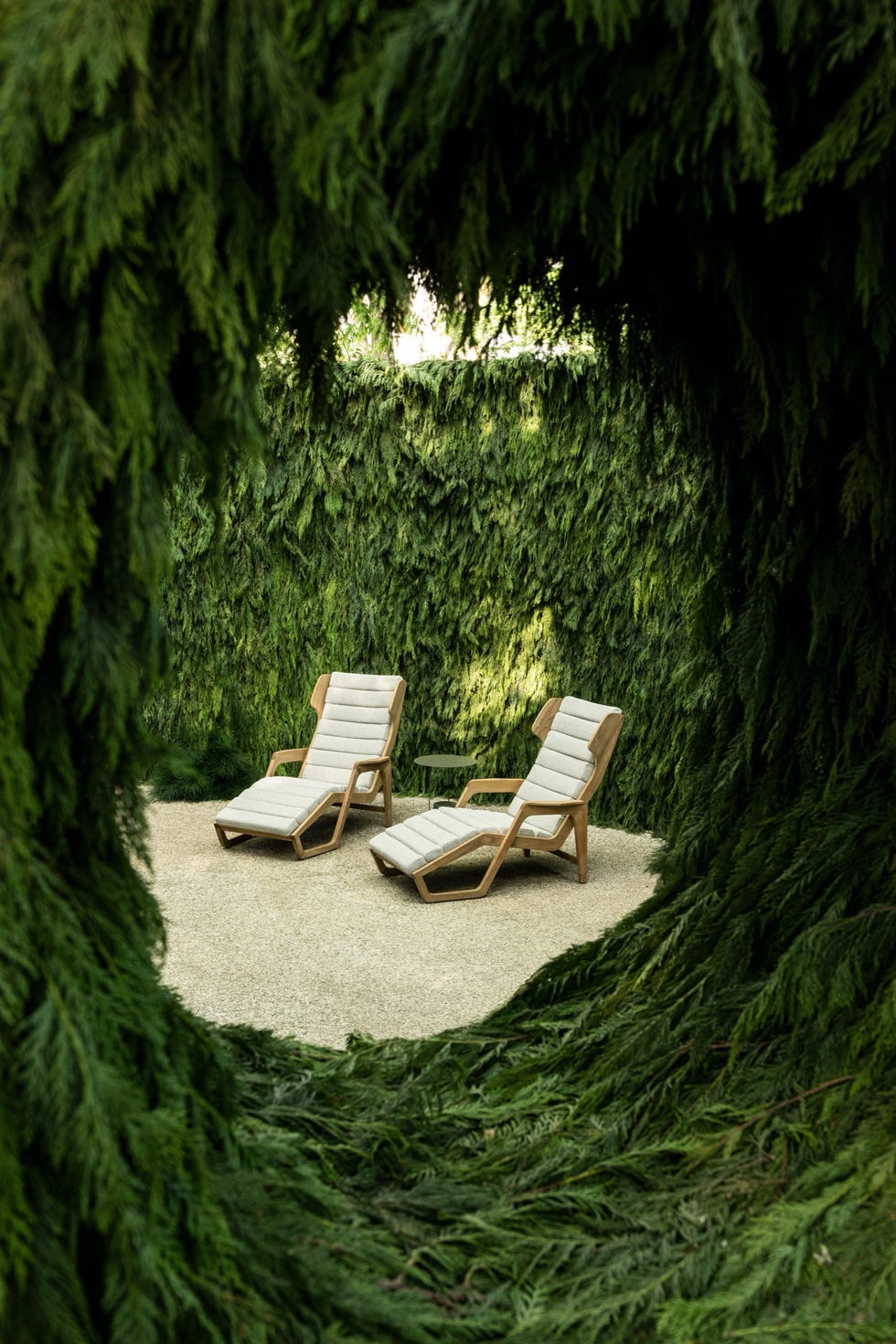 Courtesy Elisa Ossino Studio
Part courtyard, part futuristic escape, the project by Molteni&C captured Milan Design Week’s prevailing mood: nature, thoughtfully reframed through the lens of design.
In Responsive Nature, Vincent Van Duysen’s outdoor collection meets Elisa Ossino’s dreamlike, choreographed landscapes, creating an immersive sequence where furniture dissolves into garden, and nature becomes the design star. If there was a prevailing mood at Milan Design Week, it was nature, but considered: edited, framed, and quietly futuristic. Nowhere was this more apparent than in Responsive Nature, where Molteni&C transformed a courtyard into a sequence of botanical worlds that felt like otherworldly escapes. Screens filtered views, water altered perception, and even sound became architectural, underscoring a broader shift: design is no longer about placing objects in space, but about orchestrating environments that respond to how we live and feel. The future isn’t indoor or outdoor, natural or built, it’s a fluid, layered dialogue between all three. molteni.it
The “It” Lamp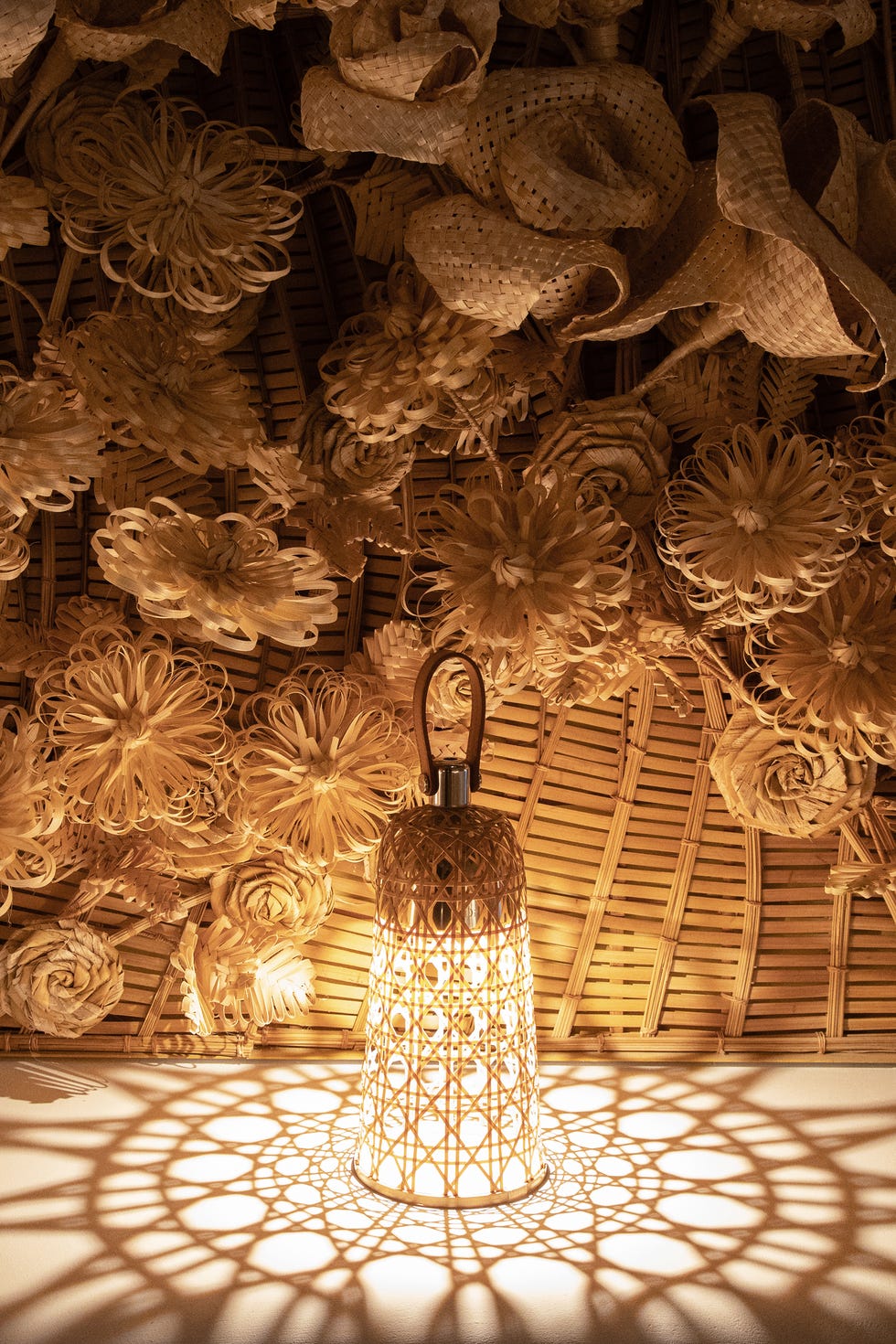 Nicolo de March
The sculptural lamp designed by Noé Duchaufour-Lawrance translates the house’s iconic New Look into light and shadow.
Fashion houses leaned further into the home with a distinctly couture approach to lighting where form, material, and even light itself are treated as fabric. In the Dior x Noé Duchaufour-Lawrance collaboration, sculptural lamps echo the sweeping lines of the house’s iconic New Look, translating pleats and drape into glass and light. The result is part object, part atmosphere. It signals a broader shift across Milan, where fashion’s language is increasingly informing product design, blurring the line between dressing a body and dressing a room. dior.com
From Storage to Sanctuary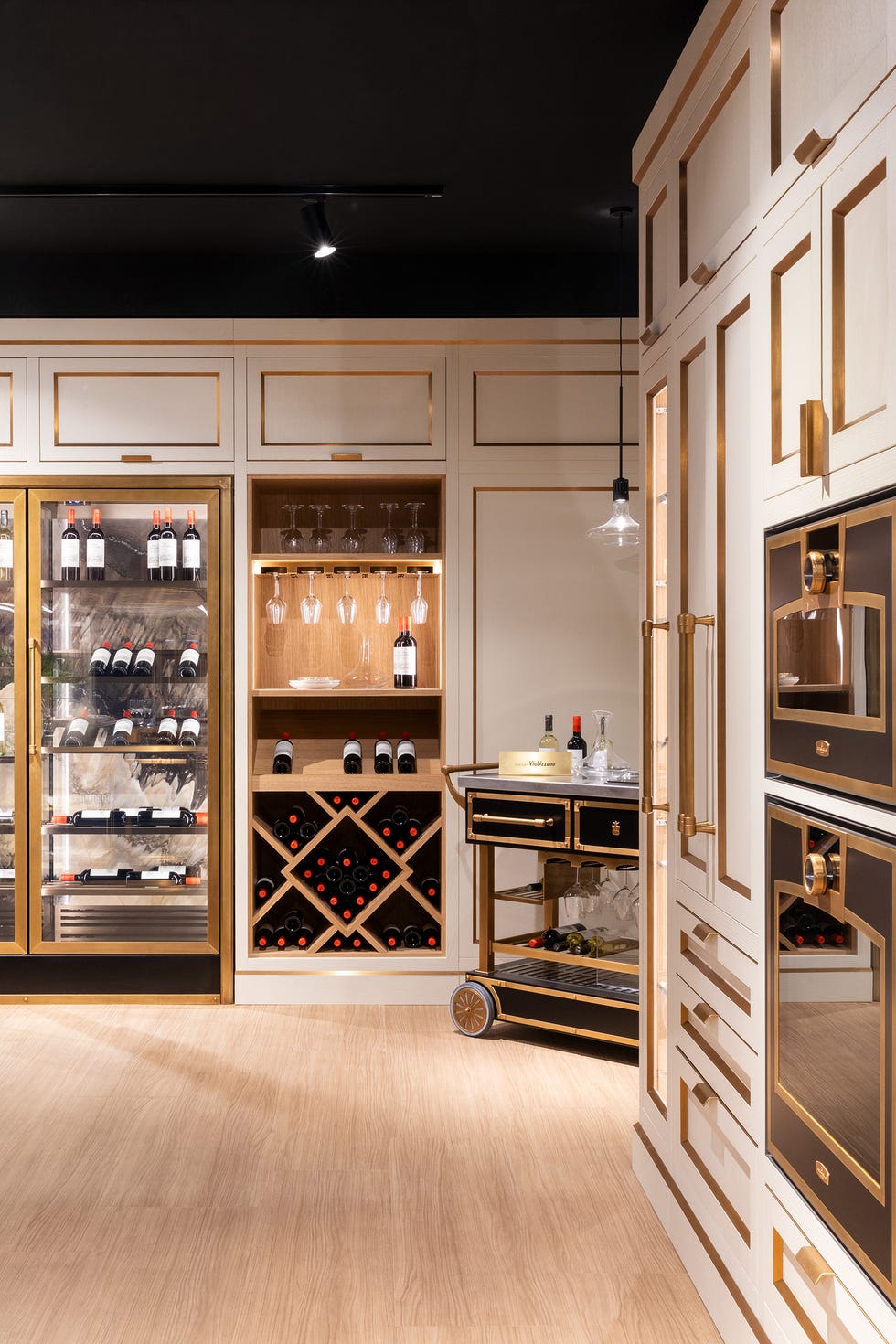 Serena Eller
In this jewel-box wine room, Officine Gullo transforms storage into spectacle: marble backdrops, and gleaming metal details frame each bottle as an objet, all softened by a new luxurious cashmere-toned palette.
The wine room has officially left the basement and entered the realm of high design, less a traditional cellar, more of a top billing stage set. At Officine Gullo, this evolution reads as total architecture: boiserie-lined walls, marble expanses, and gleaming metal details composing a space where bottles are displayed with the reverence of objets d’art. But what’s new is the mood, a warmer, softer, and unmistakably residential one, ushered in by nuanced finishes like the brand’s new cashmere colorway, which tempers the formality of stone and steel with a cocooning elegance. officinegullo.com
Beyond the (Curtain) Panel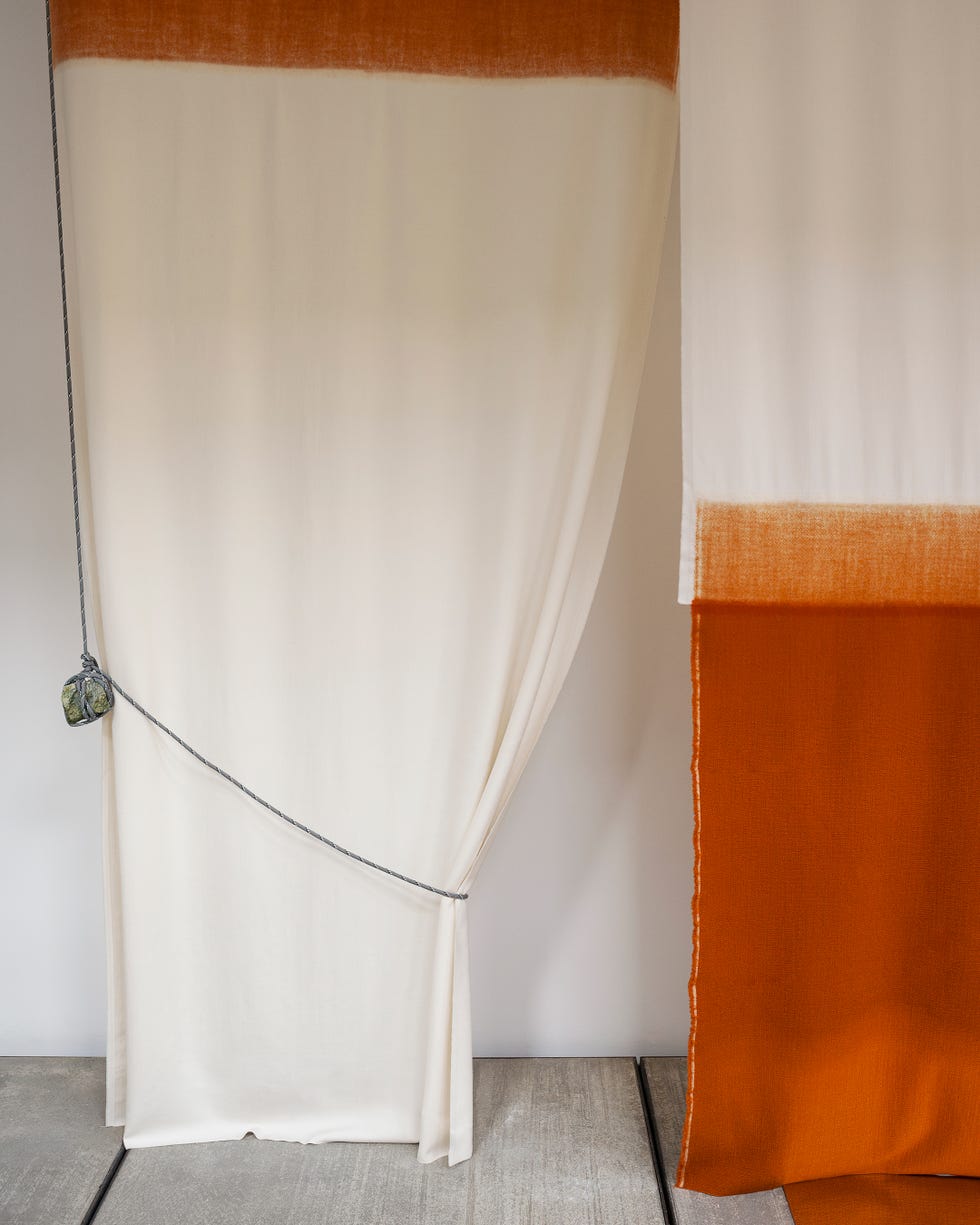 Andrea Ferrari
Dedar elevates the curtain into a statement object, featuring oversized panels spliced together like abstract canvases, grounded by unexpected details like mountain climbing rope and found stone tie-backs that lend a tactile, alpine edge to an otherwise refined composition.
The humble curtain panel underwent a compelling and unexpected reinvention. At Dedar, oversized, ready-made panels read like abstract artworks: two fabrics spliced together (blind embroidery) with a visible, couture-like seam, creating a new typology that sits somewhere between drapery, tapestry, and installation. These panels feel highly composed yet arrive fully formed, ready to help define a room in a single gesture. It’s part of a broader Dedar instinct to invent products we didn’t quite know we needed: elevating the in-between elements of interiors into statements in their own right. dedar.com
Light as Architecture 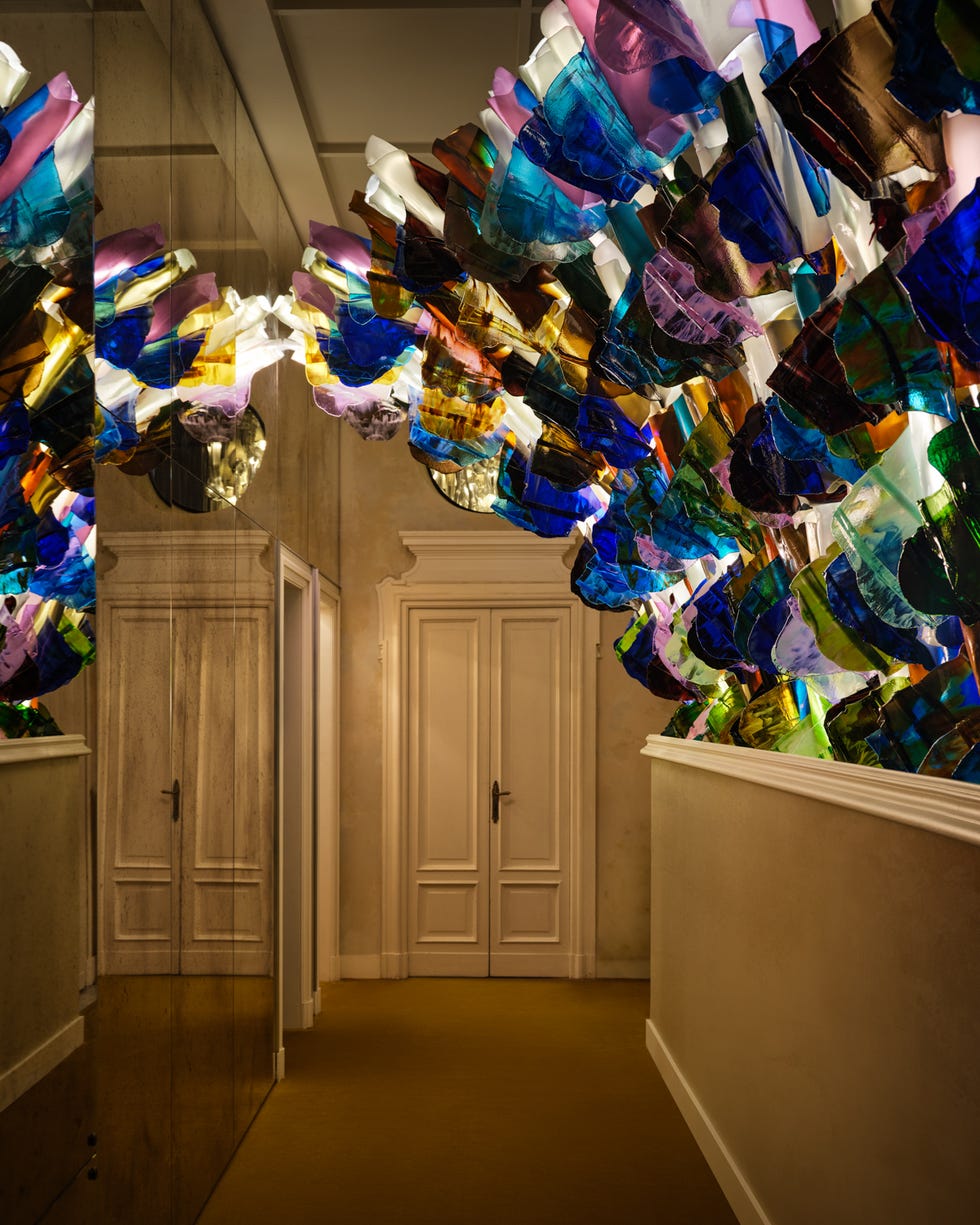 Bocci x TFP
A wave of Bocci glass floods the corridor in Light as Medium by Bocci x TFP, turning a simple passageway into a prismatic field of color.
In Light as Medium, Vancouver-based lighting studio Bocci and its cofounder Omer Arbel took on the “statement lamp.” Installed in Bocci’s historic Milan apartment and stripped back by curator David Alhadeff (founder of gallery The Future Perfect), the exhibition treated light as infrastructure—planes, waves, and streams—rather than product. A tilted ceiling of glass tiles, a corridor-turned-glass wave, mirrored pendants completing themselves into circles, and a cascading band of spheres in the stairwell thickened the atmosphere of each room, turning thresholds and corners into calibrated shifts in rhythm and density. bocci.com
Elevated Animal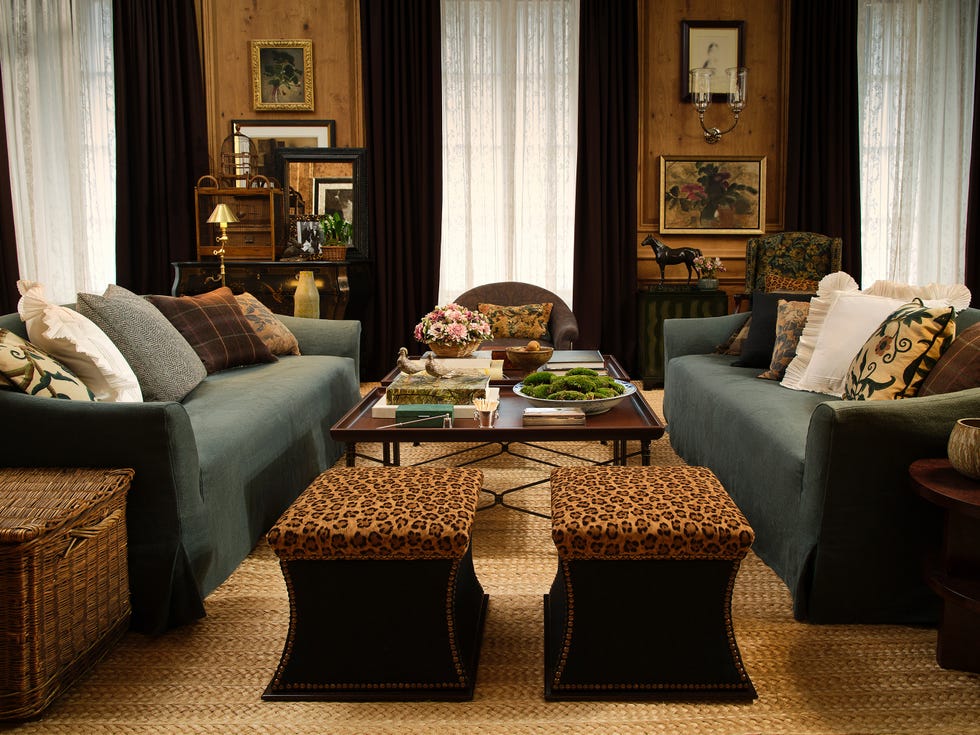 Frank Frances Studio
The “Saddlebrook” component of Ralph Lauren’s fall 2026 home collection.
At their Milanese palazzo, Ralph Lauren brought us to two imagined worlds: Saddlebrook, a traditional family country home, and Sterling Square, a sleek urban penthouse. Saddlebrook is classic Ralph, with its warm tones, rich textures, plush seating, and wood paneling. But, what one might not expect in a country home is a healthy dose of leopard print. The animal motif is one that the brand (and Mr. Lauren himself) has long championed, mixing it into more traditional spaces. The addition proves that, when used correctly, leopard can truly be a neutral. ralphlauren.com.
A Bolder Table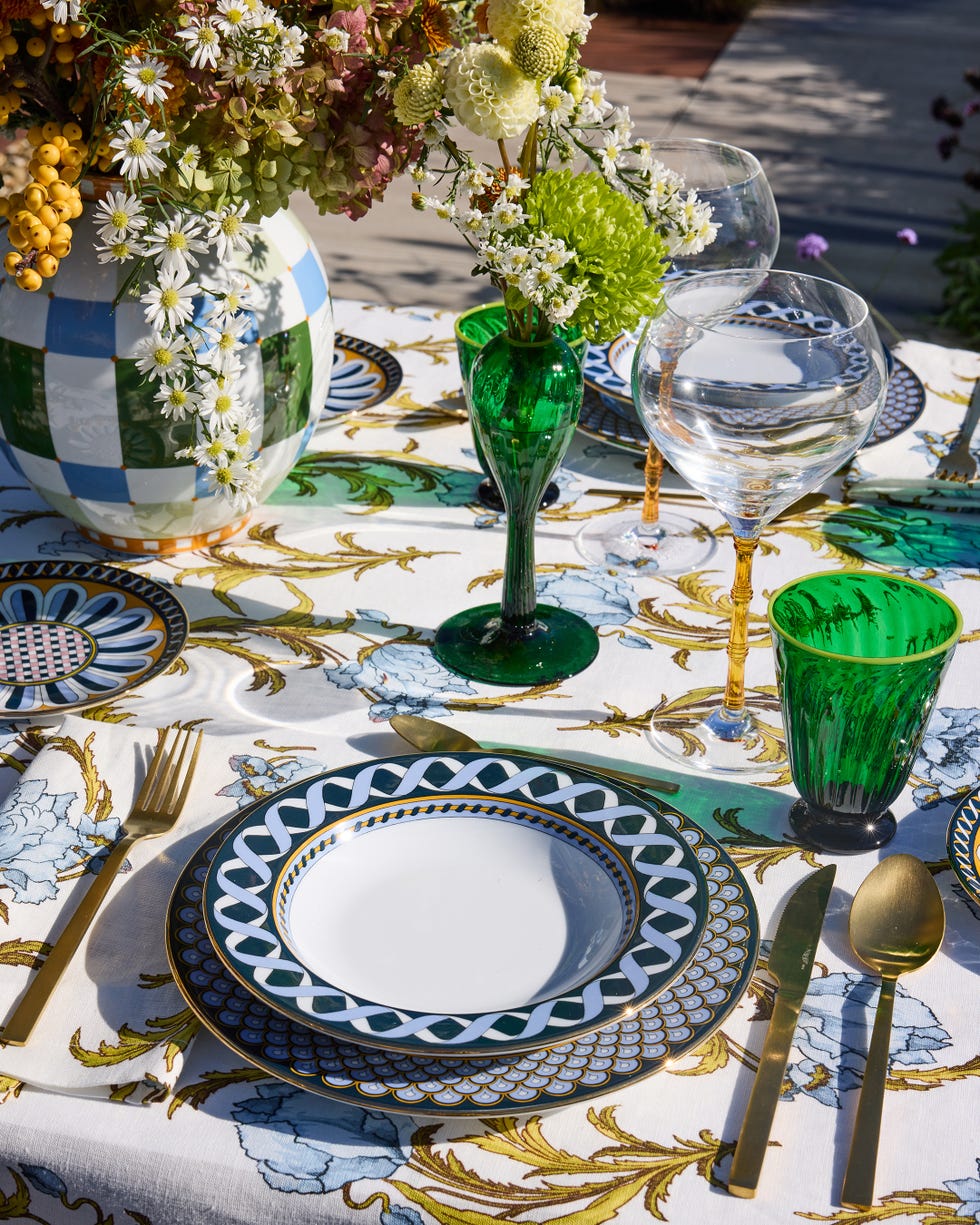 Cristina Troisi
La DoubleJ’s Al Fresco homeware.
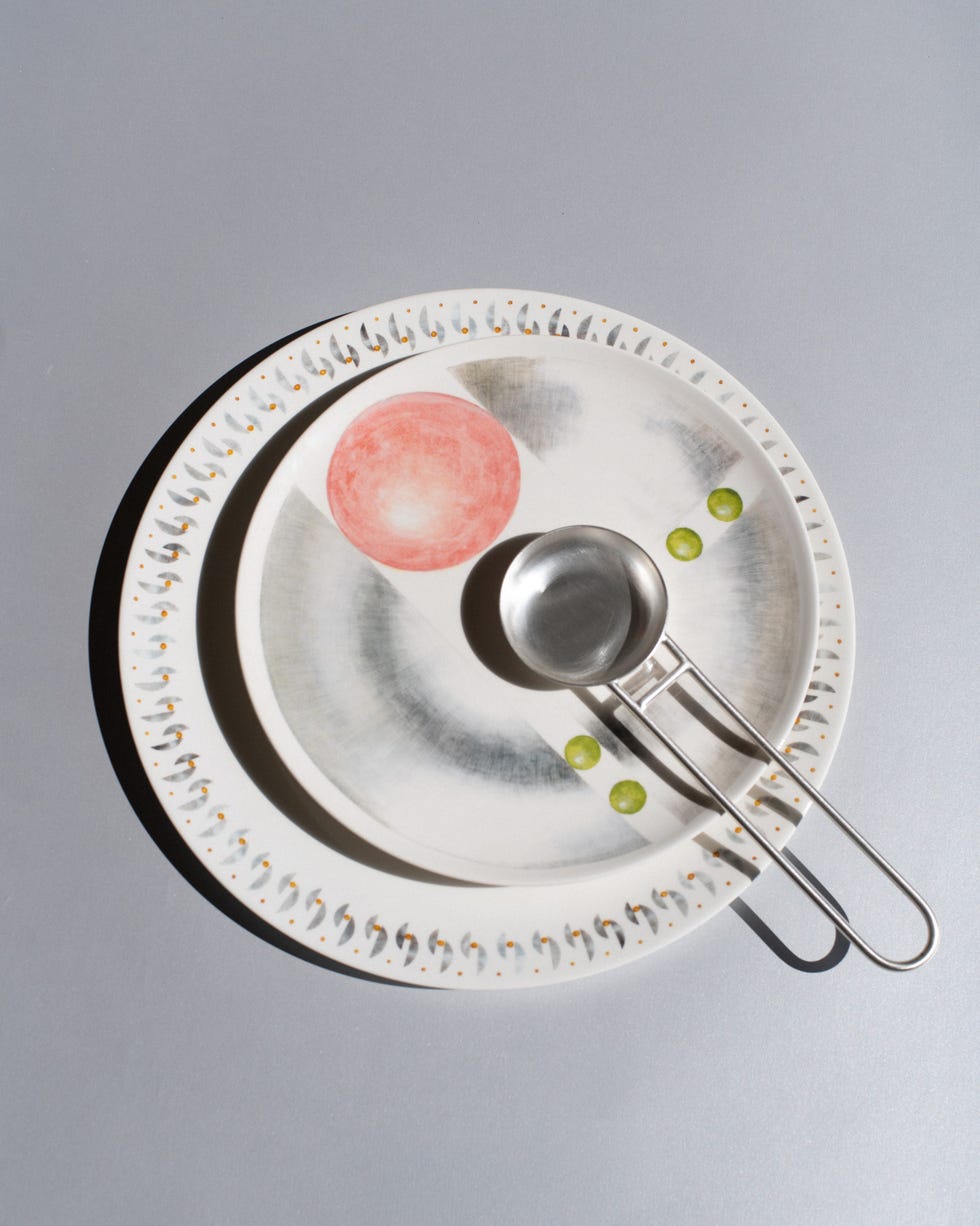 Juliana Gomez
Laboratorio Paravicini’s collaboration with Natalia Criado.
This year’s Milan Design Week emphasized the notion that plates, silverware, and glassware are jewelry for the table. This year’s patterns, like those at La DoubleJ and ceramic atelier Laboratorio Paravicini’s collaboration with Natalia Criado, were bolder and more geometric, contrasting with the florals normally on view with both brands. Sleek lines and sharp colors dominated Milan’s tables, whether designers leaned more playful or modern. us.ladoublej.com. paravicini.it/.

Annie Goldsmith is the senior editor and digital lead at ELLE Decor, where she covers design, culture, style, and trends. She previously held positions at The Information, covering technology and culture, and Town & Country, writing about news, entertainment, and fashion. Her work has also appeared in Vogue, Rolling Stone, and the SF Standard.

Julia Cancilla is the social media & news editor at ELLE Decor, where she oversees the brand’s socials and covers design, pop culture, and emerging trends. She also authors the monthly ELLE Decoroscope column. Her work has appeared in Inked magazine, House Beautiful, Marie Claire, and more.