
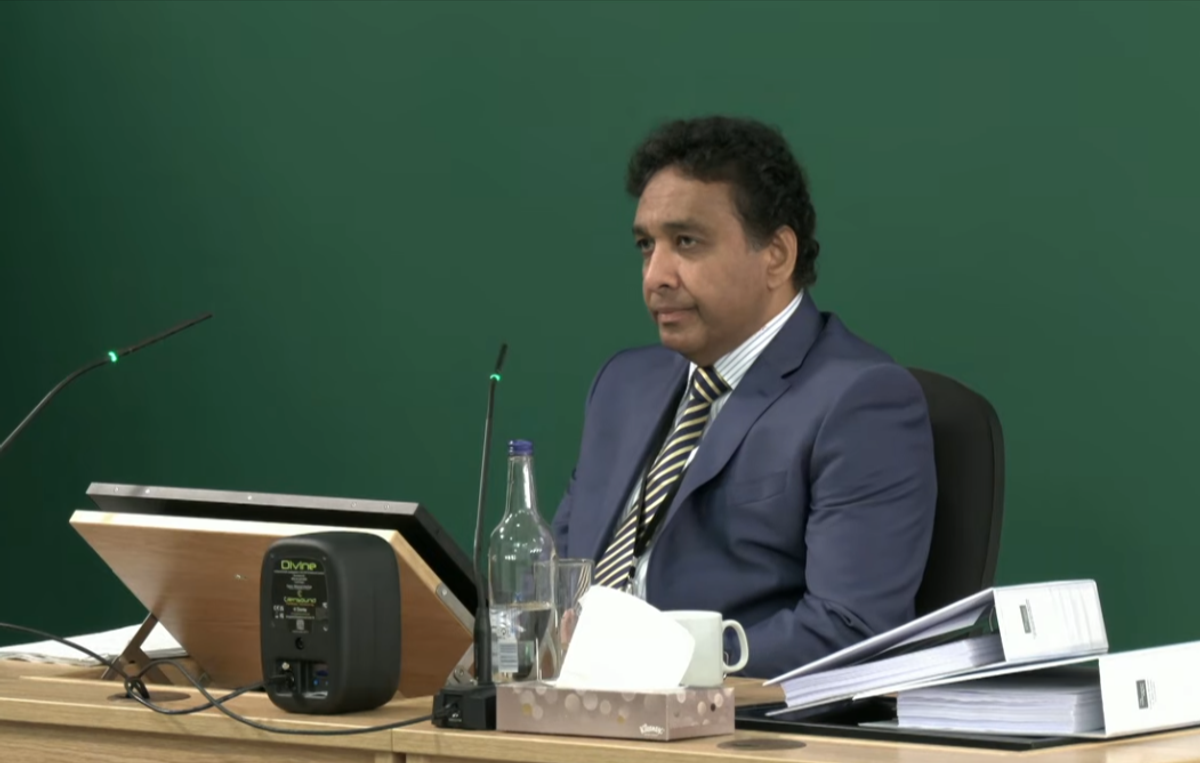
Dr Ajith Gurusinghe pictured giving evidence to the Nottingham Inquiry(Image: Nottingham Inquiry)
Dr Gurusinghe is now being asked about when Calocane brought a hammer back to the hospital after a period of leave on October 10.
The doctor said Calocane’s explanation was that he was moving into a new property and needed a hammer to hang up items.
But he did not have a new property, as counsel to the inquiry Craig Carr points out.
Dr Gurusinghe admitted the reasoning was “nonsense”.
“It was plausible in his mind but we were sceptical,” he said.
However, the incident was not officially reported by the doctor and a new risk assessment was not carried out.
“This is somebody who has come back with something that can be used as a weapon and it sounds like you thought it was nonsense,” said Mr Carr.
The doctor admitted this was a failure of the multidisciplinary team.
“I admit that it’s been missed to be included as an incident. But in terms of any harm occurring to anyone there was no harm.
“That’s probably why it may not have been highlighted enough.”
Pressing Dr Gurusinghe on his decision to discharge Calocane eight days later, Mr Carr said: “He didn’t engage, he was isolated, he didn’t have any of the therapies, he turned up with a hammer.”
The doctor replied: “I didn’t want to link the hammer incident to his general presentation. He was detained for nearly eight weeks or so.
“There were no incidents of significance in terms of violence intimidation, or aggression towards staff. He complied really well with medication.
“So there was no reason for me to justify detaining him any longer based on that presentation.”