
Joseph Dituri lived inside a 100-square-foot enclosure located 22 feet beneath the surface. The habitat maintained a pressure of 1.6 atmosphere absolute (ATA), compared with 1 ATA at sea level. Throughout the mission, the University of South Florida professor underwent repeated medical and psychological testing to monitor how prolonged exposure to elevated pressure affected his body.
The project grew out of Dituri’s long-standing interest in hyperbaric oxygen therapy, commonly known as HBOT. The treatment involves breathing pure oxygen inside a pressurized chamber, allowing the body to absorb higher concentrations of oxygen. HBOT has traditionally been used to treat decompression sickness, carbon monoxide poisoning, and certain non-healing wounds, though recent studies have also examined possible effects on stem cells and telomeres linked to aging.
Before the experiment, Dituri had already worked with hyperbaric chambers while treating veterans with traumatic brain injuries as well as patients with long COVID, multiple sclerosis, and autism. His underwater mission sought to explore what prolonged exposure to pressure might do beyond standard therapeutic sessions.
Living Underwater for More than Three Months
The confinement came with physical and psychological challenges. Dituri spent over three months without direct sunlight or physical contact with other people while relying on microwaved meals inside the underwater habitat.
One of the most difficult moments occurred early in the experiment. According to Popular Mechanics, Dituri cracked a molar on the 12th day of the mission and endured intense jaw pain for the remaining 88 days underwater.
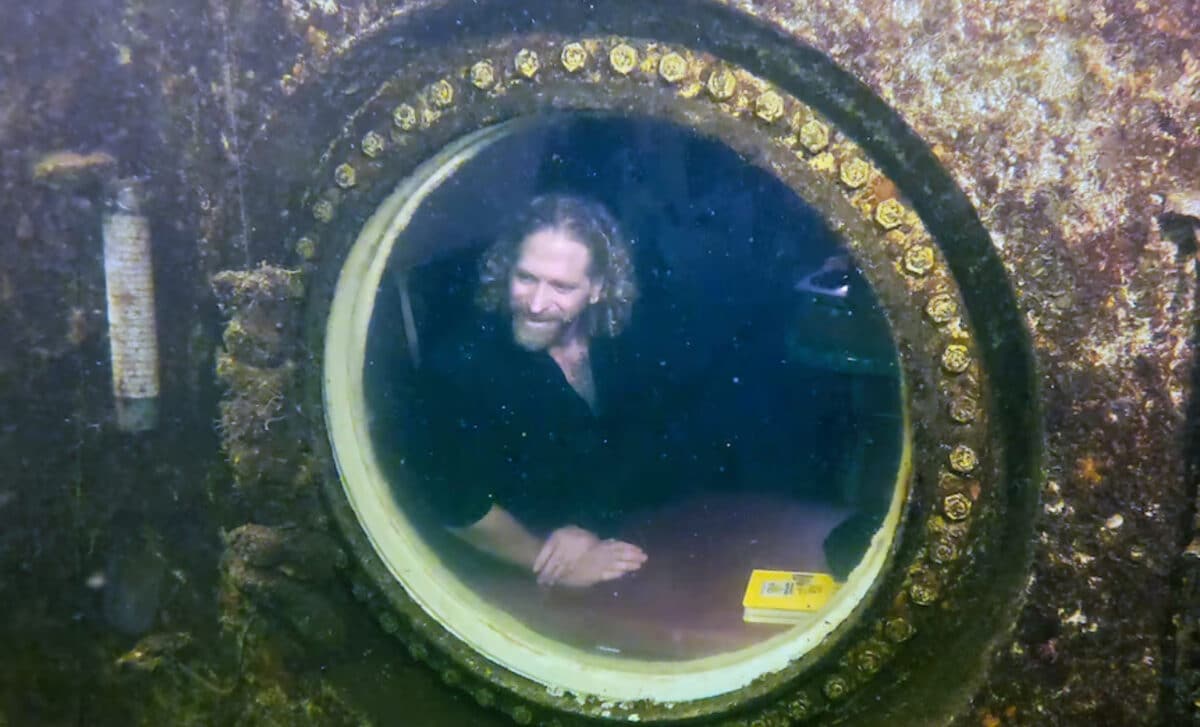 Dr Joseph Dituri in the lodge – © Frazier Nivens/Florida Keys News Bureau
Despite those conditions, he described feeling unusually energized when he resurfaced. “I was on fire both mentally and physically,” Dituri said, attributing the sensation to the hyperbaric environment.
Medical testing during and after the mission revealed several changes. Dituri said he lost eight pounds without altering his diet and saw his cholesterol level fall by 72 points. He also reported that inflammatory markers and cortisol levels dropped sharply during the experiment.
One result surprised him more than the others. “Seven times the testosterone,” Dituri said. Increased testosterone levels in men have been associated with higher energy, improved sexual function, and greater muscle strength.
Sleep and Brain Activity Changed in the Pressurized Habitat
Before relocating underwater, Dituri attempted to recreate the habitat’s conditions at his home in Tampa. He blocked sunlight from entering the house and lowered the indoor temperature so he could compare sleep quality between the two environments.
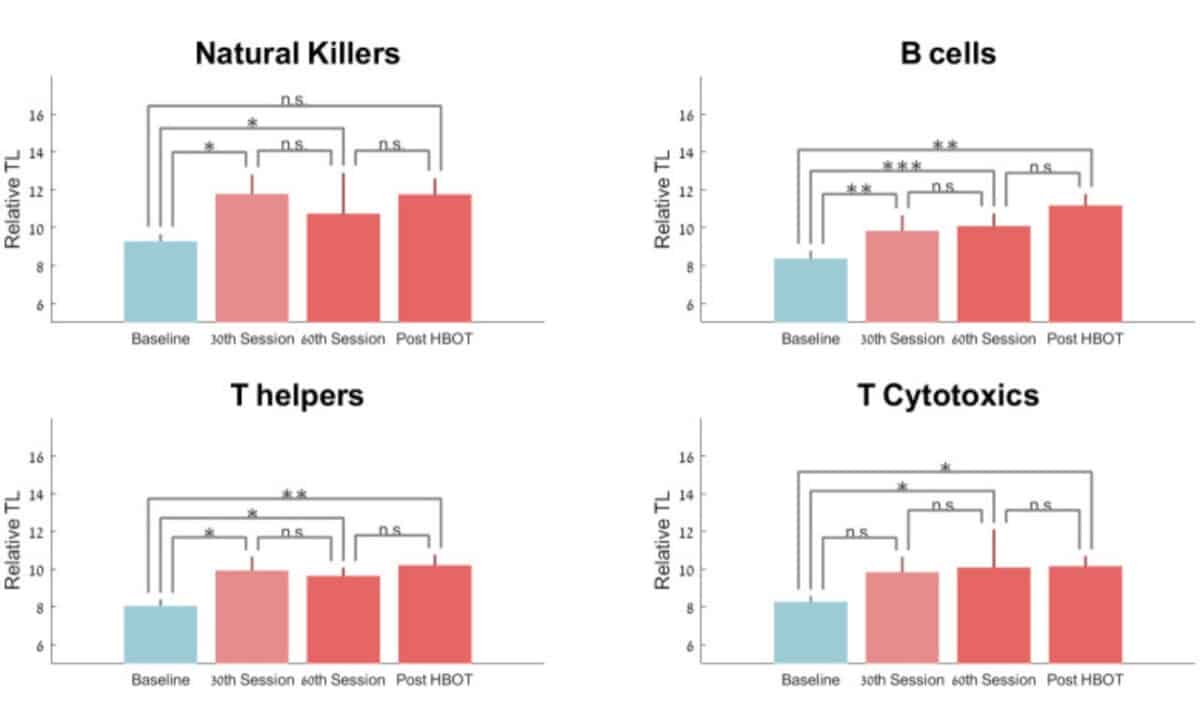 Telomere length changes with HBOT – © Aging
Dituri recorded twice as much REM sleep underwater as he did at home. He said the difference translated into significantly better rest during the mission. The changes also appeared in neurological testing. Electroencephalogram scans showed increased coherence in his brain activity, a measure associated with stronger communication between neural networks. “All these things in one fell swoop was absolutely incredible,” Dituri said of the combined findings.
The pressure conditions also produced at least one negative physical effect. Dituri said he lost three-quarters of an inch in height because the pressure compressed the vertebrae in his spine. He later regained the lost height by hanging upside down daily for several months after the experiment ended.
Researchers Question Claims About Reversing Aging
Following the mission, Dituri argued that hyperbaric oxygen therapy could help slow or reverse aspects of aging when combined with healthy habits. He said he believes a month-long protocol involving daily 45-minute HBOT sessions could reduce a patient’s age by 10 years.
“I want to be really clear about this: This is a one-shot wonder,” Dituri said. “Not only does it reduce your age, but it gives you the ability to live longer.”
Some specialists challenged those conclusions. Neal Pollock, a diving physiology expert at Laval University in Canada, pointed out that many patients already undergo daily HBOT sessions for weeks at a time under approved medical treatments.
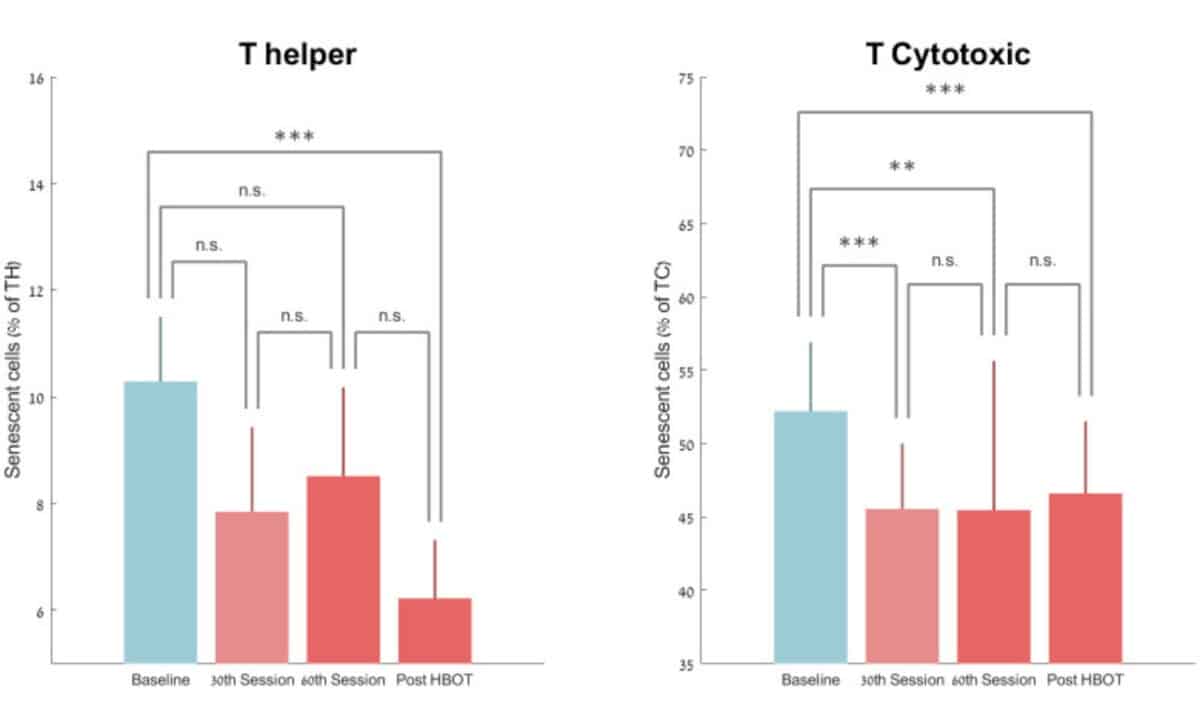 Senescent cell changes with HBOT – © Aging
“There is no evidence of systematic changes in life expectancy,” Pollock said. “Efforts at extending youth simply have not been borne out.”
Israeli researchers whose earlier work linked HBOT to telomere lengthening later stated that their study had been widely misinterpreted and did not demonstrate that patients would live longer because of the treatment.
Kinjal Sethuraman, medical director of the Center for Hyperbaric and Dive Medicine at the University of Maryland Medical Center, said she would not recommend expensive HBOT sessions solely for anti-aging purposes. According to Sethuraman, money would be better spent on “healthier food, regular exercise, reducing stress, restorative sleep, and being part of a community.”
Dituri is now involved in a larger research effort through the Arizona State University Healthspan team, which is participating in the $101 million XPRIZE competition focused on extending healthy human life by 20 years. The project will involve 200 participants using a custom-built multibaric chamber designed to simulate environments ranging from the summit of Mount Everest to deep underwater conditions.
“My 100 days underwater was a great start, but that was an n of one,” Dituri said. “There are 200 people in this study. That’s real, solid research.”