
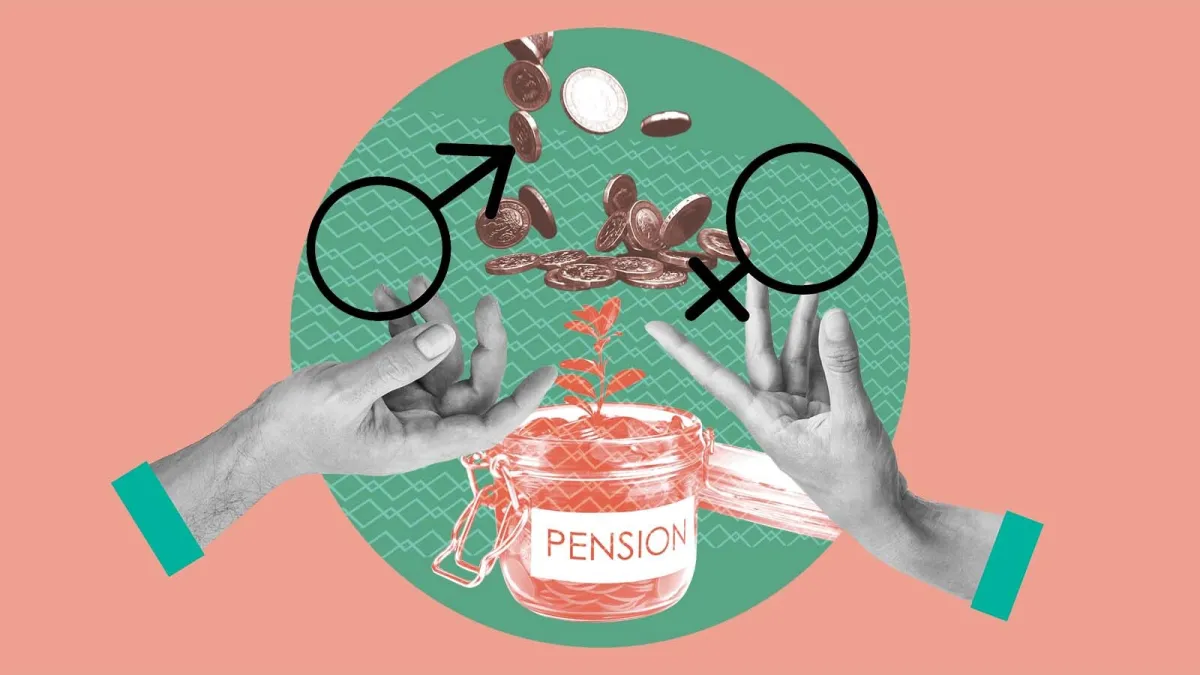
Women retire with an average of 48 per cent less wealth than men — and it’s a gap that begins to open up at the age of 28.
A survey of 2,000 people by the investment platform AJ Bell suggested that was the time when women’s pension contributions started to fall behind as they prioritised other financial goals, such as saving for a house.
Just 8 per cent of women aged 28 named retirement as a financial priority compared with 22 per cent of men. AJ Bell said its findings suggested that women did not start to place the same importance on their pension as men did until they were 41, at which point the gap was already too big to fill.
Money newsletter
The latest personal finance and investment news from our money team.
Sign up with one click
Some 21 per cent of women aged between 29 (the average age at which women have their first child) and 40 said that they worked part-time, compared with 5 per cent of men.
Charlene Young from AJ Bell said: “At 28, many women will be starting to think about getting married or starting a family and graduates might also be looking over their shoulder at their student debt balance.
“As many take career breaks, cracks start appearing from missed or lower contributions in the key years when pension growth is so important. These cracks manifest as a chunky gender pension gap by retirement.”
The shortfall is exacerbated by the gender pay gap, with women in full-time employment paid 7 per cent less than men on average, meaning that they also save less into their pension.
Thanks to the introduction of auto-enrolment in 2012 most employees automatically pay 5 per cent of their income into a workplace pension, and their employer pays in at least 3 per cent.
Those earning less than £10,000 a year are excluded from auto-enrolment, however, and the first £6,240 a year of your earnings are also exempt from contributions. This means that part-time workers and lower earners, more often women, may not benefit from auto-enrolment, and will contribute a lower proportion of their salary than higher earners if they do.
According to the insurer Legal & General, lower wages mean that women start their careers 16 per cent behind men in pension savings and by the time they are in their mid-fifties the gap can be more than 50 per cent.
The pension firm Scottish Widows calculated that the average woman retiring at 67 would have a pension fund £100,000 smaller than a man’s, translating into about £7,000 less retirement income a year. A woman would have to work about two decades longer than a man to close that gap.
‘Not having children has let me focus on my pension’
 Hollie Panther
Hollie Panther, 32, from Crawley in West Sussex, has been a committed pension saver since she started work after having the importance of thinking about retirement drummed into her by her aunt, who worked in the pensions industry.
By the time she turned 28, Panther had six pensions — a generous defined benefit scheme from her job as a teacher that will pay an income for life, and five defined contribution pots from earlier jobs, where what you get in retirement is based on your contributions and investment growth.
It was at this point that she decided to combine the small pots into her teacher’s pension despite the process taking a year and a half thanks to tricky admin from some of the pension schemes.
“Saving into a pension has always been a high priority. By 28 my partner and I had already bought our flat. Our mortgage costs were half what we had been paying in rent so we could save more for the future. We don’t intend to have children, so saving for that has never been a competing priority,” she said.
Panther, who is now a researcher in the education sector, worries that there is a tendency among her teacher friends to say they are bad with money and not engage with their pensions. “They’ve chosen a career not because of the money but because they want to make a difference, so to talk about money kind of goes against their values.
Panther said she has spoken about pensions with a handful of her friends but many of them see retirement as a long way off. She said some have a “set and forget” mindset, where they never increase their contributions, or check the performance of their investments.
Although she likes to stay on top of her pension, Panther does not have a clear goal for retirement. “I don’t really have a cut off at which point I want to stop working. But it would be nice to make work optional as soon as possible.”