
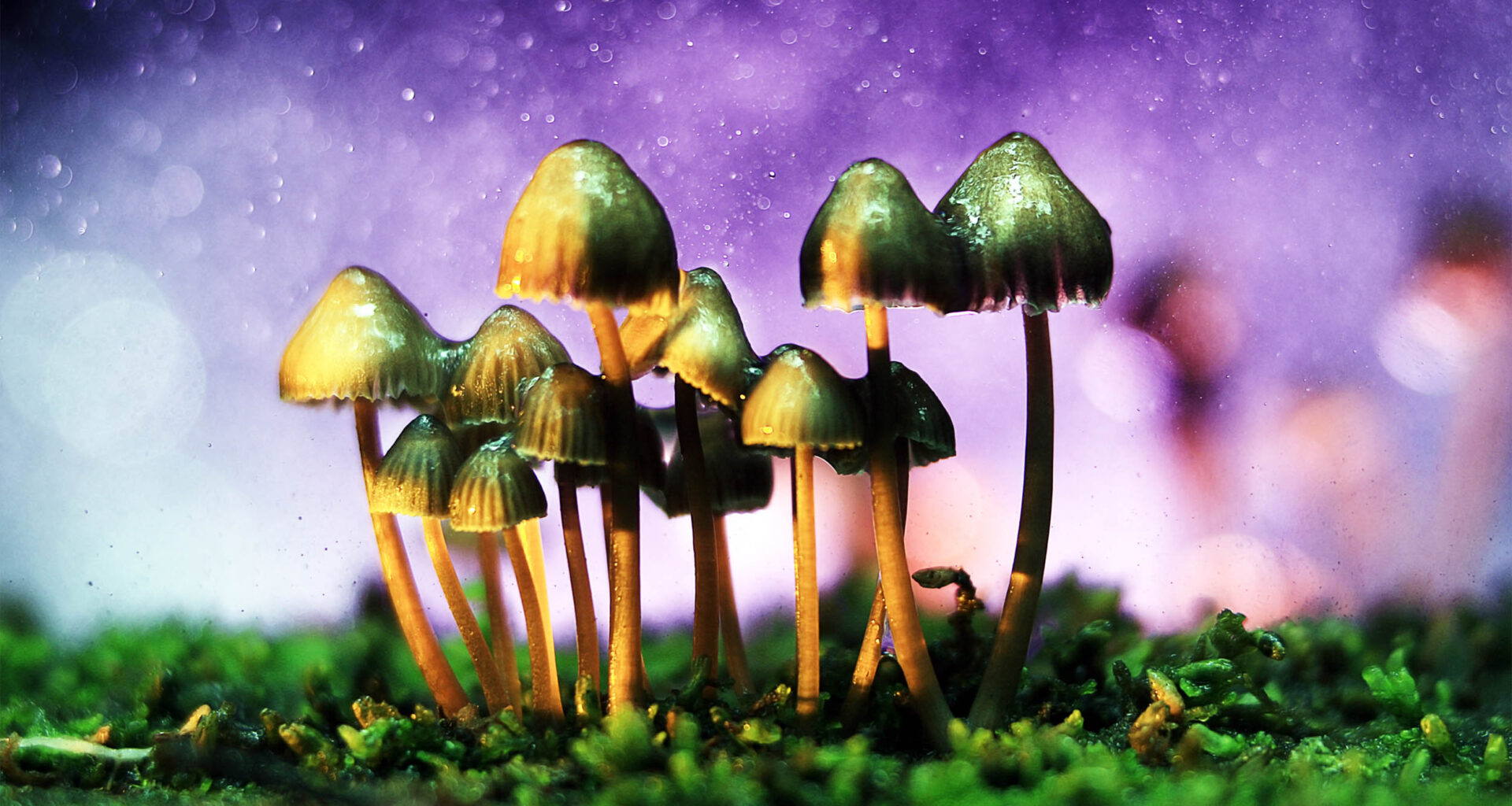
Scientists have identified a newly described African mushroom as the closest known wild relative of the world’s most widely cultivated magic mushroom, Psilocybe cubensis.
That discovery pushes their shared ancestry back about 1.5 million years and challenges the long-standing idea that the species spread globally only after cattle were moved across continents.
Finding Psilocybe ochraceocentrata

Across cattle-grazed grasslands in South Africa and Zimbabwe, mushrooms long assumed to belong to the familiar species revealed themselves as part of a separate evolutionary branch.
By comparing African collections with historical reference specimens, Breyten van der Merwe at Stellenbosch University documented that these mushrooms represent a distinct species now named Psilocybe ochraceocentrata.
Although the two species resemble one another in form and habitat, genetic evidence shows that their lineages split deep in the past.
That older evolutionary divide reframes how scientists think about the global history of the famous psychedelic mushroom and why its origins remain unresolved.
American origins of the magic mushroom
For decades, one explanation held that P. cubensis reached the Americas only after European settlers moved cattle into the Caribbean after 1493.
The new dating argues otherwise because the two mushrooms last shared a common ancestor about 1.5 million years ago.
Even the late edge of that estimate, about 710,000 years, still lands long before cattle domestication or modern humans.
That does not prove an American origin, but it makes a recent livestock delivery look far less convincing.
Dung shaped the path
Both mushrooms share a life built around herbivore dung, which gives them food as microbes break the waste into simpler nutrients.
That habit mattered because dung-rich ground let their ancestor follow grazing animals across expanding grasslands without needing forests.
Around the time their lines split, warm-climate grasslands were spreading and large herbivores were moving out of Africa into Eurasia.
Those broad ecological changes offer a plausible backdrop for separation, even though the exact route still remains unresolved.
Sorting out mushroom species
Sorting one mushroom from another often depends on type specimens, preserved reference examples that fix a species name.
By comparing African finds with those anchors, the team avoided a naming trap where lookalikes inherit the wrong identity.
That step also confirmed that the true P. cubensis name still belongs to the classic cultivated species first recorded in Cuba.
Clear naming may sound dry, but it sets the floor for every later claim about chemistry, ecology, safety, and law.
A strain that was mislabeled
One surprise sat in plain sight inside cultivation circles, where many growers already knew this African mushroom as Natal super strength, or Transkei.
Those labels had been treated as familiar variations, but the new evidence split them from standard P. cubensis.
“It’s one of the most popular strains of magic mushrooms, because it is quite potent and easy to grow. But until this study, nobody realized it was a totally separate species from the classic magic mushroom,” said van der Merwe.
That correction reaches beyond hobby culture because mislabeled strains can muddy product claims, regulation, and follow-up science.
Africa’s fungal gap
Across much of Africa, fungal surveying still runs thin, which means obvious organisms can remain unnamed for years.
A review of West African records found that reported fungal diversity captured only a sliver of what researchers expect to exist.
Sparse collecting creates blind spots where new species stay hidden and familiar names spread too widely.
That context helps explain why a globally grown organism could keep a close African relative off the books for so long.
Likely habitats over millions of years
To test where these mushrooms could have lived, the researchers compared climate-linked records across continents and across time.
After filtering public databases, they worked with 1,001 usable P. cubensis records, only 12 of them from Africa.
Those maps pointed to likely habitat across parts of Africa, Asia, and the Americas over the last 3 million years.
Such modeling cannot prove where the species started, but it shows old ranges were broader than modern records suggest.
The significance of species names
Species names are not just labels when labs, growers, and regulators use them to connect results to a living organism.
A wrong name can hide real differences in genes, chemicals, and habitat, which then blurs claims about potency or behavior.
Because P. cubensis is used in both commercial cultivation and medical research, that blur can spread quickly.
Sharper identification gives future studies a firmer start, especially when researchers compare strains sold under different names.
Questions that still remain
No single map or clock can yet pin down the birthplace of P. cubensis with full confidence.
Current evidence leaves room for several histories, including older movement through Asia and perhaps an early American presence.
The authors stop short of declaring the Americas the source, even while the new timeline weakens the older cattle story.
That restraint matters because a cleaner answer will require many more verified specimens from regions that remain barely sampled.
This discovery recasts a famous mushroom as part of a deeper history tied to grasslands, grazing animals, and thin records.
The research also shows how much fungal biodiversity slips past science when regulation, poor sampling, and old names slow the work.
The study is published in the journal Proceedings of the Royal Society B: Biological Sciences.
Image Credit: Talan Moult
—–
Like what you read? Subscribe to our newsletter for engaging articles, exclusive content, and the latest updates.
Check us out on EarthSnap, a free app brought to you by Eric Ralls and Earth.com.
—–