
Your support helps us to tell the story
From reproductive rights to climate change to Big Tech, The Independent is on the ground when the story is developing. Whether it’s investigating the financials of Elon Musk’s pro-Trump PAC or producing our latest documentary, ‘The A Word’, which shines a light on the American women fighting for reproductive rights, we know how important it is to parse out the facts from the messaging.
At such a critical moment in US history, we need reporters on the ground. Your donation allows us to keep sending journalists to speak to both sides of the story.
The Independent is trusted by Americans across the entire political spectrum. And unlike many other quality news outlets, we choose not to lock Americans out of our reporting and analysis with paywalls. We believe quality journalism should be available to everyone, paid for by those who can afford it.
Your support makes all the difference.Read more
Cyber criminals are blackmailing schools with sexually explicit AI deepfakes of pupils created using photos taken from school websites, experts have warned.
Research published on Monday found that there is widespread awareness of the issue among UK schools, though few protections are in place. Of 250 teachers surveyed, nearly a quarter said that their school has already been affected.
The Internet Watch Foundation (IWF) said criminals had targeted schools by creating child sexual abuse material (CSAM) of real pupils using AI tools. They then threatened to publish the images if they did not receive money.
The UK’s National Crime Agency (NCA) issued a recommendation to educational institutions to remove any identifiable pictures of children from their websites and social media accounts.
“It is absolutely vital that schools nationwide rethink their policy around online images of their pupils,” child psychotherapist Dr Catherine Knibbs told The Independent.
“I have seen first-hand the impact this sort of crime can have on children. If you run a school, now is the time to act – rethink your photography policy before it is too late. And while you do so, use it as an opportunity to remind parents and guardians of the risks too.”
Some schools have already taken action by blurring faces of pupils, while a UK start-up unveiled a new safeguarding tool on Monday as a countermeasure to the emerging trend.
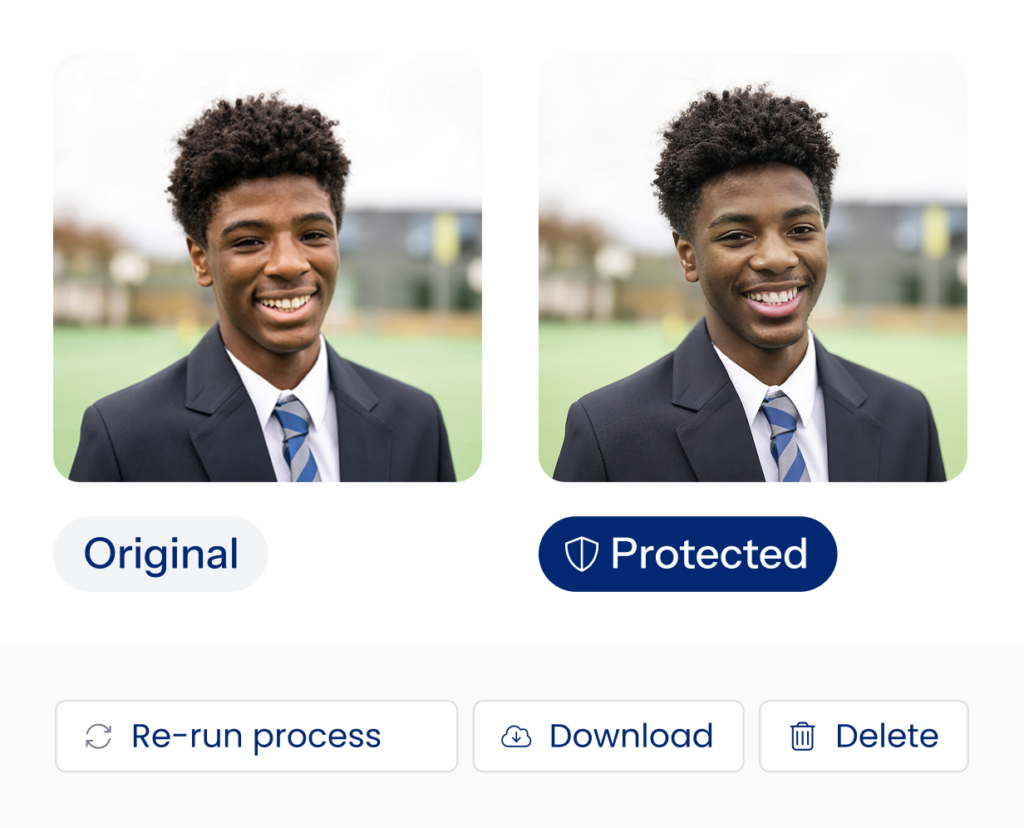 Aidos’s child protection tool creates an AI-generated version of online photos featuring school pupils (Aidos)
The platform, developed by child safety advocates at Aidos, uses artificial intelligence to make pupils in school photographs unidentifiable when posted online.

Award-winning security software you can trust. Always.
Get All-in-One Protection for Your Digital Life.
ADVERTISEMENT
Award-winning security software you can trust. Always.
Get All-in-One Protection for Your Digital Life.
ADVERTISEMENT
Each image of a face is replaced with an AI-generated one that matches the lighting, skin tone and context of the original, while remaining realistic.
“The online sexual abuse of children is reaching pandemic levels, and the emergence of AI is fueling the demand,” said Simon Bailey, the former national policing lead for child protection and adviser to Aidos.
“Aidos can prevent this form of sexual extortion in its tracks. I would urge every school leader in the country to act now. The technology criminals are using is already here, the question is whether schools are protected against it.”