
The manager told the Care Quality Commission that the cook had recently left abruptly and taken the cleaning rota
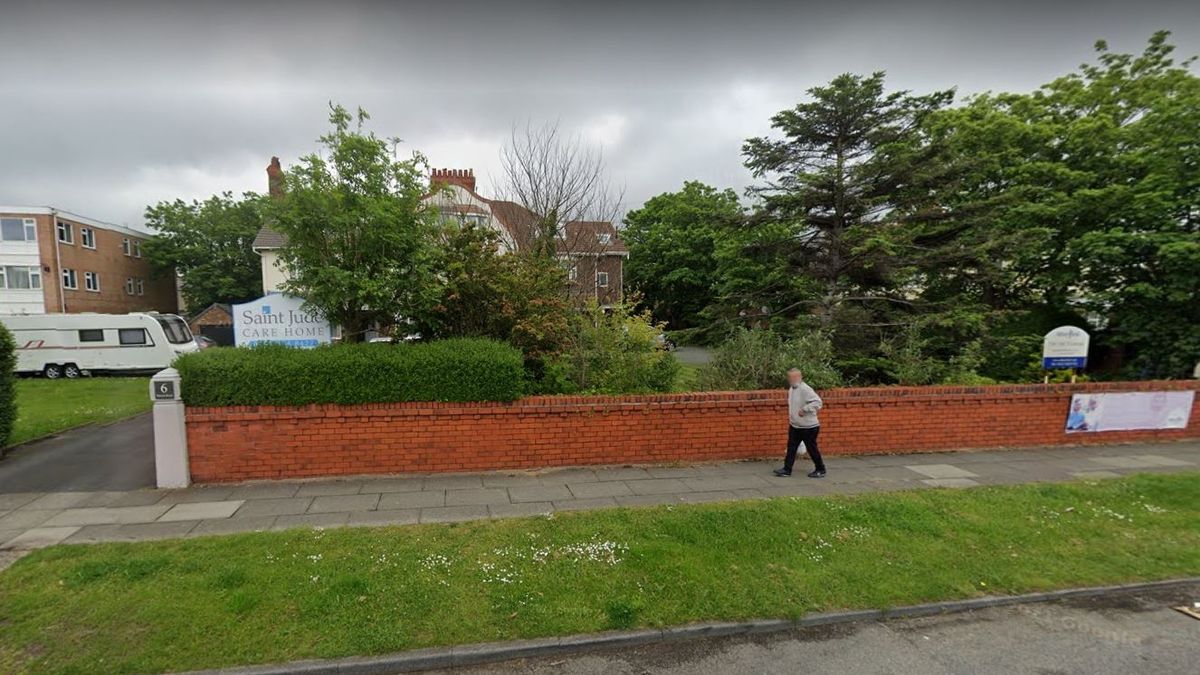
Saint Jude care home in Blundellsands, Sefton (Image: Google Street View)
A care home in Blundellsands said it is “disappointed” after an inspection found that it requires improvement with regards to safety, effectiveness, leadership and care.
Saint Jude Care Home was given this rating after the Care Quality Commission (CQC) found discarded food under kitchen cabinets and out-of-date food in the fridge and dry food storage areas. A report published on Friday stated that it did not always assess or manage the risk of infection and that several other areas of care also required improvement.
However, it also noted that relatives were generally satisfied; one said their loved one was “happy” in the home, residents felt safe and there were effective partnerships with healthcare professionals. Saint Jude’s management told the Echo that a “comprehensive improvement plan” has been put in place since the inspection.
The CQC found no cleaning schedules in place in the home, although most rooms appeared to be tidy. The kitchen, however, was unclean, with “visible food residues and debris” on equipment, and such issues appeared to be “longstanding”. The manager told the CQC that the cook had recently left abruptly and taken the cleaning rota and that the problems would be addressed without delay.
The CQC found the care home was safe, with evidence that residents were protected from abuse and avoidable harm, but the provider does not always have a “proactive and positive culture of safety based on openness and honesty”.
A system is in place to record accidents and other incidents, but the CQC said there was limited evidence to demonstrate how the collected information was analysed or used to drive improvement.
However, the report also stated that staff understand how to report safety incidents and that family members are informed when an incident affects their relative.
The inspection found a “collaborative working approach with healthcare professionals, and staff cared for people, knowing their likes and preferences”. Feedback from relatives was also “mostly good”.
Saint Jude’s systems of care were “safe”, continuity of care was ensured, and the provider was also detecting and controlling potential risks effectively.
However, there were “gaps in staffing” at times, meaning there were not always people with the “right skills, learning and experience” on shift.
Staff did not always receive “effective support and development”. Concerns raised in a team meeting in May and June 2025 about needed additional training had not yet been completed.
The care home also “did not always ensure safeguarding practices were consistently embedded”, although mental capacity assessments were completed when required.
The CQC stated that the provider “did not always work well with people to understand and manage risks” and that “staff did not always provide care to meet people’s needs that was safe, supportive and enabled people to do the things that mattered to them”.
“Staff knew people well but felt the quality and accuracy of written records did not always help them provide care consistently.
“The registered manager had an action plan to address the inconsistencies but had not yet managed to complete this,” the report said.
Finally, the CQC found that the care home did not always ensure medicines and treatments were “managed safely or in a way that met people’s needs, capacities and preferences”.
“There was no evidence medicine room temperatures were being monitored, despite a thermometer being available. This meant the provider could not be assured medicines were consistently stored within safe temperature ranges,” the report said.
In addition, medication risk assessments did not always give staff sufficient information. ”For example, a diabetes risk assessment lacked detail regarding signs of hypo or hyperglycaemia, limiting staff’s ability to recognise and respond to changes in a person’s condition,” the CQC found.
“There was no evidence of recent medicines audits, despite the registered manager reporting they had been completed. Blood pressure monitoring charts showed missing twice daily readings across several days, meaning staff were unable to demonstrate effective oversight of a known health risk.”
However, residents did “generally” receive their medicines safely and on time, the report stated, with “effective handover arrangements” in place between shifts and medication effectively concealed within food or drink for people who lacked capacity.
A spokesperson for Saint Jude said: “While we are naturally disappointed with aspects of the report, we fully accept that improvements were identified in a number of operational and governance areas, particularly around consistency of recording, and documentation processes.”
They pointed to the positive findings of the CQC report, including “positive feedback from residents and relatives, kind and compassionate staff interactions, effective partnership working with healthcare professionals and evidence that people felt safe and well cared for”.
“The report itself acknowledges that the service has experienced a period of management and staffing instability, and a new registered manager has been working to implement improvements,” they added.
“Since the inspection, a comprehensive improvement plan has already been put in place, including strengthened governance systems, enhanced auditing processes, additional oversight measures, and further staff support and training.
“Our priority remains the wellbeing, safety, and quality of care provided to residents, and we are fully committed to ensuring the required improvements are embedded and sustained.”
Saint Jude is a family-run care home which provides accommodation and personal care for up to 22 people, some of whom have dementia. It was rated as inadequate in 2021 and placed into special measures but made changes and has subsequently been rated as requiring improvement.
‘Requires improvement’ is the second lowest in the CQC system, coming below ‘good’ and ‘outstanding’ but above ‘inadequate’.