
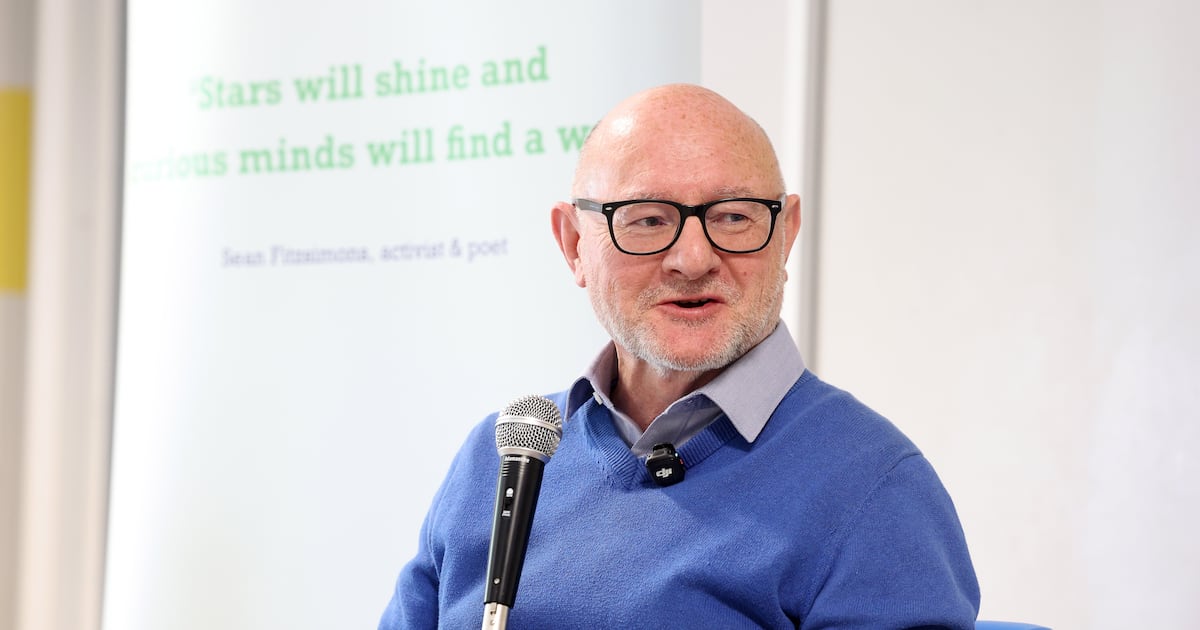
An internationally renowned psychiatrist has highlighted the mental health benefits of learning Irish.
Visiting west Belfast on Monday, Dr Pat Bracken argued that the “over medicalised” approach of mental health services throughout the UK and Ireland had become “a disaster”.
Previously a Clinical Director of mental health services in west Cork, he has also consulted for the World Health Organization as well as working in Uganda to support victims of wartime violence.
Describing himself as a ‘critical psychologist,’ his work challenges many of the current practices in mental health services.
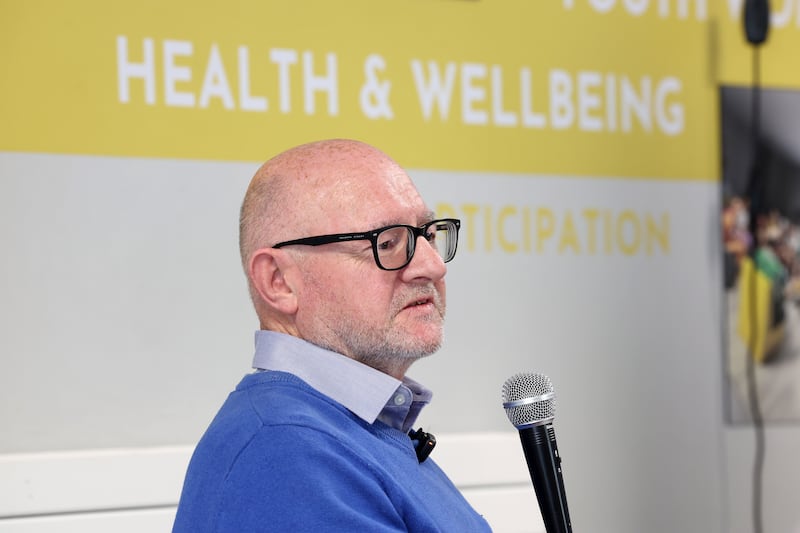 Dr Pat Bracken, a critical psychiatrist based in Cork at an event in west Belfast supporting New Script for Mental Health campaign to explore alternative solutions to the mental health crisis. PICTURE: MAL MCCANN
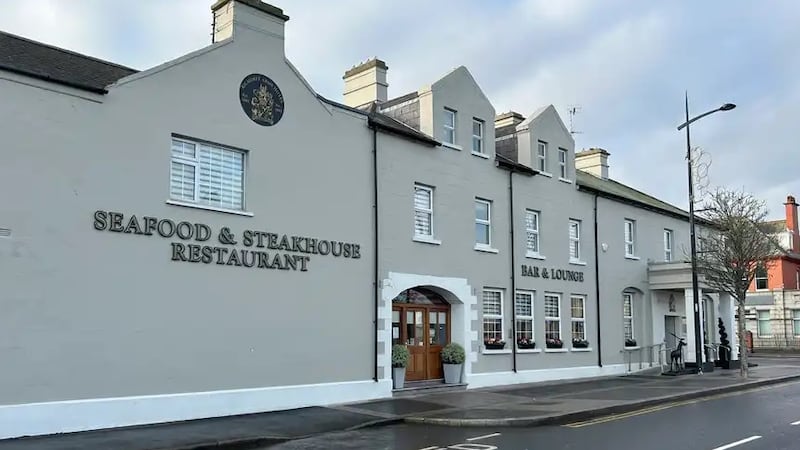

He was speaking at an event hosted by the Irish language organisation Glór na Móna and campaign group New Script for Mental Health.
The groups say that those in deprived areas like the Upper Springfield Road are too often limited to anti-depressants and six sessions of talking therapy “if people are lucky”.
Dr Bracken said this was having “a devastating impact” for both patients and staff in mental health services.
“I’m learning that there are a lot of difficulties, but there’s also a very strong sense of community in this part of Belfast,” he told The Irish News.
“People living here haven’t always found answers by asking the state, in fact for a long time all the people up here got from the state was trouble.
“So they have found their own solutions over the years, looking to one another for solidarity and that’s what I’m seeing here in the community groups.
“The Irish language is a very important part of peoples’ identity and it’s significant that Irish language groups are working with community groups around issues like mental health.”
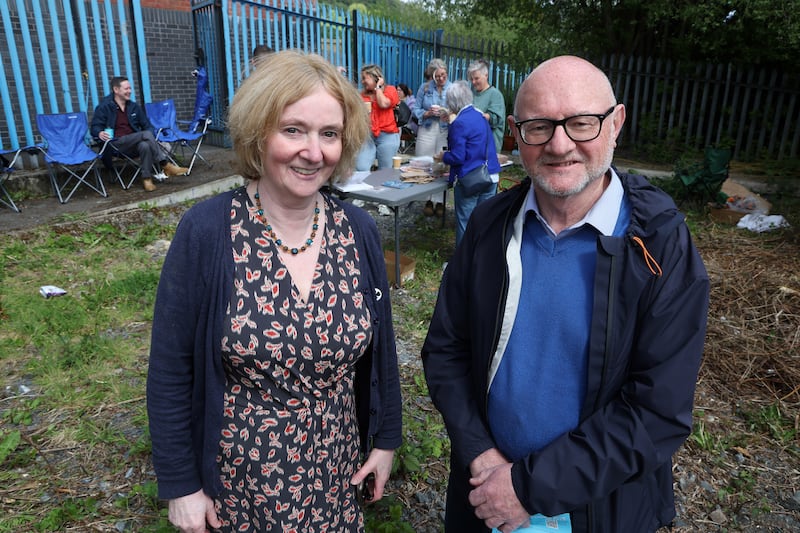 Dr Pat Bracken, a critical psychiatrist based in Cork with Sara Boyce from New Script for Mental Health. PICTURE: MAL MCCANN
He said the lack of funding for mental health services in Northern Ireland was also a common experience in the UK and Ireland.
“While some people have had very good experiences of mental health services, there’s no denying that there’s a large constituency of people who haven’t and even some who feel they have been harmed by their encounters with mental health services.
“They can’t be ignored, it can be difficult but we have to listen.”
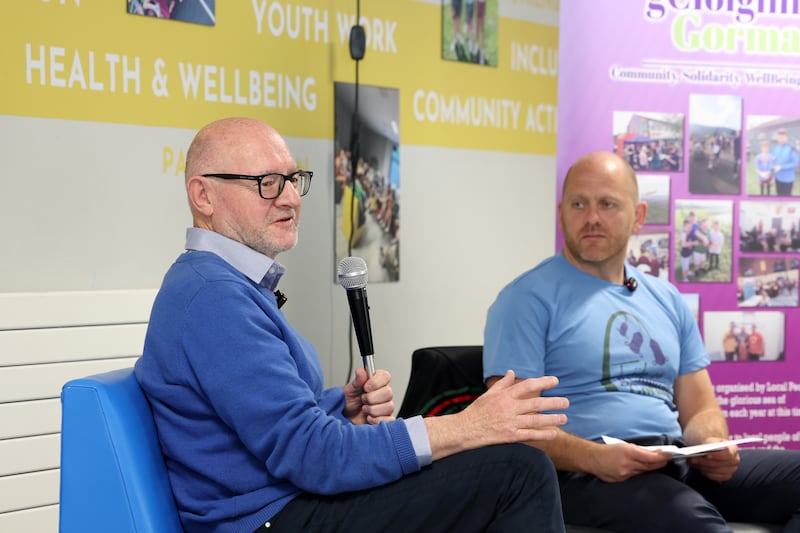 Dr Pat Bracken, a critical psychiatrist based in Cork with Feargal Mac Ionnrachtaigh at an event in west Belfast supporting New Script for Mental Health campaign to explore alternative solutions to the mental health crisis. PICTURE: MAL MCCANN
Part of his views were formed during three years with an NGO in Uganda in the late 1980s, helping to care for victims of torture.
“I learned there the limitations of highly individualised or westernised ways of looking at trauma and mental health problems,” he said.
“I started to learn about the importance of how indigenous communities have healing strategies and ways of supporting one another through very difficult times.
“I was a young doctor when I was there and that was a big learning point for me in my career.”
While accepting that many mental health patients legitimately need medication, he said this did not always have to be the case for “lesser states” of depression and anxiety.
“GPs are doing the best they can, but they’re under pressure for time,” he said.
“If we can get community solutions in place before people need to go to see their doctor, you can divert the river from flowing towards GPs.
“It can be the creative arts, outdoor activities like gardening or swimming in the sea. Learning a language is extremely important and people up here feel empowered when they connect with the Irish language.”
Maura Campbell from the New Script group also called a new community garden at Newhill Youth and Community Centre as “a perfect antidote” to many mental health problems.
“It helps people reconnect with themselves, with each other, and with nature, while bringing together everyone in the community, young and old,” she said.
“As an older local resident and New Script activist, this work fills me with hope for a radically different, more human approach to mental health – one rooted in community, connection and creativity.”