
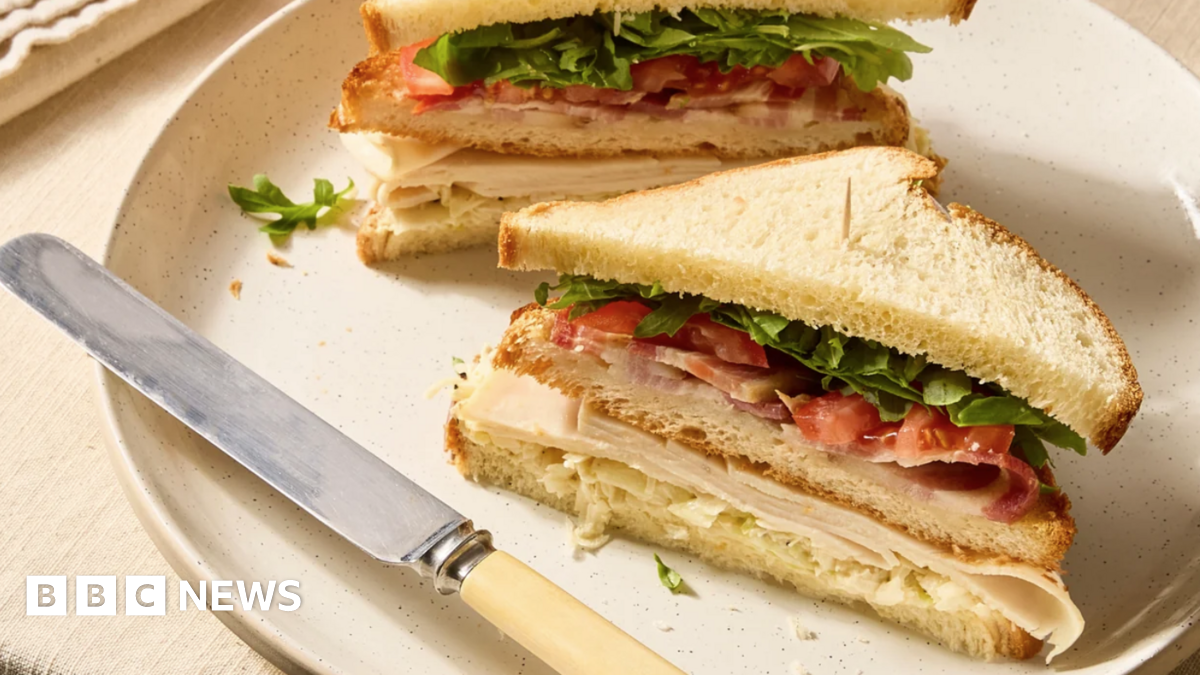
Sonia Pombo from Action on Salt & Sugar said people chose sandwiches for their “simplicity, convenience and affordability, but what they’re actually eating can be a full day’s worth of salt hidden between two slices of bread”.
She said it was “frankly unacceptable that some companies continue to sell sandwiches that exceed an adult’s daily limit in one go”.
The campaign group said high levels of salt were not inevitable, comparing a Pret A Manager chicken sandwich that contained 2.22g of salt with a similar one from Greggs that had only 1.1g. Or a pair of all-day breakfast sandwiches where Sainsbury’s kept the salt content to 1.54g while M&S used 2.65g.
An estimated 11.5 billion sandwiches are eaten in the UK every year.
Action on Salt & Sugar urged people to check the salt content on the packet, but said it was down to government to do more.
It said salt was “increasingly being overlooked” as the focus had shifted to tackling obesity and that voluntary targets for manufacturers to reduce salt content in food was a “failure”.
Dr Pauline Swift, a consultant nephrologist and chair of Action on Salt & Sugar, added: “Salt reduction is one of the quickest, cheapest and most effective ways to improve public health, yet progress has stalled.”
Dell Stanford, a senior dietitian at the British Heart Foundation, said: “This analysis shouldn’t put you off from enjoying a shop-bought sandwich occasionally, but there are ways to make your lunchtime staple healthier.
“Check the label and look for a sandwich with less salt and saturated fat, and ideally with lean protein and more fibre.”