
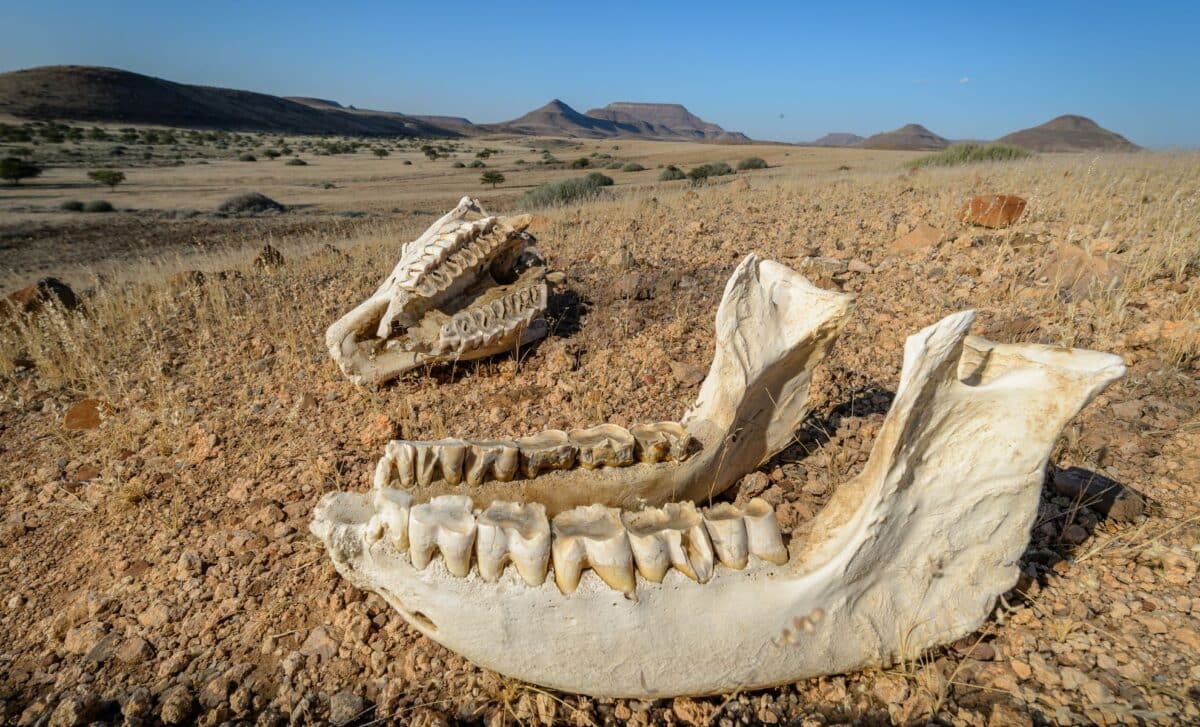
A study published in the May 2026 issue of the Journal of Human Evolution has found evidence that Neanderthals used rhinoceros teeth as tools to shape stone and process organic materials. The research, led by Alicia Sanz-Royo of the University of Aberdeen and colleagues, examined teeth recovered from sites in Spain and France, identifying patterns of wear consistent with deliberate, repeated use.
The findings extend what archaeologists already knew about Neanderthal material culture. While the use of bones and antlers as retouchers and hammers has been documented for some time, rhinoceros teeth had not previously been considered part of that toolkit. This study represents the first controlled experimental investigation into their potential use during the Middle Paleolithic in Western Europe.
Marks on Fossil Teeth Point to Intentional Use
The researchers focused their analysis on two principal sites: El Castillo in Spain and Pech-de-l’Azé II in France. At El Castillo alone, 202 rhinoceros teeth were recovered, 25 of which bore markings that had not previously been attributed to tool use. Under microscopic examination, those teeth showed grooves, notches, sliding marks, and scrapes consistent with repeated impact , patterns that could not be explained by chewing, natural weathering, or post-mortem damage, according to Science News.
To test their hypothesis, the researchers obtained teeth from modern rhinoceroses held at zoological reserves and used them to replicate tasks Neanderthals might have performed: shaping stone tools with the teeth as hammers, and cutting vegetable fibers and leather using the teeth as anvils. The wear patterns produced on the modern teeth closely resembled those found on the fossilized specimens.
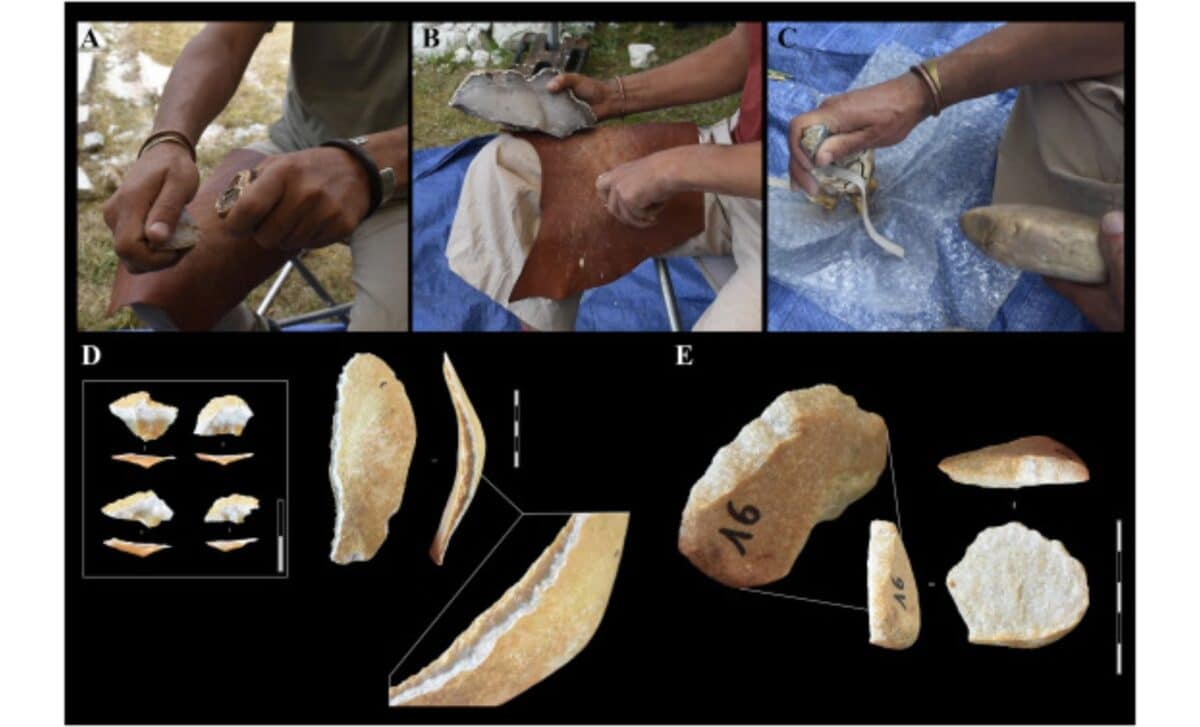 Rhinoceros tooth used as retouching tool and anvil during experimental replication of Neanderthal stone-working activities ©ScienceDirect
The experiments also revealed something about selection. Larger teeth with flatter surfaces proved the most practical, offering a stable platform for precision work. The distribution of use marks across different tooth types at the archaeological sites suggests that Neanderthals were not using whatever happened to be available, but were choosing teeth suited to specific tasks, a level of intentionality that the authors argue goes beyond opportunistic behavior.
“I had never found teeth with these types of marks. At first, I was quite skeptical,” Sanz-Royo told Science News. “This study is important because it opens the possibility that, in addition to bones and antlers, teeth (which are a superhard material) were also very useful.”
Wider Implications for Understanding Neanderthal Cognition
The study contributes to a broader and continuing reassessment of Neanderthal cognitive complexity. The concentration of teeth at these sites (particularly the 91 percent composition of isolated teeth in one layer at Payre, France) suggests that accumulation may have been intentional, rather than incidental to food processing.
José Ramos-Muñoz of the University of Cadiz, who was not involved in the research, noted the significance of the behavioral pattern the study describes. “This study shows that [Neandertals] not only ate the animals, but they utilized their remains for their technology,” he said. “It’s a trait of modernity.”
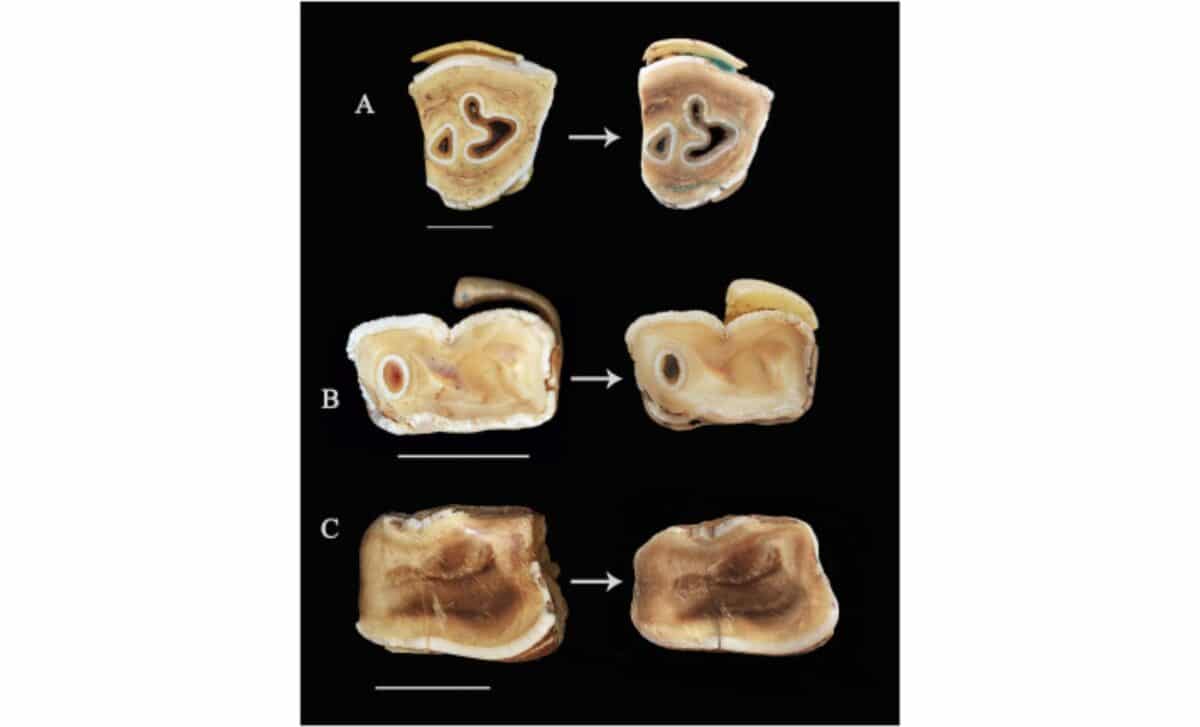 Rhinoceros tooth wear patterns before and after seven-day abrasion testing ©ScienceDirect
That framing reflects a shift in how researchers approach the archaeological record of Neanderthals. The capacity to identify materials with useful physical properties (hardness, durability, shape) and to match them to specific functional demands is not a trivial cognitive step. The Journal of Human Evolution study does not make sweeping claims about symbolic thought or language, but its findings fit within a body of work that has steadily complicated older assumptions about the cognitive gap between Neanderthals and anatomically modern humans.
The narrow-nosed rhinoceros, Stephanorhinus hemitoechus, coexisted with Neanderthals across much of Western Europe until the species went extinct roughly 40,000 years ago. The evidence now suggests that Neanderthals were not only hunting these animals for food but systematically incorporating their remains into daily technological practice, treating the carcass not as a byproduct, but as a resource.