
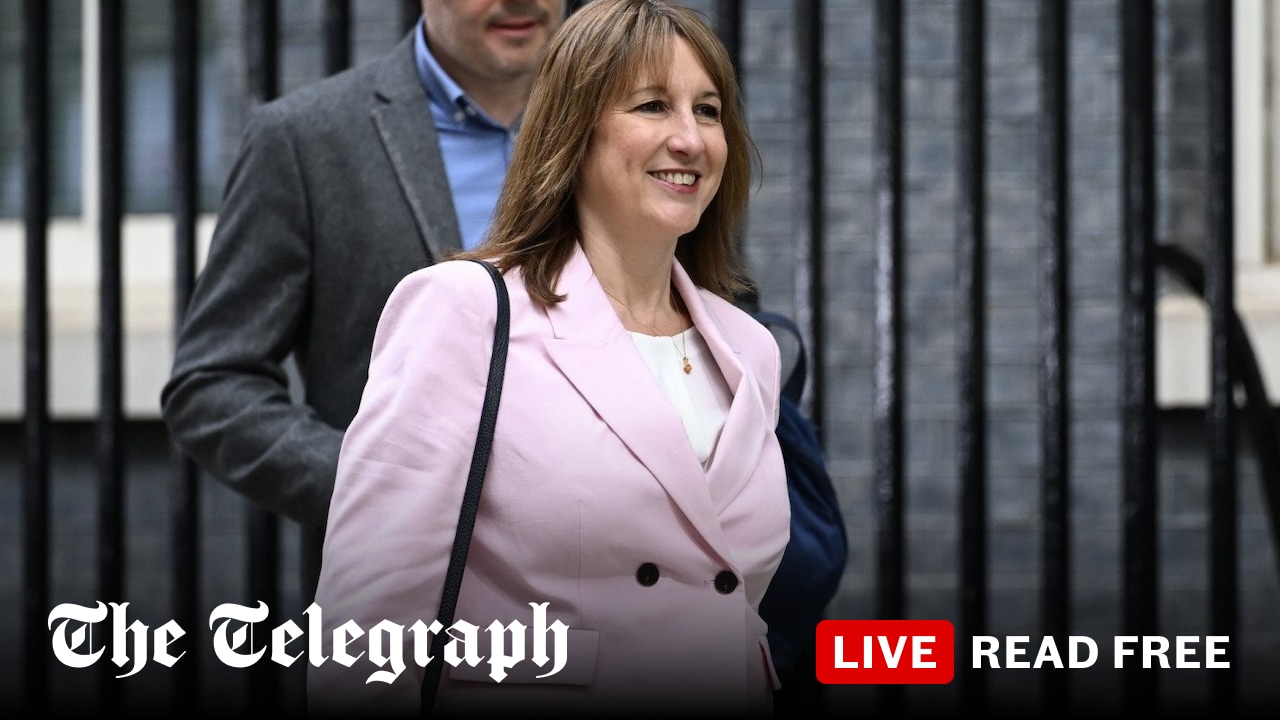
Thanks for joining me. Rachel Reeves faces a £12bn blow to the public finances over the leadership chaos surrounding Sir Keir Starmer, Goldman Sachs has warned.
The Chancellor will see her fiscal headroom – the breathing space she has to balance the nation’s books – reduced after the recent sharp surge in government borrowing costs, according to the Wall Street bank.
Borrowing costs have climbed around the world since the Iran war but the increases in Britain have been exacerbated by pressure on the Prime Minister to resign.
The yield on 10-year, the return the Treasury offers when it borrows from financial markets, surged to the highest level since 2008 on Tuesday. The yield on 30-year gilts hit its highest point since 1998.
Wes Streeting, a potential leadership challenger, will meet the Prime Minister in Downing Street for a showdown over Sir Keir’s plan to rescue the party after dire local election results and almost 100 calls from Labour MPs for him to resign.
James Moberly, an analyst at Goldman Sachs, said: “We find that some political risk premium has recently crept into the gilt market in recent weeks.”
The Wall Street bank expects the Office for Budget Responsibility to lower its growth forecasts for the British economy as higher energy prices also weaken potential economic output, also putting pressure on the public finances.
Taken together, it will wipe out around half of the Chancellor’s £23.6bn budget headroom – a blow of about £12bn.
Goldman Sachs said a new prime minister would increase the uncertainty over whether the Government was committed to reducing borrowing.
Mr Moberly added the possibility of a Labour leadership change “introduces greater uncertainty” around the Chancellor’s efforts to reduce the budget deficit, “given that it brings with it the risk of a shift in the fiscal rules”.
He said: “More broadly, policy choices will remain constrained by the challenging backdrop of rising spending pressures and an already elevated tax burden irrespective of any changes in leadership.” Here is what you need to know.
5 things to start your day
1) JP Morgan chief threatens to axe £3bn UK investment if Labour lurches Left | America’s largest bank warns it could review plans for new London skyscraper HQ
2) Labour blamed for delaying 100-million-barrel North Sea oil project | Energy company urges ministers to bring forward date of new tax system
3) Musk’s desire to control OpenAI was ‘hair raising’ | Sam Altman, the boss of the ChatGPT-maker, made the claim in a Californian court
4 ) Crisp bags turn black and white as snack giant runs out of ink | Japanese manufacturer switches to monochrome packaging amid Iran war supply shortages
5) Tony Blair’s daughter-in-law to run £500m government AI fund | Wife of former prime minister’s son appointed to lead investment committee
What happened overnight
Asian stocks fell as markets digested the lack of progress towards Middle East peace and setbacks that rattled the boom in AI technology.
Iran’s chief negotiator said on Tuesday that Washington must accept Tehran’s latest peace plan or face failure, after Donald Trump warned the truce in the Middle East war was on the brink of collapse.
Both sides have refused to make concessions and repeatedly threatened to resume fighting, but neither appears willing to return to all-out war.
Traders are now looking to China, where Mr Trump is due to land on Wednesday, the first visit by a US president in nearly a decade, saying he expected a “long talk” with counterpart Xi Jinping about Iran.
Hong Kong, Shanghai, Taipei, Sydney, Bangkok, Manila and Kuala Lumpur were all down on Wednesday. Jakarta fell nearly 2pc as the rupiah plunged to a record low.
The conflict in the Middle East has sent energy costs spiralling.
Traffic through the Strait of Hormuz – through which one fifth of the world’s oil supplies usually pass – has virtually ground to a halt.
But oil prices cooled during early Asia trade, with the international benchmark Brent crude down 0.6pc to $107 a barrel, while US benchmark West Texas Intermediate fell 0.5pc to $101 a barrel.
US stocks fell on Tuesday after a surprise surge in inflation hammered hopes of Federal Reserve interest rate cuts.
The US benchmark S&P 500 dropped by 0.2pc while the tech-heavy Nasdaq Composite fell by 0.7pc.