
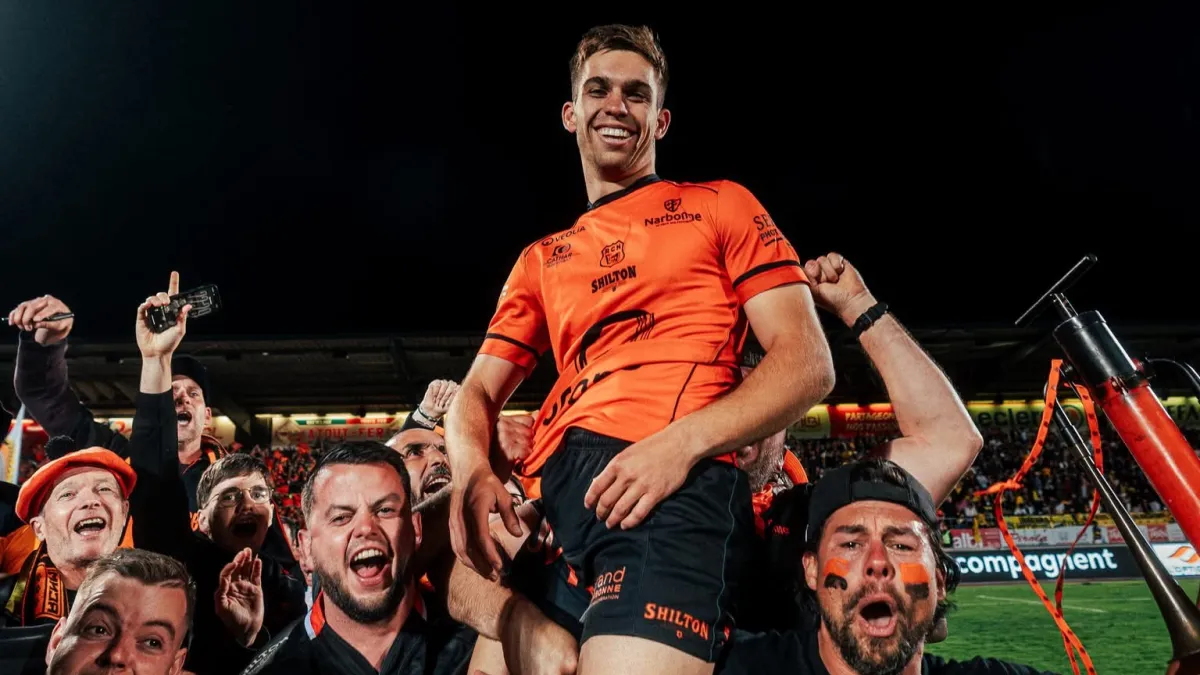
A fair few Argentinians course through the heart of Narbonne: Gonzalo Quesada, Mario Ledesma, Ignacio Corleto, Martín Scelzo. Axel Müller would not rank alongside them in most Puma recollections, yet for Racing Club Narbonnais he is immortal. As of four days ago.
The semi-final of the Nationale, the bridge league between amateur and professional rugby in France, concluded frantically. In the final minutes, Pierre-Hugo Ducom’s try and Tom Chauvet’s conversion for Narbonne were cancelled out by Mattéo Coustalat and Théo Vidal for Albi. At full-time it was 29-29. After 20 extra minutes produced no change, the occasion demanded a penalty shoot-out.
The first 12 kicks, in front of the posts from the 22m line, sailed through, including one by Naël Souid, the Narbonne flanker. The 13th effort by Téo Dospital, Albi’s full back, skewed left and up stepped Müller to win it 7-6. Away fans invaded the Stadium Municipal pitch and were wild. Albi were livid. Top of the third-tier table, knocked out by the team in fifth. Such is play-off rugby. Narbonne will face Nissa Rugby in the final on Saturday, one victory away from Pro D2.
Even in France, the only rugby nation sustaining a parochial pyramid, the modern picture is of big cities and grand plans. Narbonne embodies the old ways: smaller, rich in history.
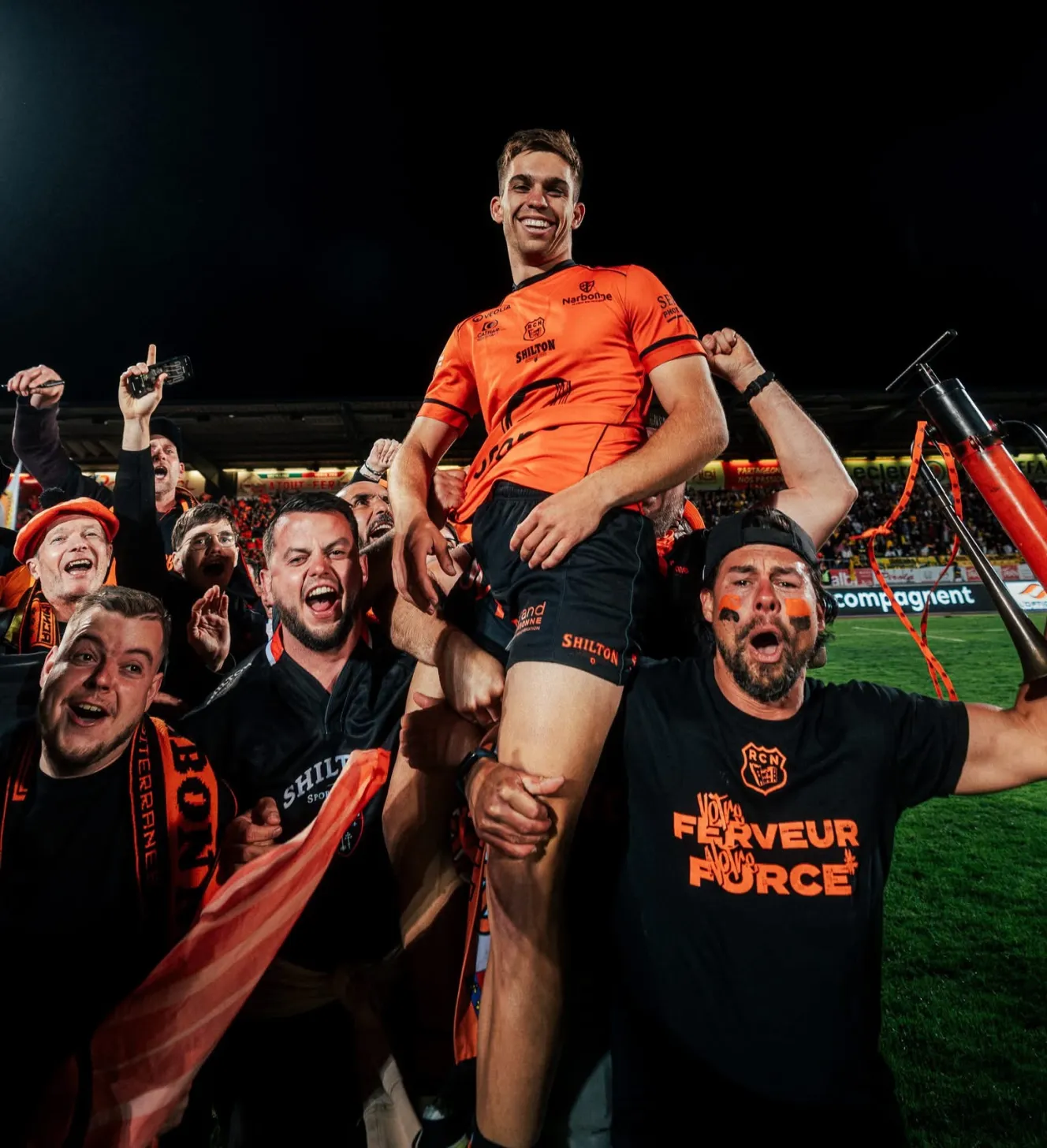 Narbonne are hoping to return to Pro D2 this weekend after a penalty shoot-out play-off winRC Narbonnais
“Small towns are finished.” That was the verdict of Walter Spanghero in 2018. The Grand Oualterre, one of six rugby-playing brothers, is a defining rugbyman at Narbonnais, alongside Jo Maso and Didier Codorniou. The orange and black of Narbonne, top-flight regulars, were relegated in 2007 and in 2018 they dropped into the third tier. Like Agen, Auch, Bagnères-de-Bigorre, Béziers, Bourgoin-Jallieu, Dax, Lourdes, Mazamet and Tarbes, a great rugby town appeared as Romanesque as the Palace of Archbishops on its crest.
I canvassed three Britons — Robbie Hutton, Steve Moore and Craig Yandell — who represented the club in the early years of professionalism. They paint Narbonne in the expected fashion, full of southern intensity. When France hosted England for a rugby league international in Narbonne in 1980, the referee Billy Thompson was locked in the changing room to avoid the post-match mob after he disallowed a late try for the hosts and had empty beer cans hurled at him. He saw the positives: “They might have thrown full ones.” Chapeau to The World of Rugby League by David Hodgkinson and Paul Harrison for that one.
Hutton met the Grand Oualterre once. “He was a very impressive Narbonne figure,” the former Richmond back-rower says. “He had hands that were like three times the size of mine. He spoke with a very strong Narbonne accent, very deep. He was someone who commanded respect straight away.”
Forget history at your peril in Narbonne, a vital Roman province at the intersection of the Via Domitia and the Via Aquitania. The rugby club was born in 1907, the year of a winegrowers’ revolt, and were national champions in 1936 and 1979. “Narbonne is a fairly insular town,” Hutton says. “It’s a little town. It’s a bit like Astérix. All the bigger towns around — Béziers, Perpignan, Carcassonne, or even Toulouse — Narbonne defends itself against these teams since the beginning of time.”
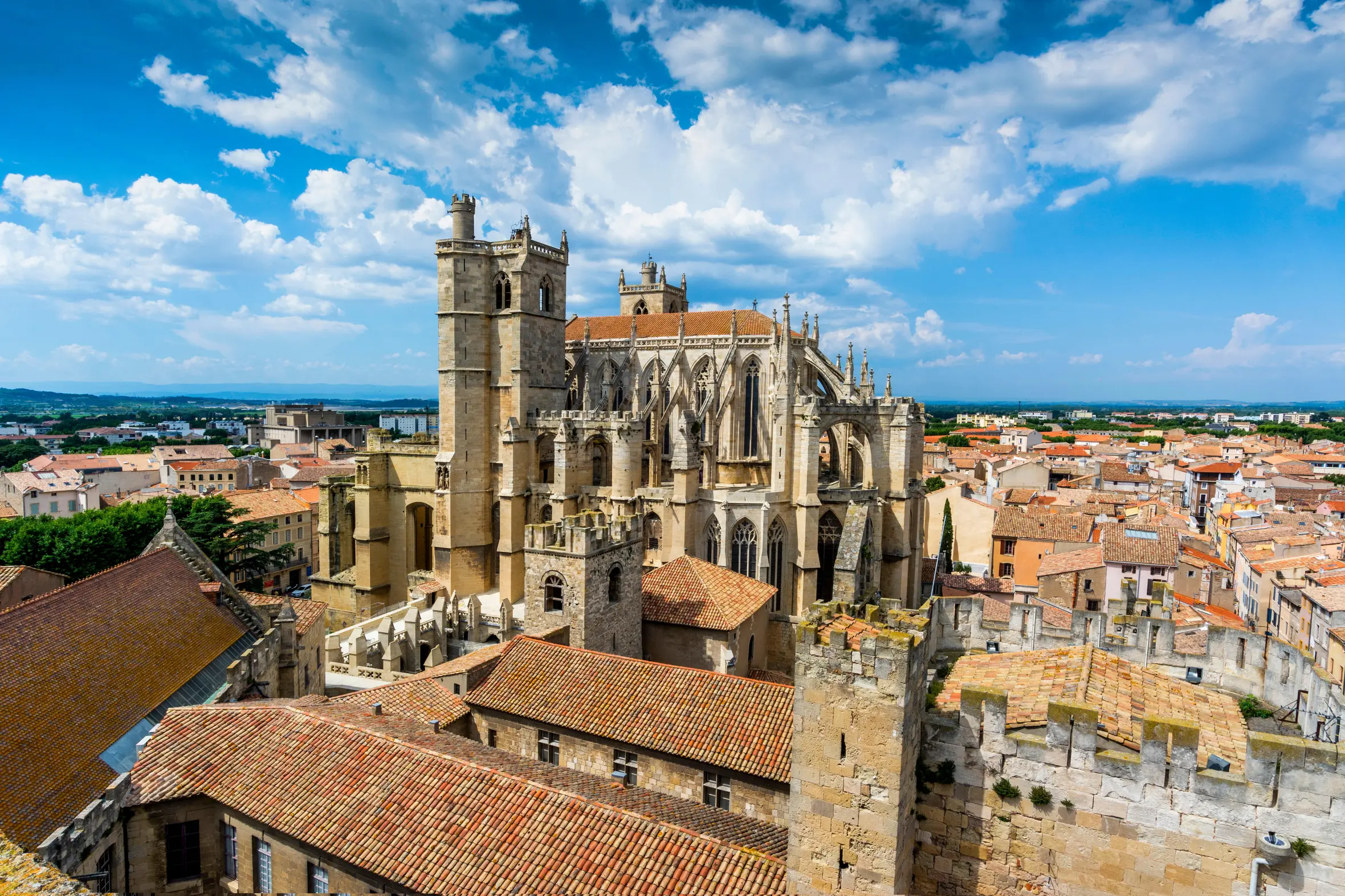 A town steeped in history, Narbonne has learnt to defend itself against the larger local sidesAlamy
One of the accusations levelled at Rocky Elsom was that he ignored history, taking down a photograph of the 1979 champions. The former Wallabies and Leinster flanker joined the club as a player and ended up as owner and president in 2015, a brief tenure said to be an association of opaque separation from the past, dividing club from town. Adding to the tragedy of the age was the death of Jerry Collins, who made eight appearances for Narbonne before a fatal car crash in June 2015.
The Elsom affair continues to generate headlines. He fled Ireland for Australia and his whereabouts were unknown last year when, in absentia, he was sentenced to two years in prison for misuse of corporate assets. Elsom denied the charges and said he was being treated as a scapegoat, having never been summoned to court. Two weeks ago he told Midi Olympique he would like to return to France to present his case, but feared he would be arrested and imprisoned during the appeal.
“What can we take away from this crazy adventure? That for the first time, we saw a rugby club ‘privatised’ in the worst sense of the word,” Jérôme Prévot wrote in Midi eight years ago. “The team with two Brennus shields and nine Challenge Yves du Manoir wins found itself managed like a kind of transit hub or marshalling yard. Its presence in the heart of Pro D2, far from the gaze of the mainstream media, undoubtedly contributed to this incredible experience, a stark reminder of professionalism at its most chilling.”
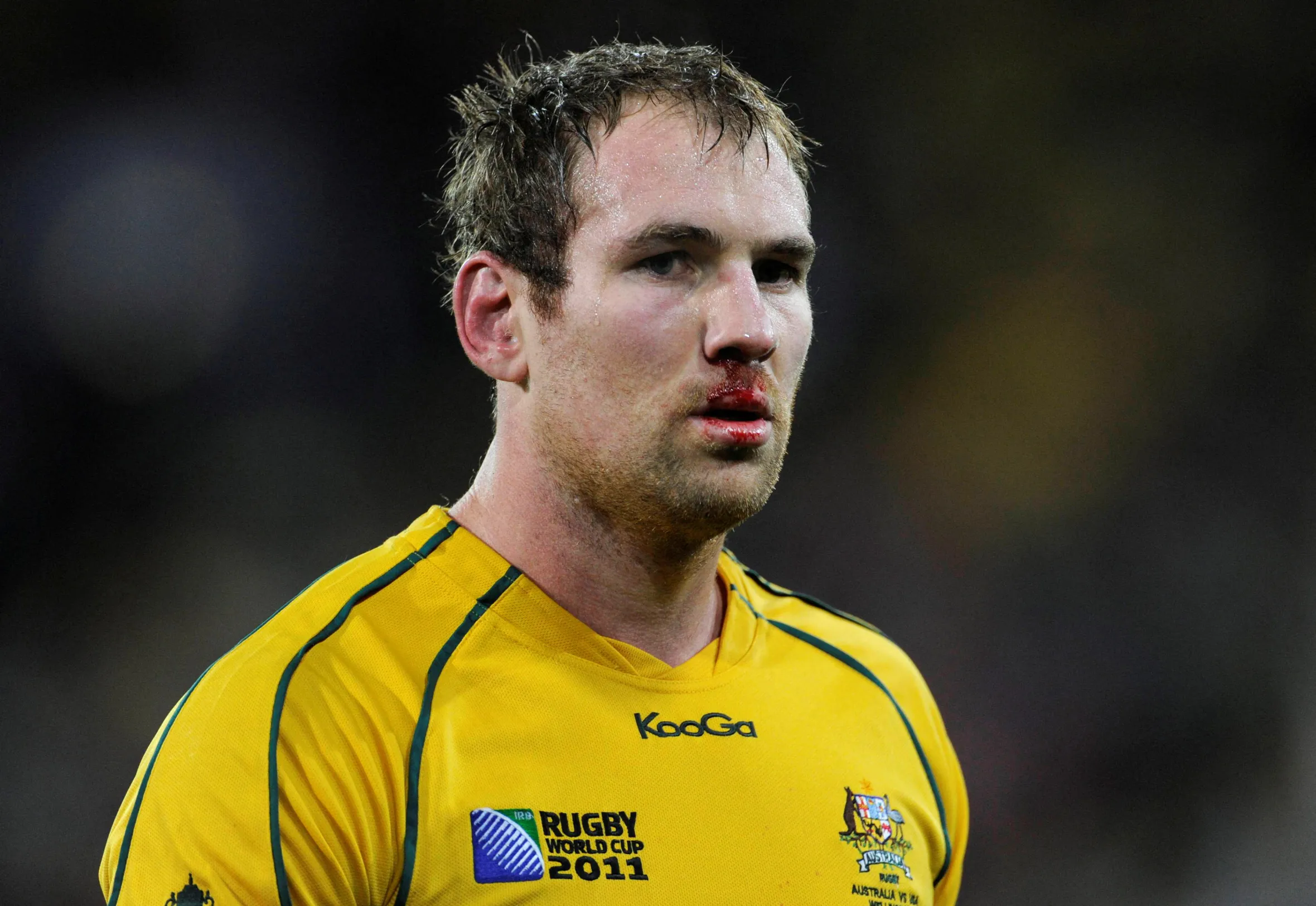 Former Australia international Elsom’s tenure at the club still generates headlines todayANTHONY PHELPS/Reuters
Given that recent history, the unity of town and club, and memory of stars in the sky, is paramount. There have been celebrations of players with 100 or more appearances for the club all season, and its “strategy of anchoring and transmission” is committed to “honouring one’s elders and maintaining the link between generations”, and “the values of rugby as a vehicle for social cohesion and civic engagement”.
Narbonne have come close to a Pro D2 return since 2021-22 — their solitary campaign back in the second tier, ending in 16th place out of 16. They lost to Nissa in the 2024 Nationale final, after which they also lost the promotion play-off 20-19 against Montauban. Last season Narbonne lost at the semi-final stage, in the Classic’Aude derby against Carcassonne, but victories in Massy and Albi have returned them to the showpiece this weekend.
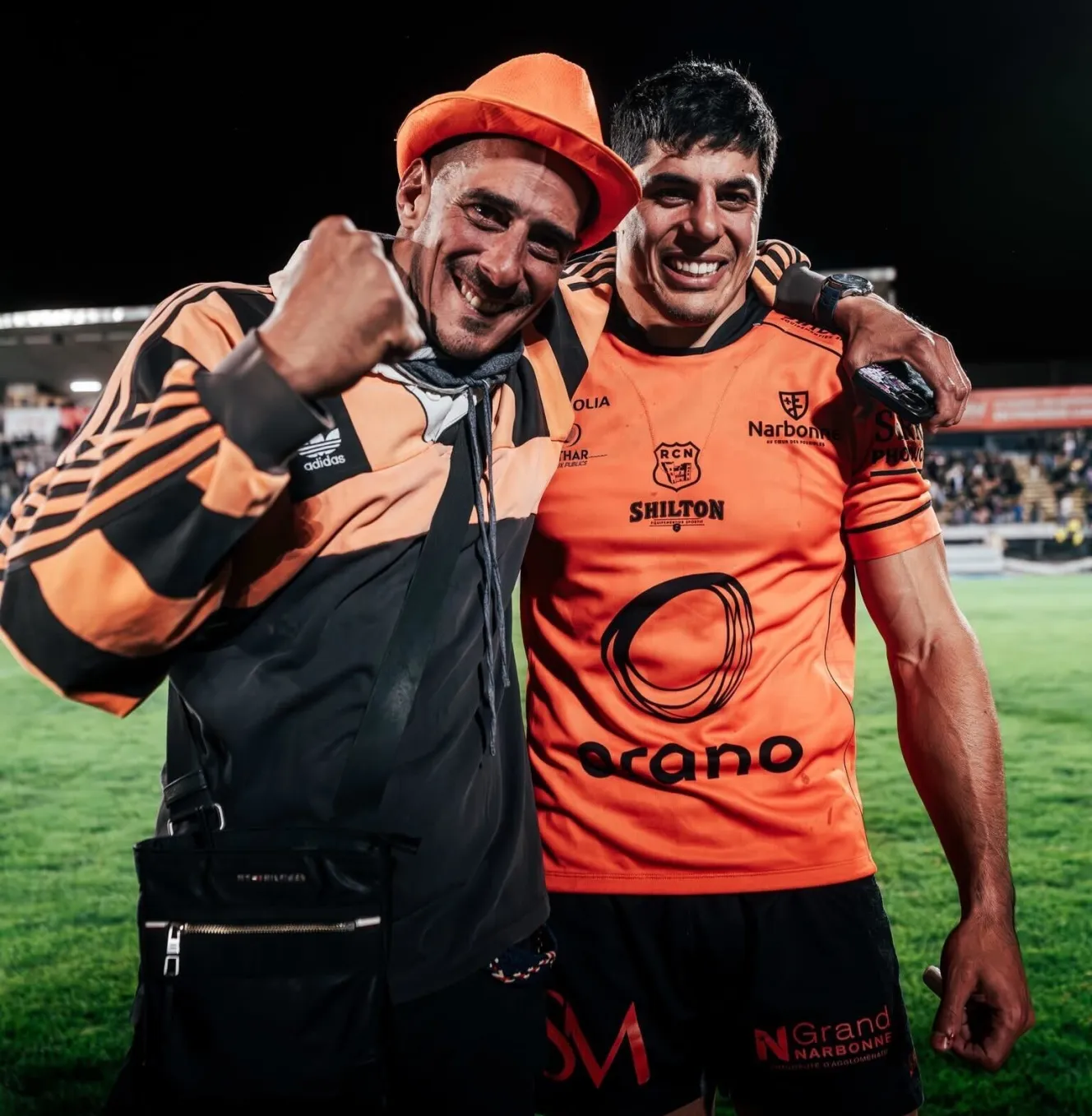 Müller, right, stamped his name into club immortality with his winning kick last weekendRC Narbonnais
Saturday’s final will take place in Bourg-en-Bresse, and those stuck in Narbonne will be able to watch at a fan zone at Parc des Sports et de l’Amitié. As they say in France: une finale, ça ne se joue pas, ça se gagne. A final is not played, it is won. The Spanghero brothers were the livid ones at Parc des Princes in 1974, playing but not winning, when Henri Cabrol’s late drop-goal won it 16-14 for Béziers.
André Belzons scored a try for Narbonne that day and his grandson, Paul, the third generation to wear orange and black, came off the bench in Albi. “Every year spent away from Pro D2 will be a slow death for the club,” Gilles Belzons — André’s son and Paul’s father — said in 2018. Sporting life and sporting death hinge on the swing of a leg.
Nationale final
Narbonne v Nice
Saturday, 5.30pm