
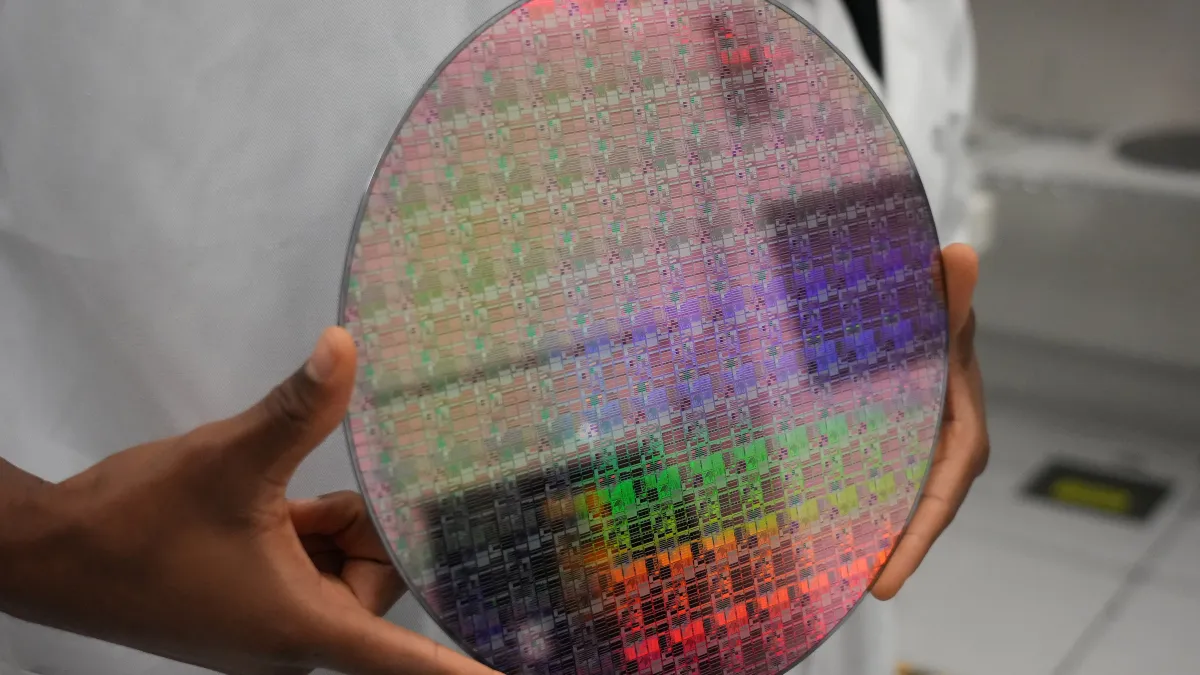
Applied Materials has forecast third-quarter revenue above Wall Street estimates, betting that heavy spending on data centres and AI infrastructure would sustain strong demand for its chip-making tools.
The world’s largest supplier of semiconductor manufacturing equipment, providing the machines and technology used to produce chips for electronics and AI, said it expects revenue of about $8.95 billion, plus or minus $500 million, for the current quarter, compared with estimates of $8.09 billion, according to data compiled by the London Stock Exchange Group.
Applied Materials, founded in 1967 by Michael McNeilly in California, reported that second-quarter revenue to April 26 was up 11 per cent at $7.91 billion, a record, against estimates of $7.65 billion.
Business newsletter
The business editor’s exclusive analysis of all the latest financial and economic news.
Sign up with one click
Net income rose 31 per cent to $2.8 billion, from $2.1 billion in the same three months a year ago.
Gary Dickerson, chief executive, said: “We now expect our semiconductor equipment business to grow more than 30 per cent in calendar 2026.”
The shares rose 4.9 per cent to $440.56 in after-hours trading following the results, released on Thursday night, leaving the stock 153 per cent higher over the past year.
Brice Hill, chief financial officer, said: “The growth in AI that Applied has been investing for is now in full force.”
The continuing AI boom is benefiting equipment suppliers such as Applied Materials, as building more powerful AI chips requires not only more silicon wafers but also more complex manufacturing processes.
Shares in Cisco Systems, the world’s largest supplier of wafer fabrication equipment for semiconductor manufacturers, rose by another 13.4 per cent yesterday to $115.53, a new record, after a 20 per cent jump in late trading on Wednesday, having reported hugely increased demand for its AI-linked networking equipment. The stock has risen by 88.5 per cent in the past 12 months.
Cisco has taken $5.3 billion in AI infrastructure orders from hyperscalers so far this fiscal year, and raised its full-year order expectation to $9 billion from $5 billion previously.
The company also said it would cut about 4,000 jobs, a bit less than 5 per cent of its global workforce. Chuck Robbins, chairman and chief executive, said the company needed to make “hard decisions” about how to capitalise on the AI opportunity.