
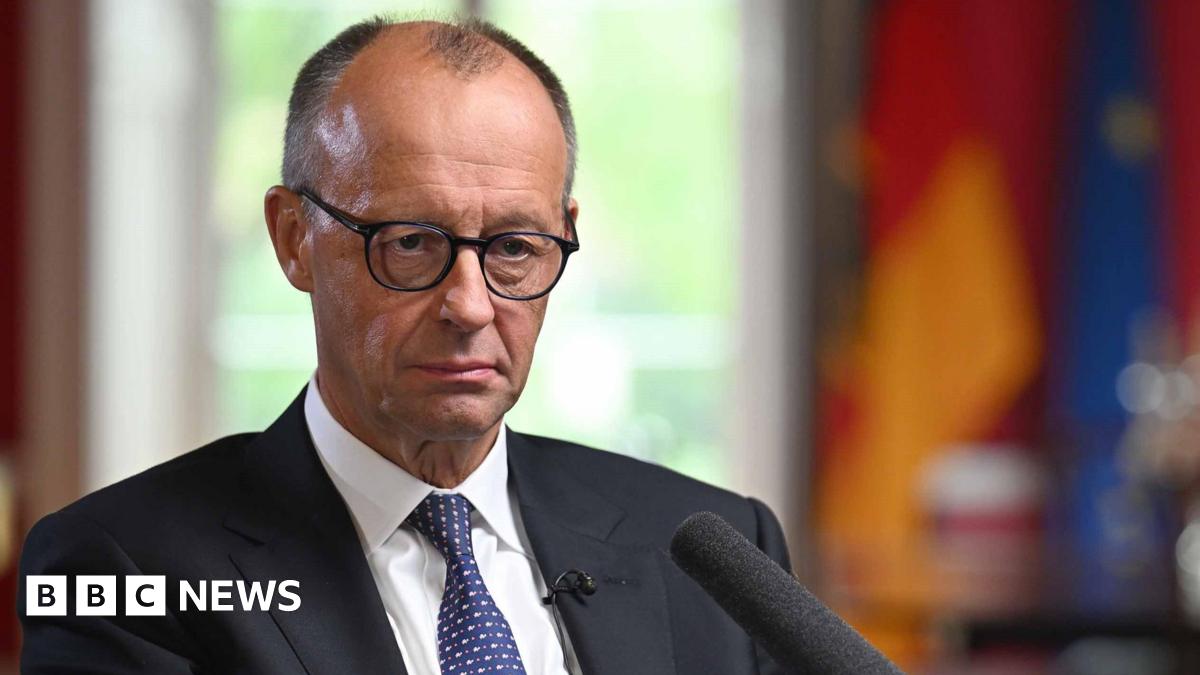
Merz told Nick Robinson, in his first UK broadcast interview as chancellor, that he had now met Trump three times and they were on good speaking terms: “I think President Trump is on the same page; we are trying to bring this war to an end.”
“We are on the phone once a week; we are co-ordinating our efforts. One issue is the war in Ukraine, and the second is our trade debates and tariffs.”
Merz was a vocal supporter of Ukraine on the campaign trail, and visited Kyiv months before he took Germany’s centre-right Christian Democrats to victory in elections in February.
Four days after he was sworn in early in May, he was on a train to Kyiv in a show of solidarity with Prime Minister Sir Keir Starmer and President Emmanuel Macron of France.
“We are seeing a big threat, and the threat is Russia. And this threat is not only on Ukraine. It’s on our peace, on our freedom, on the political order of Europe,” he warned.
In the run-up to the German elections, US Vice-President JD Vance shocked an audience at the Munich Security Conference with a list of accusations against European allies, including the UK.
Reflecting on the remarks, Merz said the government “had to draw our consequences out of that”. The message from Vance’s “very open manner” had, in other words, been heard loud and clear.