

An Israeli tech company has revealed the content of tiny particles it hopes will one day be used to combat global warming by scattering millions of tons of them into the atmosphere to reflect away sunlight, the New York Times reported Thursday.
Stardust Solutions had previously kept the makeup of its geoengineering particles a closely-guarded secret, protected with nondisclosure agreements.
As it turns out, they are made from amorphous silica, which is a food additive, and calcium carbonate, which is in eggshells and limestone.
The company, which is led by former figures from Israel’s nuclear program, on Thursday began publishing research papers on its product.
The idea is to disperse the particles at high altitude where they would reflect sunlight, cooling down the Earth.
Get The Times of Israel’s Daily Edition
by email and never miss our top stories
By signing up, you agree to the terms
“This is a very powerful tool that will be ready for testing very soon, and we want policymakers to start thinking seriously, ‘What will it take in practice?’” chief executive, Yanai Yedvab, told the Times.
So far, the company has only tested the particles in the laboratory and says it would not test them outdoors unless it were in partnership with a government to lay down the rules and limits of the test, according to the report.
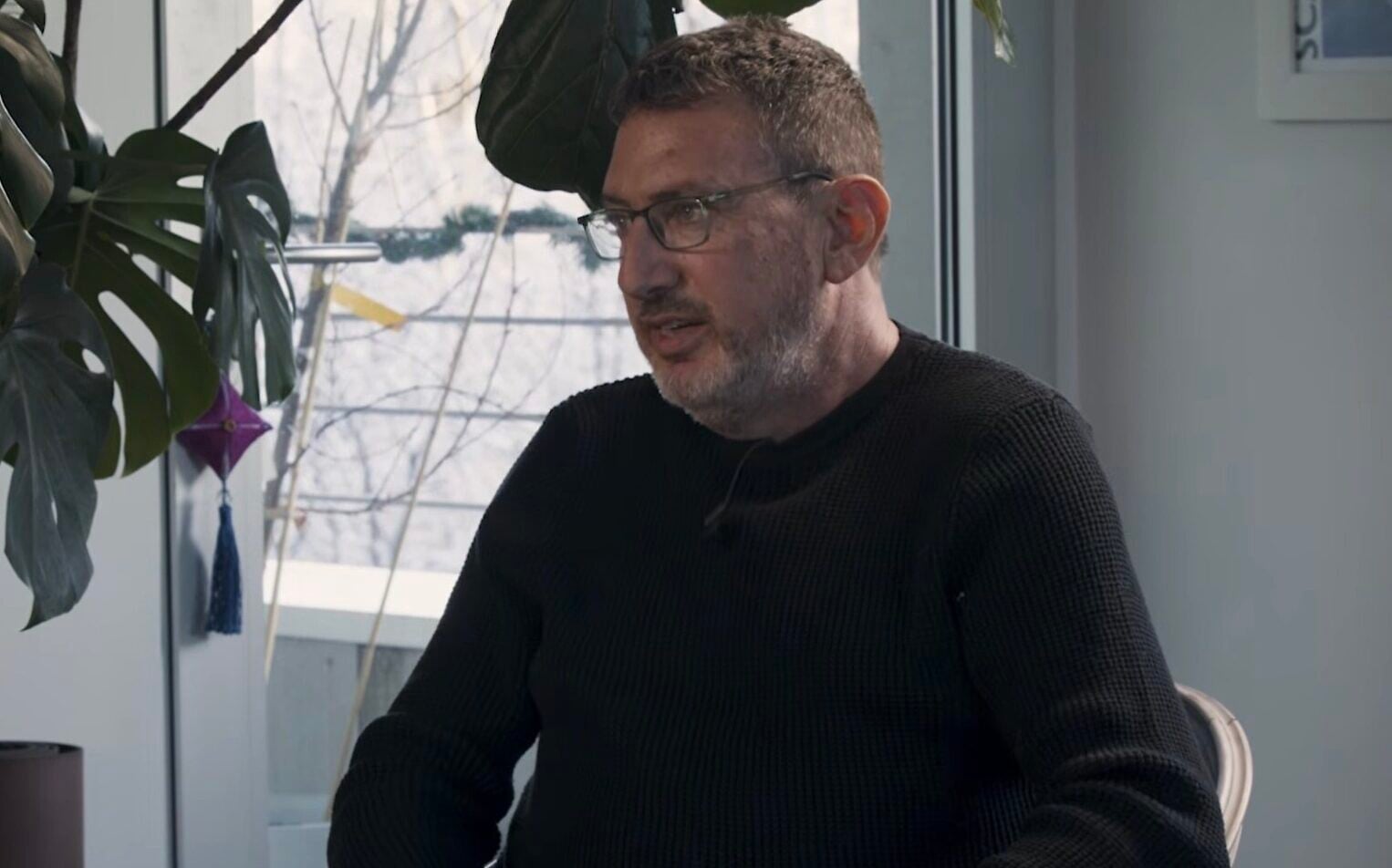
Screen capture from video of Yanai Yedvab, chief executive of Stardust Solutions, April 2026. (YouTube)
Founded in 2023, Stardust Solutions has pulled in $75 million in funding from investors and has applied for a patent. Registered as a US company with an Israeli subsidiary, it has a lab in Ness Ziona, south of Tel Aviv.
The company has two types of particles it is working on. The first could reflect up to one percent of the sunlight, while the second, still in the testing phase, could reflect more than that.
Stardust executives estimate that a starting project to begin cooling the atmosphere could cost around $10 billion. It would require some 10 million tons of particles dispersed over several years, aiming to cool the atmosphere by 1.5 degrees Celsius.
It says the particles are biodegradable, not harmful to people or animals, and would not build up in the soil or oceans.
However, the idea of meddling with the world’s weather faces pushback.
More than 600 scientists and academics have called for an international ban on such projects, while Tennessee and Florida have already banned geoengineering.
Critics cite concerns of unintended consequences and that artificially cooling the planet might lessen calls for countries and industries to cut back emissions that are causing climate change. However, in recent years, as global temperatures have gone up, many researchers and some environmentalists have been more open to studying solar geoengineering methods, the report said.
Prakash Kashwan, a professor of environmental studies at Brandeis University, has warned that solar geoengineering could alter weather patterns, impacting food production and economies.
He highlighted those who live in South Asia, East Africa, and Latin America, where annual monsoons are vital for crops.
“There’s this social risk for at least two billion people that is directly connected to the lack of scientific understanding about how interfering with the global temperature thermostat is going to interfere with the monsoon formation,” he told the Times. “We don’t have a solution for those kinds of risks.”
Which gorgeous bird do you prefer?

THIS MONTH ONLY: Join our reader support group for as little as $6/month and receive an exclusive tote bag featuring one of Israel’s native birds.
Choose between the Duchifat (orange), Israel’s national bird, or the Shaldag (blue), a beloved symbol of the Israeli landscape.
As a member of the Times of Israel Community, you’ll also enjoy:
An ad-free experience of our site and podcasts.
Exclusive access to award-winning films via DocuNation.
Weekly letters from founding editor David Horovitz.
Join ToI Community & claim my bag
Already a member? Sign in to stop seeing this
You’re a dedicated reader

That’s why we started the Times of Israel – to provide discerning readers like you with must-read coverage of Israel and the Jewish world.
So now we have a request. Unlike other news outlets, we haven’t put up a paywall. But as the journalism we do is costly, we invite readers for whom The Times of Israel has become important to help support our work by joining The Times of Israel Community.
For as little as $6 a month you can help support our quality journalism while enjoying The Times of Israel AD-FREE, as well as accessing exclusive content available only to Times of Israel Community members.
Thank you,
David Horovitz, Founding Editor of The Times of Israel