
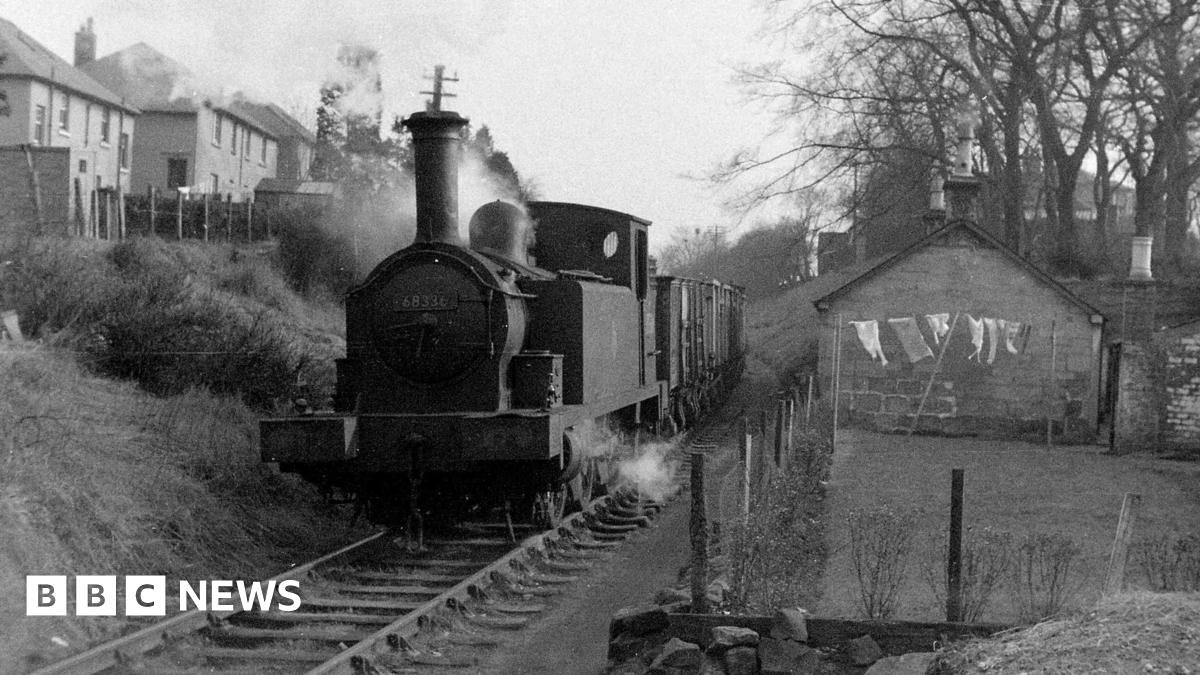
Martin, who has written books and articles about the Monklands and Kirkintilloch line, believes it was one of a small cluster of routes that essentially formed a testing ground for other railways across Scotland.
“People think that because I’m Kirkintilloch born and bred, that I exaggerate the importance of it, but I don’t”, he laughs.
“There’s some inaccurate myths about the line, and I’m happy to say that. For example, it was clamed the line used the first locomotive built in Scotland, but it wasn’t – it was the second one.
“The first one had actually been built for use at the Rainhill trials in 1829, although it was not successful. But by 1831 there were locomotives on the Monklands line.
“So the claims that have been made and are accurate about the line, they are truly worthwhile.”
Among these claims is that the line played a huge part in establishing the Coatbridge area as an industrial powerhouse.
Being able to transport coal quickly to canal boats, and then move it onwards to not just Glasgow but the likes of Edinburgh, helped the region as it became dominated by iron works and furnaces during the 1830s.
“You were able to really connect the coal field with industrial centres,” says Dr Alexander Tertzakian, a lecturer in political and international studies at the University of Glasgow.
“You had this linkage that now lowered the costs involved. There were transport links that had grown up before this with the canals, like the Monklands canal, but the railways really supplanted that, and undercut it to an extent.
“You had a situation where coal and iron ore was being transported to fuel burgeoning industries, and they really take off once you hit the 1830s.”