
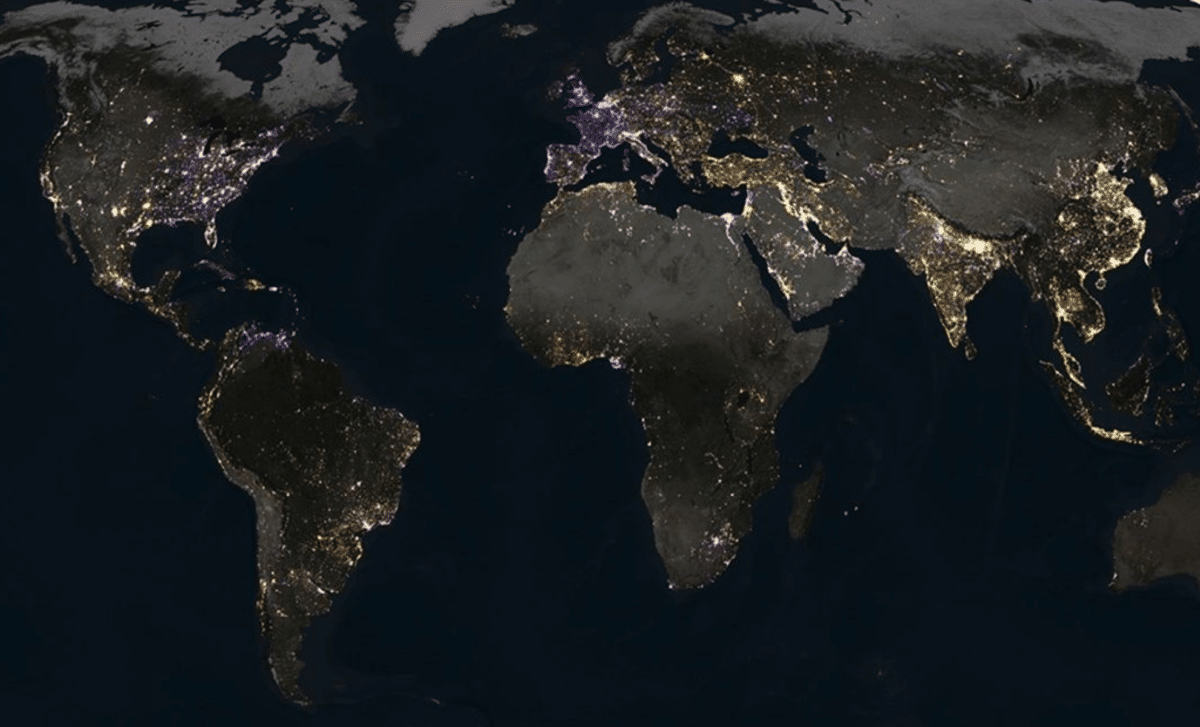
New satellite data from NASA shows that artificial light at night is not simply increasing globally—it is shifting in patterns of brightening and dimming, painting a dynamic picture of human activity and energy use on Earth. The findings, published in Nature, reveal that cities and regions are reshaping their nights in ways that reflect industrial growth, policy decisions, and energy crises.
Mapping A Flickering Planet
NASA’s Black Marble project, which analyzes data from the VIIRS sensors on the Suomi-NPP, NOAA-20, and NOAA-21 satellites, has produced detailed records of nighttime lights across the planet from 2014 to 2022. Unlike previous assumptions that artificial light increases steadily year by year, this analysis uncovers a far more complex story: nights are flickering with both growth and decline, often occurring side by side. The data captures urban expansion, temporary blackouts, construction, and even policy-driven retrofits of lighting infrastructure, creating a nuanced view of global activity.
The VIIRS day-night band is capable of detecting light in wavelengths from green to near-infrared, while advanced filtering separates city lights from moonlight and auroras, enabling scientists to track even subtle changes in brightness. NASA’s visualizations translate this data into striking maps, with yellow and gold areas indicating brightening and purple areas showing dimming, revealing patterns that are both scientific and visually intuitive.
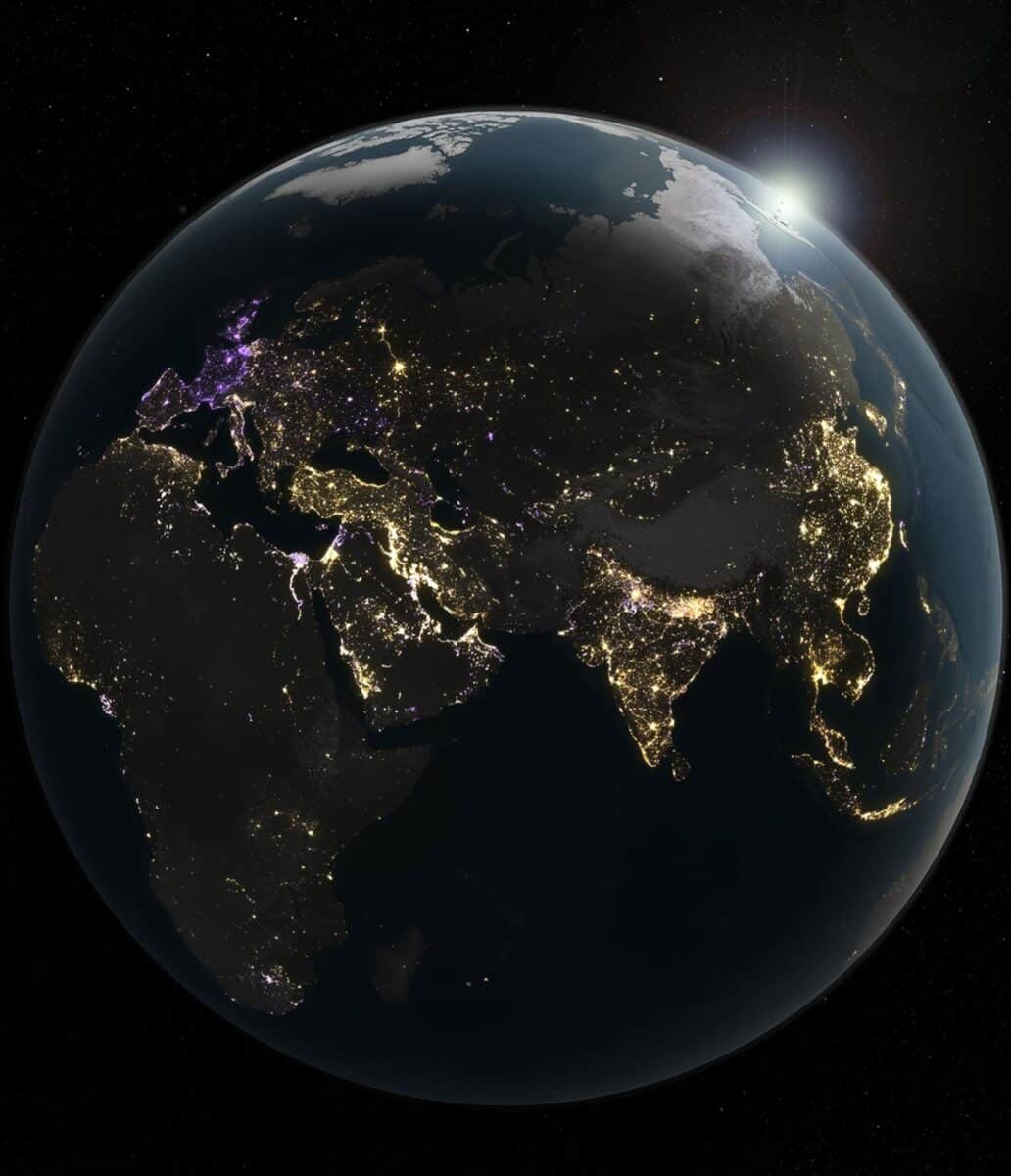 An analysis of nearly a decade of nighttime lights data (2014-2022) from NASA’s Black Marble product revealed areas of brightening (gold) and dimming (purple) shown here across the Eastern Hemisphere.
NASA Earth Observatory/Michala Garrison
Regional Surges And Declines
The global picture is not uniform. In the United States, west coast cities have brightened significantly due to population growth and urban expansion, whereas the east coast has dimmed, largely because of energy-efficient LED adoption and broader economic restructuring. Similar contrasts appear globally: China and northern India have seen rapid nighttime light growth, coinciding with urban development and industrialization.
Meanwhile, Europe tells a different story. Cities like Paris and regions across France experienced a 33 percent dimming, while the UK and the Netherlands saw reductions of 22 and 21 percent respectively. The dimming intensified during 2022 amid a regional energy crisis triggered by the Russia-Ukraine conflict. These findings underscore how energy policies, economic pressures, and technological shifts can rapidly reshape the nocturnal landscape.
The Changing Face of Earth After Dark
The study, detailed in Nature in April 2026, emphasizes that global radiance increased by 34 percent over the study period. Yet, this overall growth masks substantial local decreases. Researchers describe these “bidirectional changes” as revealing the planet’s complex rhythms: industrial booms alongside energy-saving measures, urban growth alongside policy-driven light reduction. These shifts provide a unique lens on human activity at night, linking energy consumption, environmental impacts, and urban planning.
NASA’s visualizations, including animated maps from the Scientific Visualization Studio, allow anyone to see these changes over time. From bustling cityscapes that grow ever brighter to European nights dimming under energy restrictions, these maps make the invisible dynamics of nighttime lights tangible, highlighting the ways humans are reshaping the planet’s nocturnal environment.