
Earlier this week, The Wildlife Trusts published a list of eight Bills we believe would fast-track nature recovery, improve national security and bolster people’s health, writes Erin McDaid of Nottinghamshire Wildlife Trust.
The suite of Bills is an invitation to the UK Government to do better.
The Bill illustrates the level of ambition the Government needs to adopt to match warm words about wildlife and meet the public’s increasing demand for action on nature.
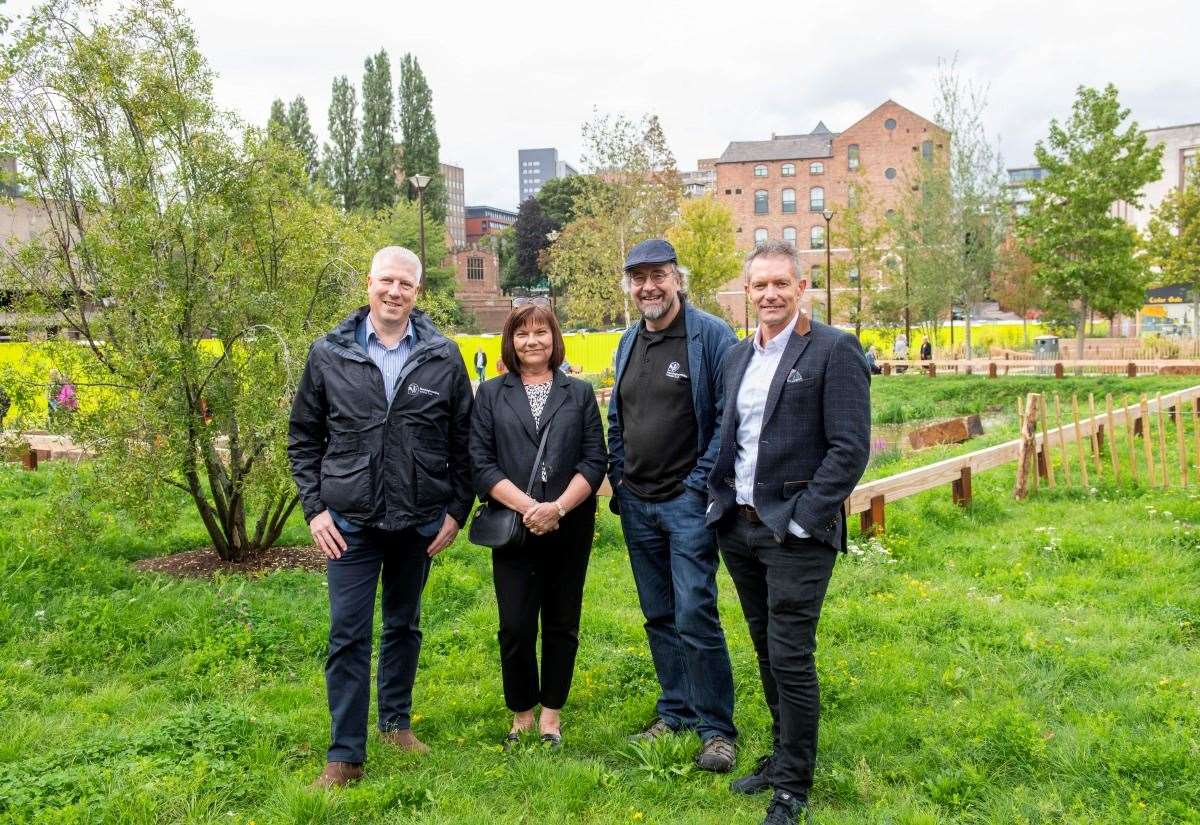
 New legislation to encourage nature-friendly development would promote more schemes like the Green Heart in Nottingham. Broad Marsh Green Heart Launch September 2024. Photo supplied.
Despite the existential threat posed by the climate and ecological crises, not one of the 40 Bills set out in the last King’s Speech in 2024 set out to tackle the serious and continued loss of nature in the UK.
When you consider that the decline in nature threatens our food, water, health and homes, this absence of legislation and action seems all the more inexplicable.
Since the 2024 King’s speech, our wild species and habitats have continued to decline at a frightening rate, bringing the prospect of catastrophic ecosystem collapse ever closer.
Back in January, the UK Government published a summary of the National Security Assessment on global biodiversity loss, which showed that nature decline presents a growing risk to the UK’s economy and overall security.
In response, The Wildlife Trusts have proposed eight bills that, if progressed by the Government, would provide a significant legal boost for efforts to restore nature.
They include The Ocean Emergency Bill to give Defra emergency powers to tackle the rapidly deteriorating marine environment; The River Restoration Bill would remove artificial barriers in rivers which impede species movement and cut off rivers from wider freshwater networks.
Woman in woods. Photo by Matthew Roberts
The Better Land Use Bill would look to reduce the production of environmentally damaging bioenergy, minimise the harmful impacts of intensive livestock farming, and enforce the Land Use Framework across the UK Government.
The Peatland Recovery Bill is designed to conserve carbon-storing, water-filtering, wildlife-rich peatland by banning the use of peat in horticulture and restricting development on deep peat.
The Bison and Elk Return Bill would create a new regulatory regime for the reintroduction of large herbivores to the wild in England, to boost nature recovery through improved habitat management and the restoration of natural processes. This is of particular interest to us here in Nottinghamshire as we are currently awaiting the results of a Disease Risk Assessment to enable us to move forward on our aspiration to reintroduce Elk to the Trent Valley.
The Nature & Climate-friendly Development Bill would help ensure that new developments benefit people, nature and climate. It will increase habitats for wildlife alongside new homes through design measures such as swift bricks as well as improving people’s health.
Such a Bill is entirely in line with our call for a ‘Nature First’ approach to the redevelopment of the Broadmarsh in Nottingham and our vision for urban regeneration across the county.
The Access to Nature Bill would confirm a legal right for everyone to enjoy a healthy environment and require decision makers to increase public access to nature to uphold that right. The Nature Investment Bill – designed to increase private investment in nature recovery and set up a governance framework for nature markets.
A moose standing in a pond and drinking water. Photo supplied.
With UK politics changing rapidly and global challenges increasing, action for nature is in danger of becoming an afterthought – but nature’s decline, our economy and national security are inextricably linked.
By restoring the natural world, we can deliver a diverse range of benefits such as reducing our reliance on fertilisers, stopping river pollution and helping prevent flooding; addressing the health and economic impacts of drought and bringing back vital pollinators. It would also boost green jobs and improve people’s health and wellbeing.
Nature can no longer be viewed as a nice to have — it is necessary for national security, and efforts to restore it are in all our interests.
Polling consistently shows how popular action to save cherished wild species and spaces would be, and 2026, this needs to be the moment the UK Government acts on the evidence in front of it and delivers a step change in nature recovery, before it is too late.
The Bills proposed set out what could be achieved – wild spaces restored, an end to harmful practices, wild species brought back, people’s connection with nature restored and an increase in private sector investment.
A while back, I said that I was looking forward to 30 Days Wild, the UK’s biggest nature challenge.
After a particularly busy few weeks where I’ve struggled to find time to get out in nature, it really can’t come quickly enough for me.
Wildlife is now all around us, from the delights of the dawn chorus and burgeoning blossom on the trees to swifts and martins swooping overhead.
There’s still time to get the most out of a joyous June and to jumpstart your wild summer.