

One quick thing: TCS gives 5% average hikes; some face pay cuts after appraisals.
In today’s newsletter:
Banks wrestle with Apple Pay ahead of India launchUber slides, Rapido racesRegional creators rule the roost for brands
P.S.: Tune into Tech3 Podcast, your daily dose of tech and startup insights. Monday to Friday! Check it out on Spotify or Apple Podcasts. And don’t forget to sign up to The AI Edge, our weekly newsletter on all things artificial intelligence (AI).
Was this newsletter forwarded to you? You can sign up for Tech3 here
 Top 3 Stories
Banks wrestle with Apple Pay ahead of India launch

Apple customers may have to wait a bit longer before they can use Apple Pay in India
What’s the news
Apple Pay’s India launch has been delayed as Indian credit card issuing banks have been driving a hard bargain.
The iPhone maker wants a 20 basis points or 0.2% share of payments through its platform. Large banks like HDFC Bank and ICICI Bank are willing to offer only 15 bps per transaction.
“The negotiations with the credit card issuing banks have been stuck on commercials, while the technology and infrastructure are ready to enable the launch the next day,” said one of the partner firms for Apple Pay’s India launch.
Premium play
Apple is trying to attract banks with a promise to sway customers to Apple Pay from UPI or other payment methods with its fast and seamless payments.
Interestingly, smaller banks have agreed to Apple’s higher commission structure. But Apple wants to launch with the larger banks.
The bigger question is whether Indian consumers will be willing to trade rewards and cashback for faster payments.
Jumps all regulatory hurdles
To make the launch possible, Apple has agreed to the Reserve Bank of India’s data localisation mandate and annual System Audit Report (SAR).
Earlier, Apple argued that it did not need to undergo SAR, as it does not store the payment data.
Apple will now store the tokenised payment data on-device and with card networks to meet RBI norms.
Globally, Apple backs up tokenised payment data in its local servers in the US, Denmark (for the European Union) and China. However, it will not mirror the data for India to comply with the RBI’s mandate.
Apple’s willingness to adapt to Indian regulations indicates that the smartphone maker sees the Indian payments market to grow big in the future.
Uber slides, Rapido races

Uber brought the global playbook to India. Rapido is trying something more local. And the local strategy is beginning to show results
What’s happening?
During his recent India visit, Uber CEO Dara Khosrowshahi took a bike taxi, rode the Delhi Metro, and met government ministers.
But the optics highlighted a larger shift: Uber is increasingly being forced to adapt to a market where local rival Rapido’s hyperlocal, bike-first model is gaining ground.
Rapido’s monthly active users stood at 75 million as of February 2026, exceeding the combined MAUs of Uber (39 million) and Ola (27 million).
“Rapido has not only outgrown incumbents to become India’s leading mobility platform but also amongst India’s largest consumer tech companies by order volume,” Saurav Jain, Principal Investor, Prosus India Ecosystem, told us.
For Prosus, Rapido is now its largest bet in India. The global investor now owns 26% in Rapido – translating to a stake worth $780 million at a $3 billion valuation.
It even holds a board seat at Rapido, we were told. Super app play
While Uber has hinted at a super app approach, housing all offerings under one roof, Rapido is already ahead.
Rapido has food delivery via Ownly, as well as flight bookings, train tickets, hotel reservations and bus bookings, all through one app. Uber is still plotting its route there.
Industry executives said Rapido’s early focus on bike taxis also helped it build scale faster than competitors in densely populated cities such as Bengaluru, Hyderabad and Delhi, where traffic congestion made shorter two-wheeler rides attractive for commuters.
Unlike Uber, which increasingly concentrated on premium cab services, airport rides and enterprise mobility, Rapido expanded rapidly into autos, cabs and Tier-II cities.
While Uber’s evolving India playbook gets a Rapido check, it remains to be seen which player emerges as the number 1 winner in the long-term.
Regional creators rule the roost for brands

“Now, creators from Bihar, Jharkhand, or Uttar Pradesh don’t need to move to Mumbai or Delhi to build an audience.”
These are the words of a creator from Patna who says the opportunity is now in the regional markets as brands bet on Bharat.
Loving local
Brands see better bang for the buck when creators speak the local language and connect with regional audiences.
Campaign costs in smaller cities range between Rs 35,000 and Rs 90,000 against Rs 3.8 lakh to Rs 4.5 lakh in metros.
When Emami Group marketed its five personal care brands, regional creators and multilingual content were prioritised across campaigns.
Result? 10 Kolkata-based creators drove 1.81 million views with a 3.79% engagement rate for BoroPlus. Still buffering
Going live or shooting 4K videos is when the cracks start to show, as connectivity and infrastructure still lag behind big cities.
Payment cycles stretching between 60 to 90 days is another concern for regional creators.
More importantly, many are still trying to shake off the perception that regional means smaller or lower quality.
The Big Picture
By the end of 2026, the Indian creator economy will be valued at over Rs 4,500 crore.
It has become one of the fastest-growing segments in India’s digital advertising ecosystem.
MC Special: Anthropic’s money man
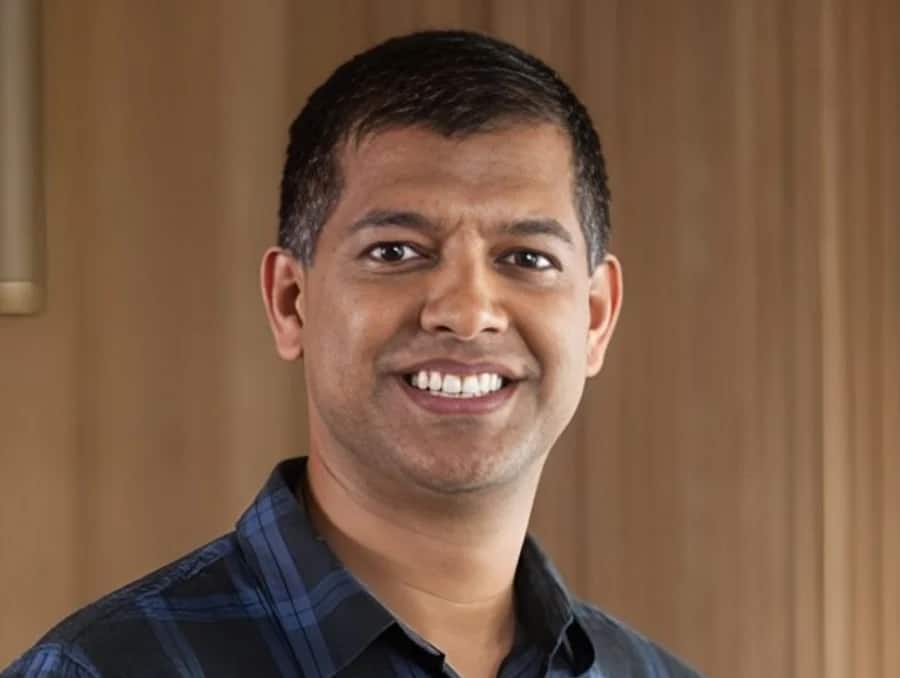
Krishna Rao might be a man of few words, but he sits at the epicenter of the current AI boom as the first CFO of Anthropic.
The Indian-origin executive is tasked with navigating the frontier AI lab’s unprecedented growth, compute constraints, and massive capital requirements amid an intensifying battle with rivals such as OpenAI.
The stakes couldn’t be higher: both rivals are now racing toward potential IPOs that could land as soon as later this year. Read more.