

In our How I Manage My Money series we aim to find out how people in the UK are spending, saving and investing money to meet their costs and achieve their goals.
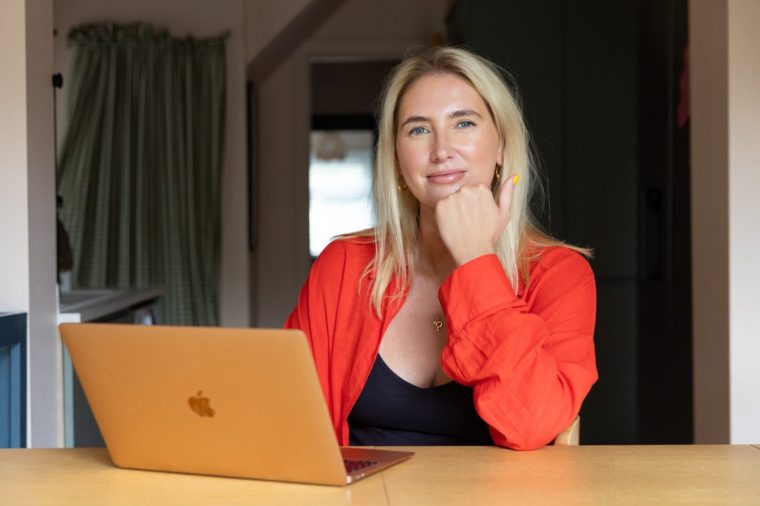
This week we speak to Julie Creffield, 47, who lives in Bishop’s Stortford with her daughter, Rose, 13. Julie, an innovation director and business strategist, wants to double her income without increasing her workload. She has been made redundant five times and was once in £40,000 worth of debt. Julie wants to be able to pass on property to her daughter and is currently paying both a mortgage and rent, due to a flat she’s struggling to sell.
Monthly budget
My monthly income: Before deductions, the income from my job at a company as an innovation director is £4,333.33 a month. The income from my other work as a business strategist, author and keynote speaker can vary hugely month-to-month. In one month, I can make an extra £30,000 from my additional workstreams, but in others it is zero.
My monthly outgoings: Rent for Bishop’s Stortford home, £1,750; mortgage for Stratford flat I am trying to sell, £700; council tax, £160; groceries, £500 to £600; gas and electric, £150; water, £30; my mobile bill, £60; daughter’s mobile, £15; petrol, £300; broadband, £60; streaming services, £20; TV licence, £16; life insurance, £49; dance club for daughter, £80; school dinners and bus money for my daughter, £120; gym, £60. I put any money left over in sinking funds for holidays, birthdays, fun money, eating out and Christmas. I rely on credit cards to deal with emergencies, special occasions, holidays and my daughter’s school trips. I am adding about £200 a month to a workplace pension.
I grew up in a council house in east London in a single parent family with five siblings. Things were very tight financially after my parents got divorced and my mum was left to raise us. I was the first person in my family to go to university and worked in a salad factory to help pay for my student accommodation.
Shorts
Scroll to previous short
Scroll to next short

 Woman awaking after sleeping well in a nice sleeping room. – stock photo. (Photo: Getty)
SLEEP
How to reset your sleep
Irregular sleep has been linked with poorer cardiovascular health, metabolic disruption, inflammation and mood imbalances.
If your sleep has fallen out of whack, this is what the experts recommend.
From personalised ‘sleep windows’ to unhelpful bedtime routines.
Consistency in bedtimes
It helps the brain feel safer and more predictable around sleep, which is important for people with insomnia. When sleep and wake times are consistent, that clock stays well aligned. When sleep timing is all over the place, the body clock becomes confused…
dr ZOE GOTTS, CONSULTANT CLINICAL PSYCHOLOGIST AT THE LONDON SLEEP CENTRE
 Couple sleeping in bed – stock photo. (Photo: Getty)
The changes to make
 Sleep tourism in hotel. Exhausted woman sleeps sweetly in bed in the morning – stock photo. (Photo: Getty)
Find your sleep window
When do you naturally start to feel tired? Aim to allow your body to sleep within that timeframe most nights.
Wake at the same time
Pick a wake-up time you can stick to and anchor everything around that, says Dr David Garley, sleep expert.
 Sleep doesn’t have to be so complicated (Photo: Olga Pankova/Getty)
 Caption: TOPSHOT – NASA’s Artemis II Space Launch System (SLS) rocket is seen at sunrise at the Kennedy Space Center in Cape Canaveral, Florida on April 1, 2026. On Wednesday three men and one woman are set to embark on the first crewed journey to the Moon since 1972, a landmark odyssey that aims to launch the US into a new era of space exploration. The NASA mission dubbed Artemis 2 has been years in the making after facing repeated setbacks, but is finally scheduled to take off from Florida as early as April 1 at 6:24 pm (2224 GMT). (Photo by Gregg Newton / AFP via Getty Images)
Photographer: GREGG NEWTON
Provider: AFP via Getty Images
Source: AFP
Copyright: AFP or licensors
Get out into sunlight
Exposing yourself to daylight soon after waking helps to sync your circadian rhythm, says Dr Garley.
How to reset your sleep
Regulate your nervous system
Many people are running on exhaustion but still in a state of high alert, so might not be able to rest when needed, says Dr Gotts.
Gentle routines, reduced evening stimulation, and calming the body can make a huge difference.
Sleep tourism in hotel. Exhausted woman sleeps sweetly in bed in the morning – stock photo. (Photo: Getty)
 Senior bed woman problem pain headache home elderly mature pain bedroom upset unhappy female caucasian adult relationship retirement old difficulty ache head sick migraine hangover sleep – stock photo. (Photo: Getty)
Don’t spend too long in bed
If you cannot sleep within 20 minutes, get out of bed, ideally out of the bedroom, and find a relaxing and distracting activity to do while you wait for the natural urge to return.
The tweaks to make to reset sleep
 (Photo: AzmanL/Getty/E+)
Look at your bedtime
Don’t presume earlier to bed (ie. more time in bed) equals better sleep. The timing needs to fit you.
It might mean going to bed later
Set an alarm to anchor the wake-up time, then choose a bedtime that allows you to fall asleep easily and aim to sleep solidly within that time.
 Woman in bed at night having trouble sleeping. – stock photo. (Photo: Getty)
 A mature woman lies in bed and reads a hardback book – stock photo. (Photo: Getty)
Don’t overdo it
Too much preparation can increase pressure around sleep so a short and consistent routine is far more effective.
Weight training has a host of benefits, but only if it’s done correctly.
We asked personal trainers the common mistakes that people make when lifting – especially for the first time or early on in their strength journey – and how to avoid them.
 Woman lifting barbell with heavy weights in cross training gym – stock photo. (Photo: Getty)
Priotising weight over form
When the load is too heavy, form usually breaks down, the wrong muscles take over, and the risk of injury goes up. If you can’t control the lowering part of the movement, keep good posture, or move through the full range, you’re compromising.
CELEBRITY TRAINER AND PT AIMEE LONG

The mistakes you could be making
 Close up of male athlete gripping heavy green kettlebell during strength training exercise in cross training gym – stock photo. (Photo: Getty)
Not progressing
If you’re reaching for the same pair of dumbbells each week you’re likely just maintaining muscle, not building.
The wrong trainers
You need adequate support for your ankles, without overly cushioning your arches.
 Find the best shoes for you (Photo: Xavier Lorenzo/Getty/Moment RF)
 Woman at the Gym – stock photo. (Photo: Getty)
Not timing your rest
PT Nancy Best’s advice is to take 90 seconds of downtime before picking your weight back up.
 Research has found that strength training can help slow bone loss
(Photo: FJ Jimenez/Moment RF
via Getty)
Neglecting recovery
Progress does not happen during the workout itself; it happens afterwards when your body repairs and rebuilds.
Poor sleep, not eating enough calories or protein, or training the same muscles hard every single day can hinder recovery and leave you constantly exhausted, says Long.
Not choosing the right exercises
An effective programme is built around variety.
Ensure your training includes each movement for the upper and lower body.
PT Luke Worthington recommends a push/pull programming.
Upper body push targets the shoulders or chest and upper body pull typically works the back.
Lower body push includes squats and leg press whereas pulls include deadlifts and hinges.
What to do
Perfect the movements before increasing the weight.
Best recommends Nike Metcons or Converse for a flat, stable surface.
Aim to eat 1.4-2g of protein per kilogram of bodyweight if you’re regularly exercising.
When you’re comfortable you can increase the weight, number of sets or reps, or range of motion to progress each lift.

LIFESTYLE
6 min read
The eight biggest mistakes we make
when retiring
Psychologist and author Dr Denise Taylor says we shouldn’t sleepwalk into retirement, nor stop walking, just because everyone else has.
 Denise Taylor’s marriage ended at 60 as the structure of the working day faded away (Photo: Mihai Zsigmond)
The mistakes we make when retiring
 The man is currently drawing a small defined benefit (DB) pension (Photo: SimpleImages/Getty)
Hoarding money
Many clients tell me their biggest regret was spending too little when they were healthiest and most able to enjoy it.
Planning to rest
Boredom in retirement is misunderstood. It’s rarely about having nothing to do. It’s about having time without meaning.
 Naps before 1pm can lead to better cognitive performance in the following hours (Photo: Lord Henri Voton/Getty Images)
 Photographer: Lourdes Balduque
Provider: Getty Images
Source: Moment RF
Copyright: Lourdes Balduque
Not mentally preparing
People prepare financially and practically, but don’t do the psychological work of leaving well.
Waiting to plan what’s next
Once the structure of work disappears, people can slip into a narrower way of being. Start sketching out possible paths at least two years ahead. Even rough ideas about what you might want to explore – creative projects, volunteering, learning.
DR DENISE TAYLOR
 Denise Taylor has worked with many clients who moved into ‘purposeful’ roles expecting to feel better, only to be more depleted than before
(Photo: Ilona Gierach)
Common mistakes she sees
 ‘I know it’s a minor thing but it makes me feel unheard and ignored’ (Photo: PonyWang/Getty)
Not preparing as a couple
Discuss how much time you want together, and what kind of lives you’re moving towards, rather than assuming it will naturally align.
Trying to stay busy
Without noticing what drains your energy, activity becomes a way of bypassing the deeper adjustment.
 Remember to care for your lawn (Photo: RHS / Tim Sandall)
Senior bed woman problem pain headache home elderly mature pain bedroom upset unhappy female caucasian adult relationship retirement old difficulty ache head sick migraine hangover sleep – stock photo. (Photo: Getty)
Treating it as an ending
People can find themselves psychologically stranded. Days begin to blur into one another.
Retiring because everyone else is
For a generation raised to expect retirement at a certain age, default timing can feel normal.
The timing is personal.
 Portrait of senior man at desktop computer in home office – stock photo. (Photo: Getty)
The mistake is retiring without questioning whether that timing actually fits your own life. It ignores your relationship with work, your health and your finances.

Agony Uncle
5 min read
What to do
1For some a gradual shift is best like working fewer days or changing role, slowing down.
2Experiment before you leave. Taking a sabbatical or reducing hours can show you how retirement might feel.
3Prioritise a small number of meaningful anchors: one regular commitment, one place where you feel known and one activity.
4Slow it down psychologically – question default timing, resist expectations and ask yourself what kind of transition you are actually stepping into.
 Sir David Attenborough is estimated to have travelled almost two million miles in his career, and has visited 90 countries and all seven continents in his quest to enhance our understanding of nature (Photo: Shirlaine Forrest/WireImage)
SIR DAVID ATTENBOROUGH
The national treasure has celebrated his centenary
For all the inspiring insight into nature that Sir David Attenborough has given us, he has also shown us how to age well.
Here, Chief Features Writer Kasia Delgado looks into his lifestyle, and the tips he’s shared to live to 100.
 Caption: Programme Name: Africa – TX: n/a – Episode: The Future (No. 6) – Embargoed for publication until: n/a – Picture Shows: SIR DAVID ATTENBOROUGH WITH A THREE MONTH OLD BLIND BLACK RHINO ??? LEWA WILDLIFE CONSERVANCY, KENYA – (C) BBC/David Chancellor – Photographer: David Chancellor
Photographer: David Chancellor
Provider: BBC/David Chancellor
Source: 6
Copyright: WARNING: Use of this copyright image is subject to the terms of use of BBC Pictures’ Digital Picture Service (BBC Pictures) as set out at www.bbcpictures.co.uk. In particular, this image may only be published by a registered User of BBC Pictures for editorial use for the purpose of publicising the relevant BBC programme, personnel or activity during the Publicity Period which ends three review weeks following the date of transmission and provided the BBC and the copyright holder in the caption are credited. For any other purpose whatsoever, including advertising and commercial, prior written approval from the copyright holder will be required.
LOREM IPSUM
Never retiring fully
Putting your feet up is all very well, but it’s very boring, isn’t it?
In the last two years alone, Attenborough has done voiceovers on a number of projects, including Wild London, and a National Geographic Disney film, Ocean.
Although his workload has remained high, he did acknowledge in 2017, that as he ages, he sometimes finds it harder to recall correct words as quickly as he did before.
Improving his diet
In his 90s, Attenborough has cut back on red meat, and begun eating an increasingly vegetarian diet.
Whether as he said, he “simply lost the taste” for meat, or whether it was an environmental or health reason, the NHS advises that eating a lot of red and processed meat increases your bowel cancer risk at any age.
 Caption: Fox Cub BBC Wild London 2026 Attenborough Screenshot

Big Read
7 min read
Keeping active
 Caption: Sir David Attenborough visits the London Wetland Centre in west London where he launched his new campaign to raise public awareness to help reverse the butterfly decline, urging the public to plant butterfly-friendly flowers in their garden to help reverse declining numbers of the insects.
Photographer: Stefan Rousseau
Provider: PA
Source: PA Archive
Attenborough has previously said he has “never done exercise” in an official capacity.
But he has kept active by going for walks in Richmond, where he lives.
Interviewers who have been to his home have also mentioned him practically skipping down the stairs of his house.

TELEVISION
8 min read
Avoiding becoming isolated
When Sir David’s wife Jane died in 1997, the couple’s adult daughter Susan moved in with her father. He said at the time: “I’m quite used to solitude in the wilds but, no, an empty house is not what I enjoy.”
 Caption: TELEVISION PROGRAMMES: THE QUEENS GREEN PLANET
Monday 16th April 2018 on ITV
Sir David Attenborough joins Her Majesty the Queen in the gardens of Buckingham Palace
This unique, landmark documentary follows Her Majesty the Queen and an ambitious legacy project to create a global network of protected forests, spanning the 52 countries of the Commonwealth.
This project, called the Queen’s Commonwealth Canopy, brings together Her Majesty’s deeply held commitment to the Commonwealth and her little-known love of trees.
At the heart of the film is a conversation between the Queen and Sir David Attenborough filmed in the gardens of Buckingham Palace last summer. In a rare opportunity to see the Queen talking informally to Sir David, the conversation ranges from climate change, to conkers and birthday gifts.
The film follows members of the Royal Family involved so far in making the Queen?s Commonwealth Canopy a reality, including Prince Harry planting trees in the Caribbean, and Prince William and his family in Canada’s Great Bear Rainforest.
(c) ITN Productions
For further information please contact Peter Gray
0207 157 3046 peter.gray@itv.com
This photograph is ? ITV and can only be reproduced for editorial purposes directly in connection with the programme THE QUEENS GREEN PLANET or ITV. Once made available by the ITV Picture Desk, this photograph can be reproduced once only up until the Transmission date and no reproduction fee will be charged. Any subsequent usage may incur a fee. This photograph must not be syndicated to any other publication or website, or permanently archived, without the express written permission of ITV Picture Desk. Full Terms and conditions are available on the website www.itvpictures.com
Provider: From ITN Productions
Copyright: ITV
 Sir David Attenborough during the event marking his 100th birthday today at the Royal Albert Hall (Photo: BBC Studios Natural History Unit/Buckingham Palace)
He’s also been known to respond personally to fan letters and maintain relationships with people who admire him. He has no iPhone or email address and instead prefers to communicate by handwritten letter.
Appreciating small things
It seems to me that the natural world is the greatest source of excitement; the greatest source of visual beauty; the greatest source of intellectual interest. It is the greatest source of so much in life that makes life worth living
 Caption: Veteran broadcaster and naturalist Sir David Attenborough with an Australian bearded dragon after receiving an honorary degree from Queen’s University in Belfast for exceptional services to science and broadcasting.
Photographer: Paul Faith
Provider: PA
Source: PA Archive
Forget lifespan, everyone is focused on extending their healthspan: meaning, the number of years you live in good health
So what tiny tweaks can you make to your daily routine to extend a fulfilled life? Health writer Rosie Fitzmaurice tried some out.

The research
One year
Analysis from the University of Sydney found that getting an additional five minutes of sleep, two minutes of moderate to vigorous physical activity and an additional half-serving of vegetables per day could lead to an extra year of life.
A decade
Getting seven to eight hours of sleep each night, more than 40 minutes of moderate to vigorous exercise each day and following a healthy diet, were traits associated with almost a decade of additional lifespan.
Daily tweaks to make
 Colorful Array of Mixed Beans – stock photo. (Photo: Getty)
Daily spoonful of beans
One large study found that an intake of 20g of legumes daily may reduce a person’s risk of dying in any given year by up to eight per cent.
Fibre at breakfast
Most people in the UK eat around 16–18g fibre a day but 30g is recommended.
 Caption: Ro??ie Fitzmaurice – fibre maxing.
Photographer: Teri Pengilley
Provider: Teri Pengilley / i news
Source: Teri Pengilley
 (Photo: Carlos Gawronski/Getty).
Olive oil shots
One major study found those who ate the most olive oil (more than half a tablespoon a day) had a 19 per cent lower risk of death from any cause.
Daily tweaks to make
4There are benefits to eating an early dinner when we’re insulin sensitive and strolling afterwards to help digestion.
5Vigorous intermittent lifestyle physical activity – rather than structured exercise -ccould reduce the risk of a heart attack.
6Strength training is still important and just 30 to 60 minutes each week is associated with a 10 to 20 per cent lower risk of death.
7Balance training improves neuromuscular co-ordination and proprioception, which are critical for preventing falls.
Rosie puts this to the test
 Washing Garbanzon Beans – stock photo. (Photo: Getty)
She had a helping of beans daily and loaded her breakfast with nuts, seeds and berries.
Fitzmaurice swapped butter for olive oil, had dinner two hours earlier (around 6pm) and did one-minute bursts of exercise throughout the day.
She also practised her grip strength through dead hangs at the local park and brushed her teeth on one leg to improve balance.
The verdict
I can’t predict the future, but it’s true that making a few microtweaks to my weekly routine have had a surprisingly uplifting effect on my mood. As the world feels so utterly terrifying, taking control of the small things feels like therapy.
ROSIE FITZMAURICE, HEALTH JOURNALIST FOR THE i paper
 Caption: Writer Ro??ie Fitzmaurice. Rosie Fitzmaurice
Photographer: Teri Pengilley
Provider: Teri Pengilley / i news
Source: Teri Pengilley
Is napping an
invaluable part of the day or an unproductive hour?
To find out how to feel better, brighter and bushy-tailed, we asked Russell Foster, a
professor of neuroscience at
the University of Oxford, everything you need to know about napping.
Naps before 1pm can lead to better cognitive performance in the following hours (Photo: Lord Henri Voton/Getty Images)
 Caption: A mother and new born baby taking a nap together on the sofa in a quiet but tender moment.
Photographer: Jamie Garbutt
Provider: Getty Images
Source: Stone RF
Copyright: Jamie Garbutt
How long should we nap for?
For Professor Foster, the ideal length of a time for a nap is just 20 minutes and certainly no longer than 30.
“You don’t want to do is fall into deeper sleep, because then recovery from that can leave you groggy,” he says.
Is there an optimum time of day to nap?
Napping too late in the day is warned against.
An early-afternoon nap of around 20 minutes can improve your cognition during the second half of the day.
If you have a nap later on, you can push back your sleep pressure, which means the longer you’ve been awake the greater need for sleep, at night.
As long as you’re getting the sleep that you need to function optimally, that’s the main thing.
Sleep tourism in hotel. Exhausted woman sleeps sweetly in bed in the morning – stock photo. (Photo: Getty)
How much sleep does a person need?
Sleep is like a shoe: one size doesn’t fit all.
Oversleeping on days-off or sustaining your waking day with caffeine and other stimulants are signs of tiredness.
Not everybody needs eight hours of sleep; it’s variable, dynamic and individual. And will vary over a lifetime depending on the season.
Other things to know
It doesn’t matter where you physically nap as long as it feels right and you’re comfortable. You can create the right environment by making it dark, calm or using a smell like lavender.
 ‘I encourage anyone that is sleepy to take a good nap, guilt free,’ writes Zuva Seven (Photo: Klaus Vedfelt/Getty)
 The drug is taken by one in five Americans under 14, but it is only available on prescription in the UK (Photo: ozgurcankaya/Getty)
Generally speaking, napping is probably a metric that you’re not getting the sleep you need at night, says Professor Foster. “But don’t beat yourself up over it. A short nap, if it improves the second half of the day, is fine”.

What is causing damp? And how to fix it
In addition to being generally unpleasant, living in a damp property can lead to structural and health issues if left unaddressed for long periods of time.
Read on to find out the industry expert advice on how to cut the risk of damp forming in your home…
Start with your windows
Don’t keep them closed.
 Take time to rest (Photo: Counter/Getty/Digital Vision/Nicolas Hudak)
Regularly opening windows – even on cold days – can improve the ventilation inside and decrease the humidity of the room.
Also wipe away the condensation that has formed overnight with a microfiber cloth to remove the dampness.

Big Read
8 min read
How to reduce the risk of damp
 Woman loading washing machine in the kitchen – stock photo. (Photo: Getty)
Dry clothes in the bathroom
Avoid drying clothes in bedrooms or living rooms without airflow.
Avoid curtains over radiators
It can trap heat behind the fabric, reduce room warmth and cause condensation on windows.
 Central heating problem at home. Woman checking heating radiator in cold apartment – stock photo. (Photo: Getty)
 Furniture assembly in new apartment – stock photo. (Photo: Getty)
Nudge your furniture
Large furniture items placed tightly against cold walls can trap condensation, leading to mould over time.
 Caption: Berlin, Germany – January 20: Condensation has been reflected on a cold winter morning on an old double box window on January 20, 2019 in Berlin, Germany. (Photo by Thomas Trutschel/Photothek via Getty Images)
Photographer: Thomas Trutschel
Provider: Photothek via Getty Images
Source: Photothek
It could be the age of your home
Close to 90 per cent of UK homes with solid external walls lack insulation, making them vulnerable.
The airtight design of some new builds helps with energy efficiency but can trap moisture if ventilation isn’t properly managed, says Chad Bragg, chief technical officer at insulation company SuperFOIL.
How to reduce the risk of damp
Clear clothes out
Clothing that is packed too tightly in a wardrobe traps humidity, especially if it is slightly damp.
 (Photo: Getty).
 Caption: File photo dated 19/09/13 of a general view of a central heating thermostat. Households are set to learn their energy bills will fall by around 7% from April in a shake-up of costs after the Government promised they will receive an average ?150 cut. Latest predictions suggest Ofgem will reduce the energy price cap by ?117 to ?1,641 a year for a typical dual fuel household from April 1 when it makes its announcement on Wednesday. Issue date: Sunday February 22, 2026. PA Photo. Photo credit should read: Steve Parsons/PA Wire
Photographer: Steve Parsons
Provider: Steve Parsons/PA Wire
Source: PA
Heat strategically
If the heating in your home is reduced in temperature by just two degrees, humidity levels will increase by 10 per cent.
Keep lids on pans
While cooking it avoids releasing moisture into the air. A good cooker hood is most effective.
 Protein doesn’t have to mean steak (Photo: 10’000 Hours/Getty Images/Digital Vision)
Planning for an extension?
Pay attention to insulation
 (Photo: Pramote Polyamate/Getty).
Poor insulation creates ‘thermal bridges,’ or cold spots, where the new structure joins the old house. These cold junctions act as magnets for condensation, causing localised mould, heat loss, and discomfort.

LIFESTYLE
4 min read
How to fake your way to being organised

Do you have your life together? Is your home tidy and clutter-free; your diary neatly colour-coded; your to-do list full of satisfying ticks?
If these questions feel like a personal attack don’t worry. We asked the put-together experts for their secrets.
Get to know your brain
The real magic is rarely in the system but in how your brain likes to work.
If you love analytical tasks, try making spreadsheets.
Set reminders for the things you usually forget.
Use the Notes app for the ideas you think of in the shower but never remember when you get to do it.
But if you are more likely to structure your day around how you’re feeling, a calendar isn’t the best option.
How to fake your way to organisation
 Cropped image of senior woman putting car key in ignition lock – stock photo. (Photo: Kentaroo Tryman/ Getty)
Make it easier
If you hate folding, change your storage style. If you’re always forgetting your keys, put a sign by your door.
Make a launch pad
Keep a small tray or basket in the hallway for your can’t-leave-home-without essentials.
 Two young children wearing school uniforms exit their front door – stock photo. (Photo: Getty)
 Mid adult businesswoman using phone and laptop for work from home. – stock photo. (Photo: Getty)
Use technology
After meetings use an AI tool to note down what you have to remember as a brain dump.
Create new habits
The one-touch rule
If you put your shoes straight on the rack as you take them off, instead of kicking them onto the floor and moving them later, that’s one touch. If you hang things up rather than tossing them onto the ‘bedroom chair’ it’s another one-touch win.
 A woman with one foot is searching for an amputee to share shoes with – so her two bin bags full of unwanted right foot size six shoes don’t go to waste. (Photo: Emma Henson/ SWNS)
 Full length of mid adult man doing chores in kitchen at home – stock photo. (Photo: Getty)
Talk to yourself out loud
This verbal anchor helps you remember what you have decided to do and cuts down on mental drift.
The 300-second challenge
 Caption: Millennial black lady vacuuming floor while her husband watching TV, not helping her with household duties, cropped view. Unrecognizable young couple having problem with domestic chores
Photographer: Prostock-Studio
Provider: Getty Images/iStockphoto
Source: iStockphoto
Give yourself five minutes to deal with one overdue chore or task.
Using seconds rather than minutes creates urgency and gives your brain a novelty hit.
Try it when putting the laundry away, making a phone call or reading an overdue email.

LIFESTYLE
9 min read
Make it easier for yourself
Use completion cues
Drop a marble in a jar or move a sticky note across a board each time you complete a task.
 To do list – stock photo. (Photo: Getty)
 It is the perfect time to enjoy an afternoon nap in your own home (Photo: Malte Mueller/Getty/fStop)
Support your future
Write down where you left off and the next small task to tackle to strengthen your control over every day demands.
Ask for help
Consider seeking support from loved ones, neighbours, colleagues, community groups or professionals.
 ‘Everyone who comes to see me assumes I am hard-up, so they either bring me gifts and treats, or if we go out together, they always insist on paying’ (Photo: Getty)
Over the years, I’ve had all sorts of jobs. I’ve done bar work, worked in supermarkets and had a job in Wimpy aged 13 for £1.50 an hour. I’ve worked as a drama practitioner for young people, a project manager and consultant on sports and arts projects, and did an eight-year stint as a consultant for the London 2012 Olympics. I also once ran my own online fitness company, which I closed just after the pandemic as the model became unviable.
I’ve been made redundant from what I call “proper” jobs five times. Each time was difficult for different reasons. Once I became a parent, being made redundant felt particularly painful and personal. The day after the opening ceremony of the 2012 London Olympics, and when I was six months’ pregnant, I was made redundant.
Later on, after securing a £125,000-a-year job in business consulting a few years ago, I was made redundant after three months. My personal debts and a bounce-back loan debt spiralled to £40,000. It was the perfect storm of redundancy, increased costs due to a move and trying to build myself back up again while still being in total shock. My mental and physical health was on the floor. I’ve paid most of my debts off now. I’m still rebuilding my finances, so I have about £10,000 in savings.
I now work as an innovation director at a company, with a gross annual salary of £52,000 a year. On top of this, I’m a business strategist with my own firm, Julie Creffield – The Big Ideas Lady. I regularly help small businesses establish what to sell, who to sell to and how to do it. I do one-to-one mentoring and am also an author and keynote speaker, talking about topics like artificial intelligence and emerging technology. The income from my business and additional work can be anything from zero to £30,000 a month.
As a single mum, I have to be smart with my money. For me, it’s all about leveraging my most important asset, which is time. I’m not into designer brands, but prefer to spend money on experiences and things that make life easier.
I live in a rented house in Bishop’s Stortford, which is an expensive commuter town. I would like to buy, but am struggling to sell another property I already own in Stratford. The cladding scandal and lease renewal problems have made the flat hard to sell.
I have no idea how much money I have in pensions, but I’m guessing it’s probably not enough. In later life, I would like to be able to live off the earnings from my books, perhaps moving into fiction writing at some point. I’d like to double my income without doubling my efforts. I want to be mortgage-free and be able to pass property over to my daughter when she is older.
Julie Creffield’s book, Fix Your Finances with the Help of AI, is on sale now.
Want to take part in How I Manage My Money? Email money@theipaper.com