
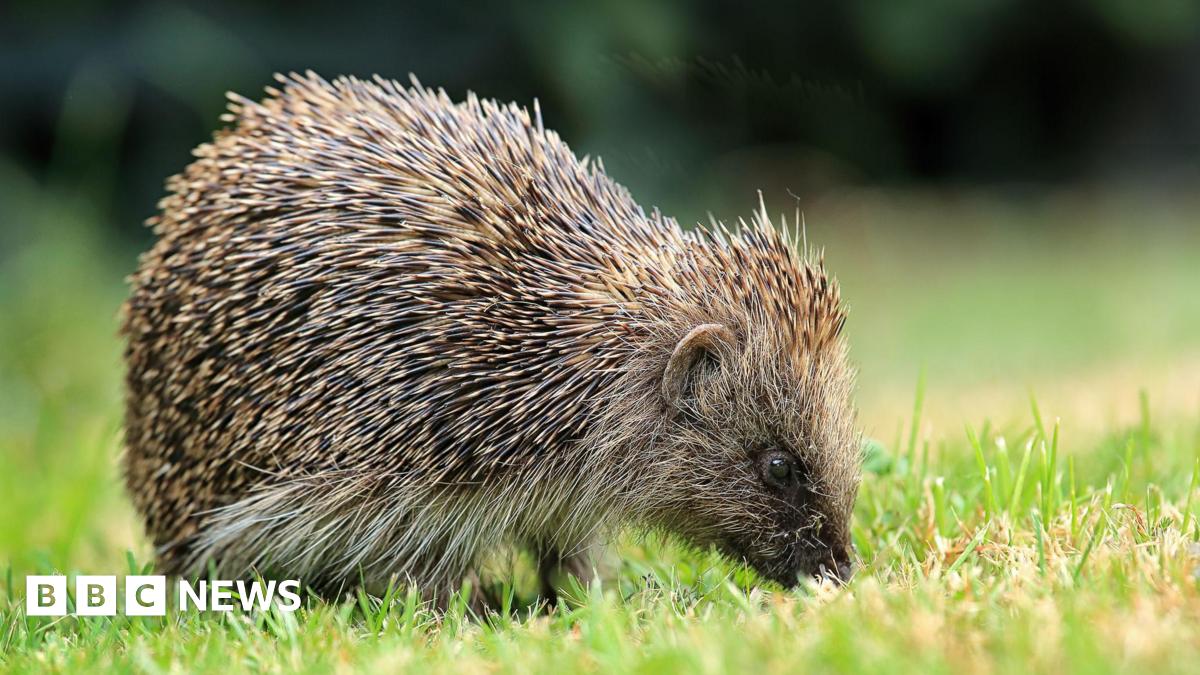
Hedgehog populations have declined dramatically across Europe in recent decades.
And in the UK, a 2022 report, external estimated their numbers to have fallen by up to 75% in rural areas since 2000.
The common western European hedgehog – the UK’s only native species, according to the RSPCA – has been listed as ‘Near Threatened’ by the International Union for the Conservation of Nature, external.
But Prof Silviu Petrovan, strategy and research manager at People’s Trust for Endangered Species, says he is optimistic that AI can help protect the tiny mammals.
“What we’re really hoping is that we can use these really powerful models to understand, for instance, what are the very specific barriers for hedgehogs to find food and find their mates, and be able to safely move around the countryside?” he says.
He told the BBC researchers behind the project refer to hedgehogs equipped with trackers as “digi-hogs”.
To be able to accurately identify the tiny creatures and other objects in image data, the Tessera system had to be trained on vast amounts of data – with around 20 petabytes, or the equivalent of 10 billion standard digital photos, used to build it.
After reaching the limits of the computing power allocated to the university, researchers installed additional processors under their desks to keep the process going.
A new deal with US tech firms AMD and Vultr has also given them access to extra infrastructure.