
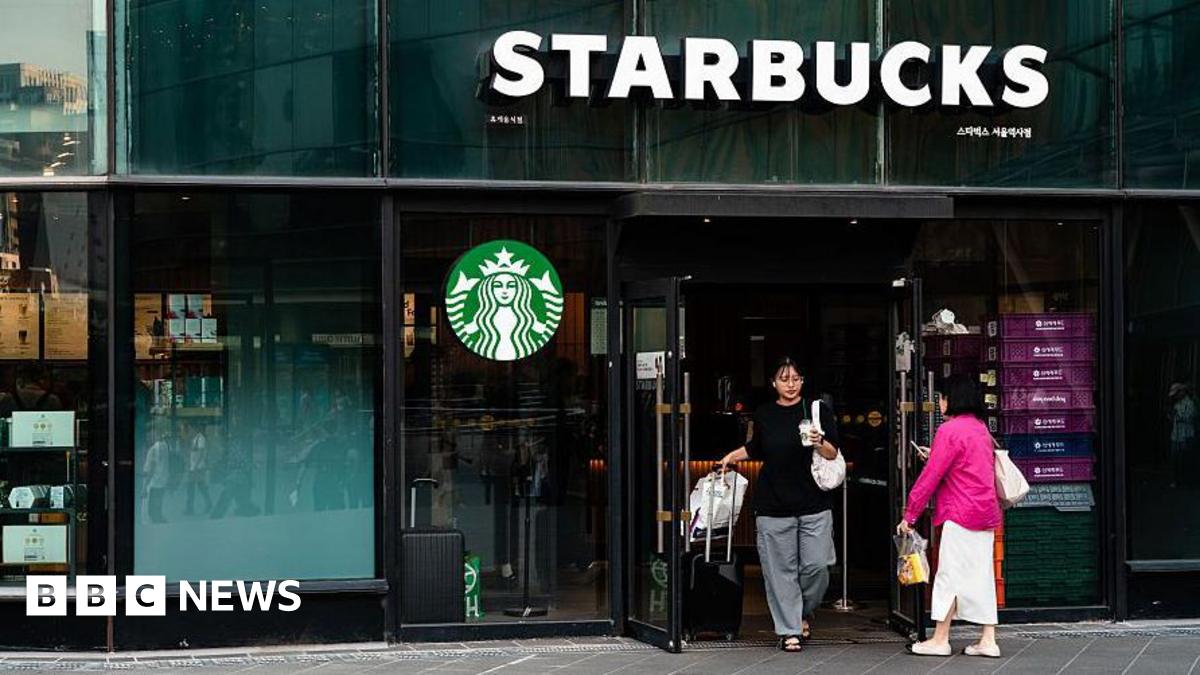
The promotion, which used the English words “Tank Day”, was for their Tank Series drink tumblers touted to have “spacious volume” for a large amount of coffee.
According to local reports, Starbucks Korea initially clarified that the Tank Series was one of several series of tumblers it was rolling out in a campaign running from 15 to 26 May.
“We sincerely apologise for causing inconvenience and concern to our customers due to this,” the company said. “We have immediately suspended the event and will review and improve our internal processes to prevent similar incidents from recurring in the future.”
Starbucks’ headquarters in the US also issued an apology, acknowledging that “while unintentional, [the incident] should never have happened”.
“We recognise the deep pain and offense this has caused, particularly to those who honor the victims, their families, and all who contributed to Korea’s democratisation,” it said.
“I can’t believe they thought they could pull off something like this and people would just let it slide… it’s utterly absurd and infuriating,” an X user wrote early on Tuesday.
Several also put out calls on social media to boycott both Starbucks Korea and Shinsegae.
South Korea’s president was among those who criticised the campaign, saying it “insults the victims and the bloody struggle” of the residents of the southern city of Gwangju.
“What on earth were they thinking, knowing how many lives were taken that day and how seriously that set back our country’s justice and history?
“I am outraged by such a low-class merchant’s inhumane behaviour, which denies our country’s values of basic human rights and democracy,” Lee wrote on an X post.
Reports estimate that hundreds of demonstrators were killed in the southern city of Gwangju on 18 May 1980.
Further investigations into the massacre later confirmed that troops deployed by the military regime of Chun Doo-hwan committed rape and sexual assault.
Since then, 18 May has frequently been depicted in films and television shows as a day of national trauma for South Korea while also commemorated annually as a sacred day of democracy.