
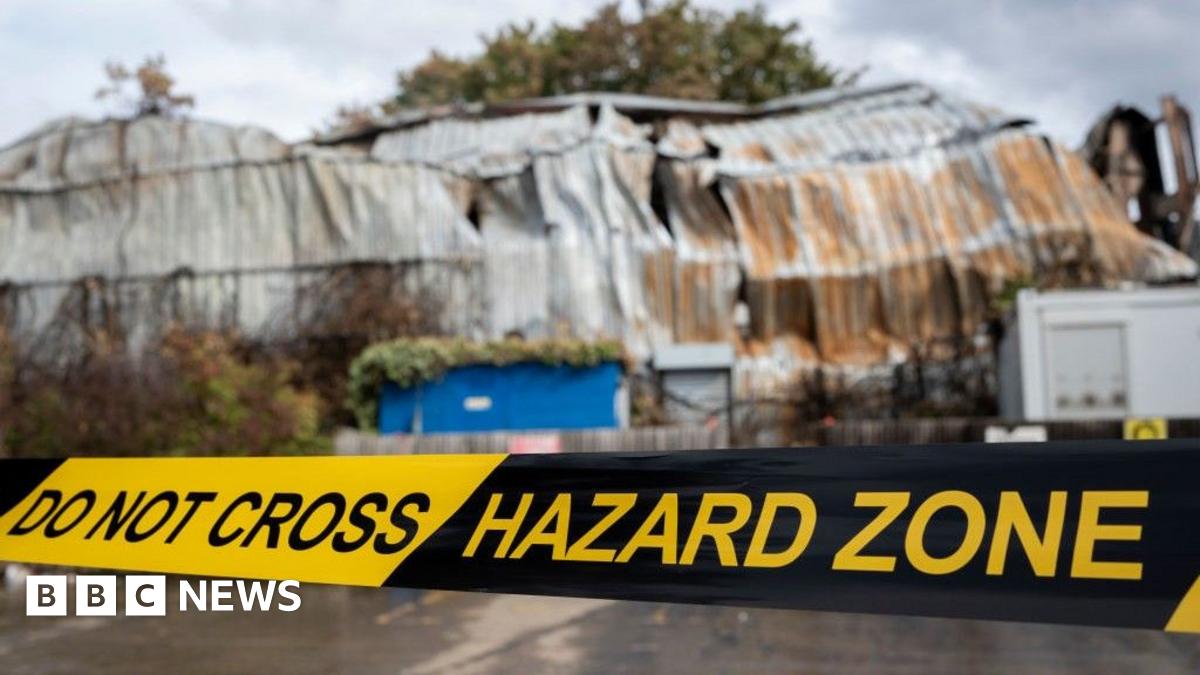
Lithium ion battery fires start when the cell becomes damaged, often by crushing or piercing, which can occur when batteries have been disposed of among other rubbish.
“When those internal components become damaged, distorted or broken, we can have chemical reactions inside which will start what we call thermal runaway, which is when we get heat, gases and, ultimately, fire,” says Scott Hirons, a station manager with Northamptonshire Fire and Rescue Service.
Battery fires can start not just from individual batteries but often from products with built-in batteries, such as disposable vapes, electric toothbrushes and even musical birthday cards.
Such products can get damaged in the waste collection process when not disposed of separately.
Lithium ion fires can generate their own heat and oxygen, as explained in this BBC video, external, whereas regular fires have to bring in oxygen.
This means that lithium ion battery fires can spread faster than some other fires.
Larger batteries in e-scooters or even battery farms can also pose fire risks.