
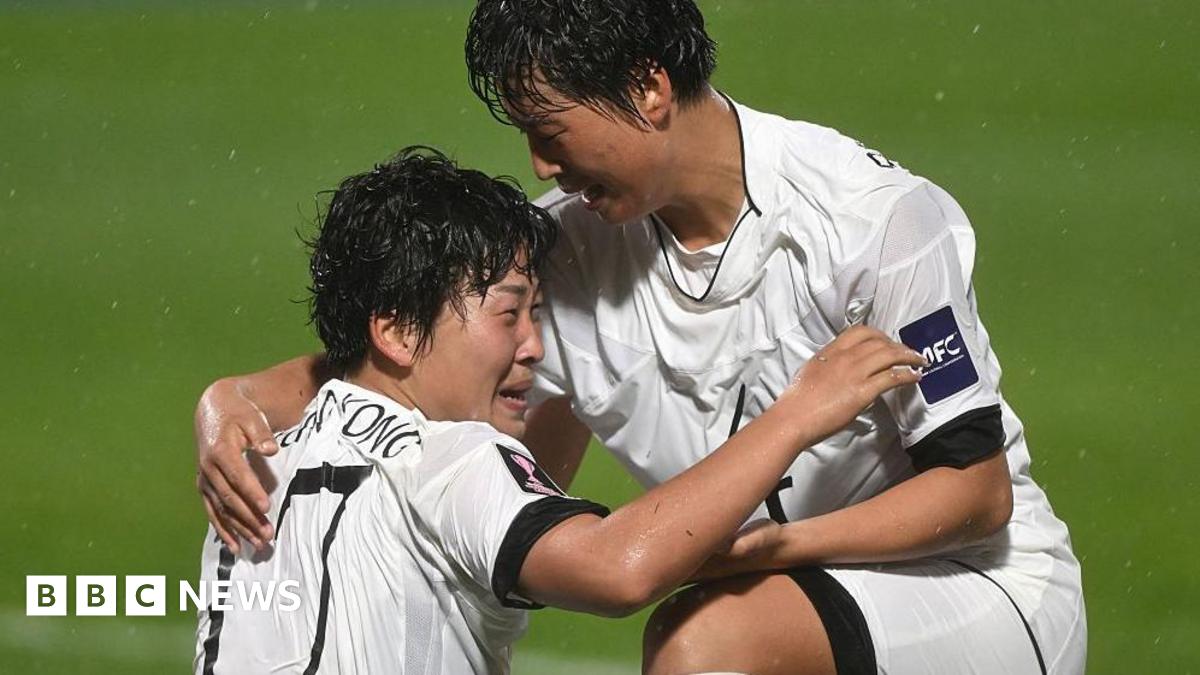
North Korean women, on the other hand, “are very tough and resilient”, Han said, reflecting a widely-held perception of them as hardworking and resourceful breadwinners in a country where everyday life can be incredibly hard.
He added, cautiously, that he did not want to sound “sexist” but he believed North Korean female athletes had a better chance of achieving strong international results than men because women’s sports leagues have not always been as competitive globally – especially at the time when Pyongyang decided to focus on developing the sport.
Some observers believe this goes back to the late 1980s when Fifa agreed to start a World Cup for women. “Maybe someone came to Kim Jong-il and said to him that we could use this,” Brigitte Weich, a filmmaker who followed the North Korean team for five years to make a documentary, told BBC Sport in 2024.
“North Korea is not the best in economics, science, human rights and the rest, but in countries like this they can be good at some sports because, from the top down, they can focus on training and nothing else.”
It’s impossible to know what ordinary North Koreans make of this week’s win, or how many of them were even able to watch Wednesday’s match given they have limited access to the internet or media.
But South Koreans will be watching – and on Saturday again, there will be a cheering squad, courtesy the Unification Ministry, although their decision to fund it has drawn some criticism.
Beyond the pitch, there are those who remain hopeful that sports could help rebuild trust and open the door to better relations between the two Koreas.
Choi Jong-dae, who was at Wednesday’s match, is one of them. The 91-year-old was separated from his mother and four siblings during the Korean War. He was 16 when he ended up south of the border and he never saw his family again.
“I feel like these North Korean players are like my granddaughters,” he said. “Who knows? One of them might be the daughter of one of my siblings or relatives. I hope they do well.”