
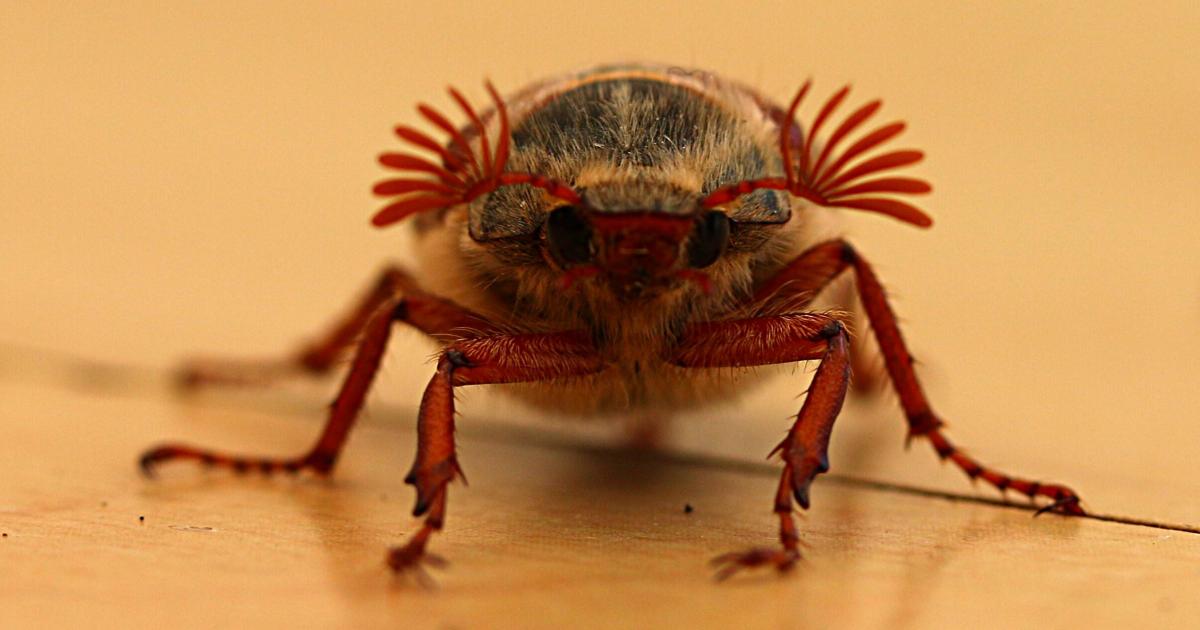
That’s according to the Sussex Wildlife Trust, which says the large beetles—better known as May bugs—are emerging as adults after spending years underground as larvae.
Charlotte Owen, from Sussex Wildlife Trust, said: “May is the month of the cockchafer, a big, bumbling beetle that may look and sound a bit scary, but this gentle giant is just looking for love.”
The beetles are most active after sunset and are often spotted flying clumsily around streetlights and illuminated windows.
If you have a moth trap, you might find a few attracted by the bright light.
Ms Owen said the name “cockchafer” is believed to come from “cock”, meaning familiar—like a cock sparrow—and “chafer” which refers to a gnawing beetle in the same family as the Egyptian scarab.
The insects are known by a variety of regional nicknames, including spang beetle, billy witch, dumbledarey, mitchamador and bummler, according to Sussex Wildlife Trust.
The adults that appear in May have spent at least three years underground as creamy-white grubs, munching on the roots of grasses and cereals.
The Cockchafer is also known as the Maybug (Image: Wikimedia)
Ms Owen said that before modern farming practices, these larvae were a serious agricultural pest.
In 1320, the beetles caused so much trouble in Avignon, France, that they were taken to court, ordered to leave the town and relocate—but, unsurprisingly, none complied.
Ms Owen said: “Of course, not a single cockchafer complied, and thousands were rounded up and killed.”
Today, cockchafers exist in much smaller numbers.
Cockchafer’s spend years underground as grubs (Image: Wikimedia)
It takes three to five years for the slow-growing grubs to reach their maximum size of around 4cm before pupating in early autumn.
Six months later, they emerge as adults but remain underground until spring.
Once above ground, they live for only six to eight weeks, during which their sole aim is to reproduce.
The beetles are clumsy fliers, often crashing into windows or wandering into homes, and rely on their large, feathered antennae to detect chemical signals from potential mates.
Males have seven “leaves” on their antennae, whereas females have six.
After mating, females lay up to 80 eggs deep in the soil before disappearing for good.