
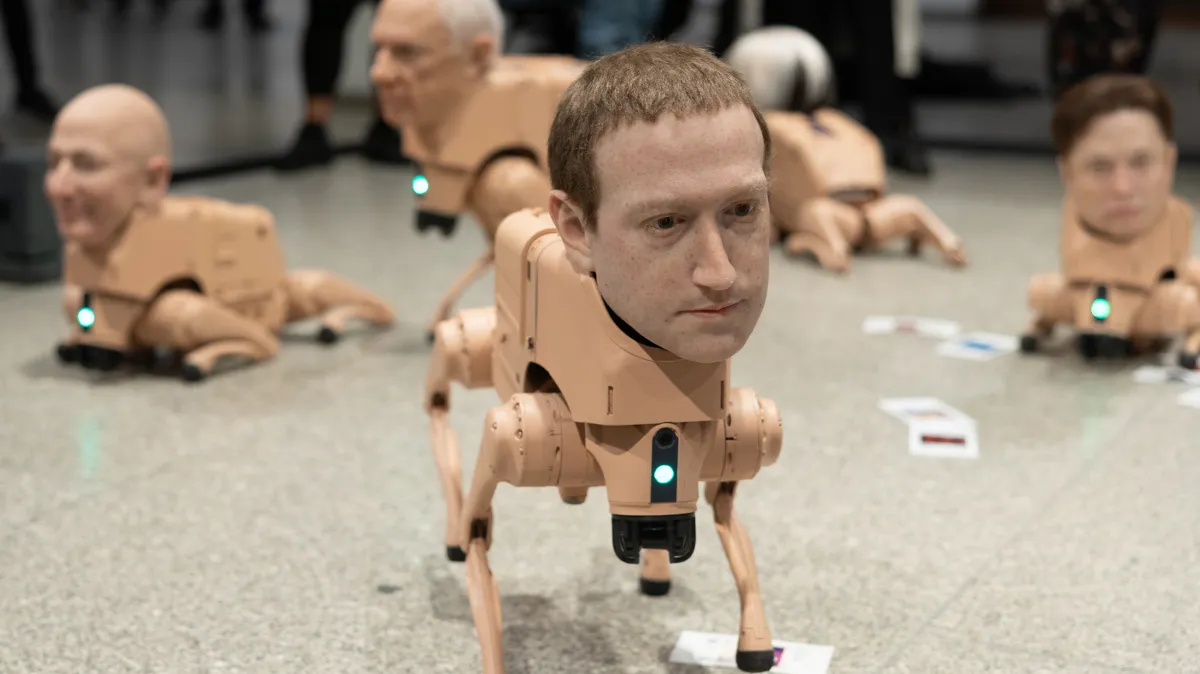
The email arrived while he slept — at 4am — so that it was waiting for him when he woke up. “Unfortunately, your role has been eliminated as part of today’s reorganisation,” read the message. “If you are already in the office, we ask that you please gather any personal items at your desk and head home.”
Dean Hogarth, a 40-year-old father of a new-born baby, had been made redundant.
“I was really surprised,” he said. Hogarth, whose name has been changed, had spent nearly seven years at Meta. He was a top performer, attaining the highest rating possible from his manager. And he worked on the artificial intelligence team, helping improve the efficiency of the company’s AI models.
“I was the exact profile of the person that they would want to keep,” he said. “This is extremely scary. But I would do the same if I were Mark [Zuckerberg]. I might do it in a kinder, gentler, more humane way, but it’s coming, and I don’t think people are ready.”
Zuckerberg, chief executive of the Facebook, Instagram and WhatsApp owner, last week laid off 8,000 people — 10 per cent of Meta’s 80,000-strong workforce — as he pivots the $1.5 trillion (£1.1 trillion) social media giant towards artificial intelligence. Back in 2022, Zuckerberg spent $32 billion on AI infrastructure. In 2026, he plans to invest up to $145 billion — an increase of $113 billion — to build the fleet of vast data centres required to attain “superintelligence”.
Humans were a casualty of that shift in priorities.
But the layoffs were only part of the change. Zuckerberg also reassigned another 7,000 people into new, AI-focused roles. In a note to employees, he offered little comfort. “Success isn’t a given. AI is the most consequential technology of our lifetimes. The companies that lead the way will define the next generation,” he wrote. After a series of mass redundancies in recent years, he pledged only that more company-wide cuts would not happen “this year”.
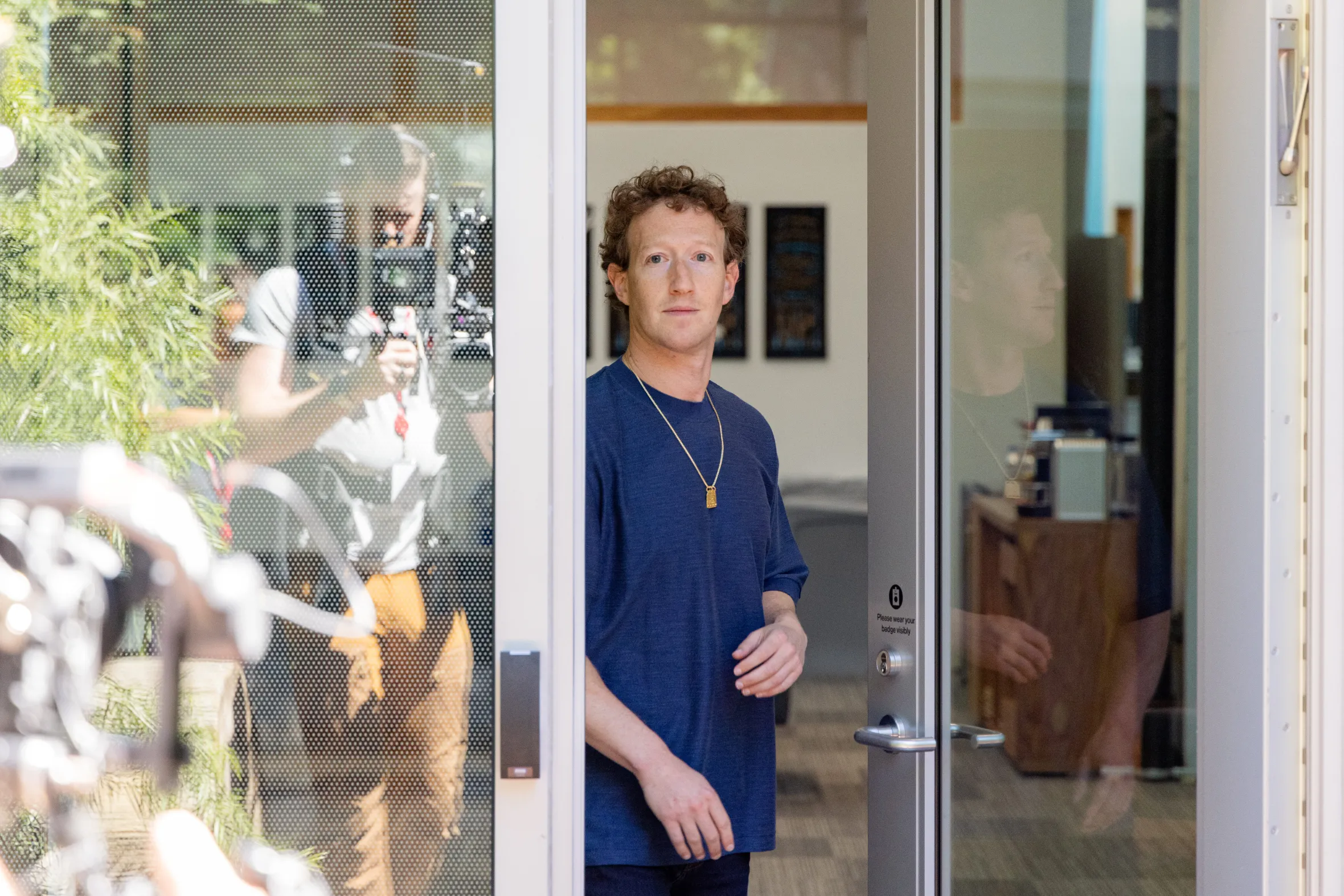 At Zuckerberg’s tech giant, staff have pushed back against being tracked by AIGettyON HENRY/GETTY IMAGES
Hogarth said: “I don’t think I’m leaking any intel to say that morale at Meta is bad.”
More than 1,500 employees have signed a petition demanding an end to a new programme that Meta rolled out to train AI models by tracking employee mouse clicks, screen data and key strokes. Flyers could be found around Meta’s headquarters, in Menlo Park, California, with a kitten in a hard hat saying, “I sure hope I don’t get my data extracted for AI training today”.
The tracking programme is understood to be part of an effort to create AI tools to increase efficiency — or even replace entire functions with bots.
 Meta’s Menlo Park headquartersTAYFUN COSKUN/GETTY IMAGES
Zuckerberg has made big shifts before. Early in Facebook’s life, he forced the company to completely reorient around the smartphone and away from its roots as a website. He spent nearly $100 billion on the metaverse before throwing in the towel this year, shutting down Meta’s core Horizon Worlds app and axing more than 1,000 people in January from the Reality Labs arm.
And now he is pivoting, hard, to AI. Or to put it another way, he is going all-in on the machines, leaving those humans who survive the latest bloodletting to fret if they are, in effect, living on borrowed time.
The day after Zuckerberg wielded the axe, Gavin Newsom, California’s governor and expected 2028 presidential candidate, signed an executive order to prepare workers in his state — ground zero of the AI revolution — for mass disruption.
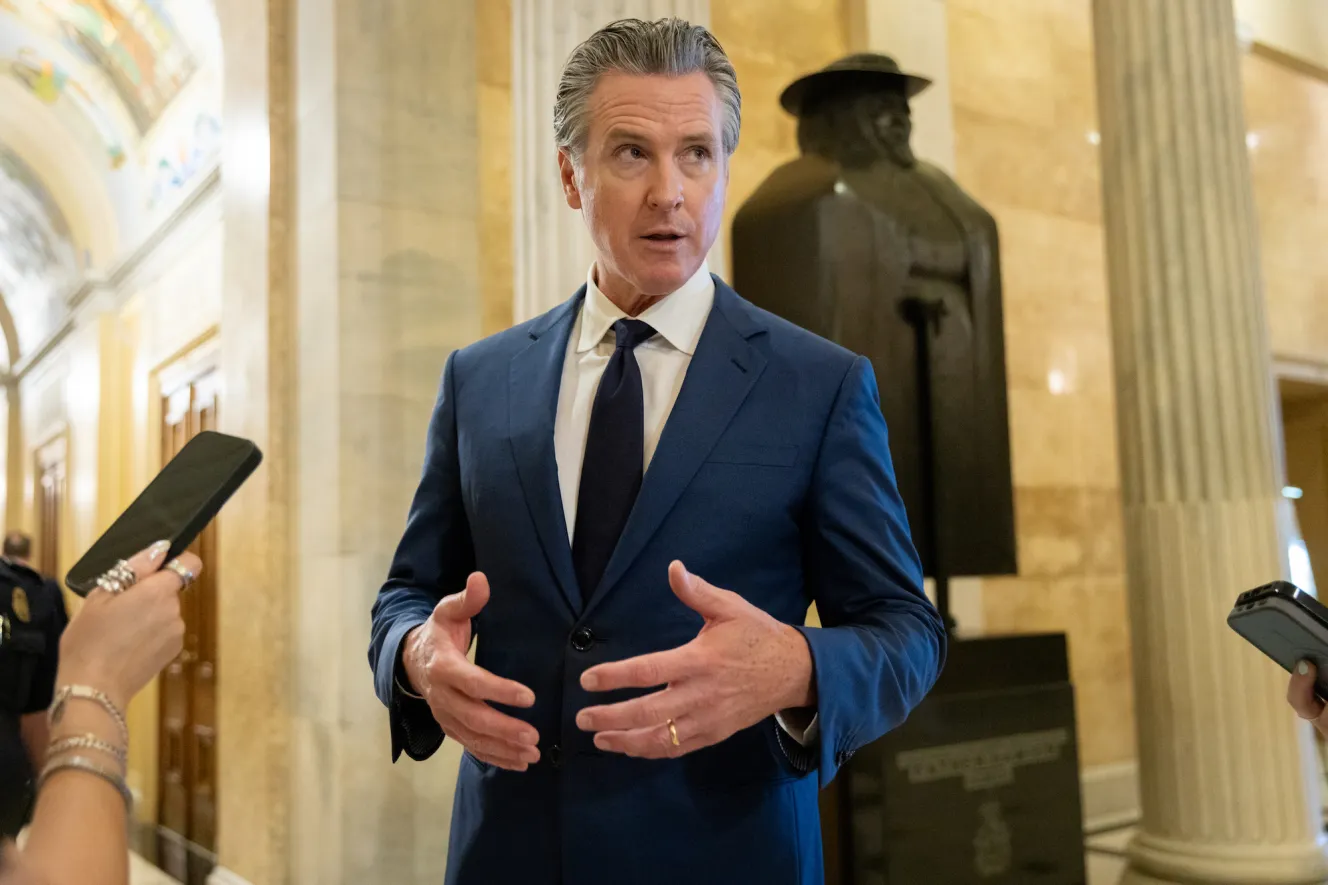 Gavin NewsomNATHAN POSNER/GETTY IMAGES
Newsom said: “This moment demands that we reimagine the entire system — how we work, how we govern, how we prepare people for the future — and that work is starting right here in the Golden State.” The order directed state agencies to explore new policies ranging from retraining to new severance standards and employment insurance.
Meta is not the first to make such a move. In February, billionaire Jack Dorsey laid off 40 per cent of his workers at payments firm Block. Larry Ellison’s Oracle announced 30,000 redundancies the next month, while Evan Spiegel at Snap got rid of over 16 per cent of his workforce in April — more than 1,000 people.
Bill Winters, the chief executive of Standard Chartered, apologised on Friday for his language when referring to the almost 8,000 people set to lose their jobs at his bank to AI. Three days earlier, he had explained that the job cuts were “not cost-cutting … it’s replacing, in some cases, lower-value human capital with the financial capital and the investment capital we’re putting in”.
 Bill WintersLUCY YOUNG FOR THE SUNDAY TIMES
On Wednesday HSBC chief executive Georges Elhedery urged his staff to get on board with AI, saying they should not be “fighting us, not disenfranchised, not anxious, overwhelmed, and resisting the change”.
While each cited AI as the primary driver of job cuts, Zuckerberg’s move carries extra weight. He may be controversial outside Silicon Valley, but within the industry he is revered — seen as a leader willing to take big bets. Where he goes, others follow.
The cuts will leave Meta with 20 per cent fewer workers than the pandemic-era high of 86,000 in 2021. That year, the company earned $39 billion on $117 billion in sales. Since then, Meta has grown dramatically, partly due to AI tools that improved ad conversion rates and targeting. In 2025, it banked $83 billion in profits on revenues of $200 billion.
In other words, the company is twice as profitable with a fifth fewer humans. It is doing more with less.
Start-ups and big companies alike are under pressure to do the same. Tom Blomfield, the founder of challenger bank Monzo and a partner at the Silicon Valley start-up accelerator Y Combinator, last week ordered 200 founders in the current batch at its boot camp to build “self-improving companies” with AI at their centre.
To do this, he encouraged them to “record everything” — every email, every chat message, and even offline interactions via wearable recording devices and meeting rooms decked out with microphones. The goal: to make every interaction, however minute, “legible” to an ever-expanding “company brain” that directs AI agents to make decisions and “improve the company while you sleep”. Middle management, he added, was “done”.
That type of fervour is stirring angst in everyone from politicians to billionaires, senior executives to young people. Indeed, when Eric Schmidt, the billionaire former chief of Google owner Alphabet, delivered the graduation address to thousands of students at the Arizona University this month, he was drowned out by boos when he started talking about the rise of AI.
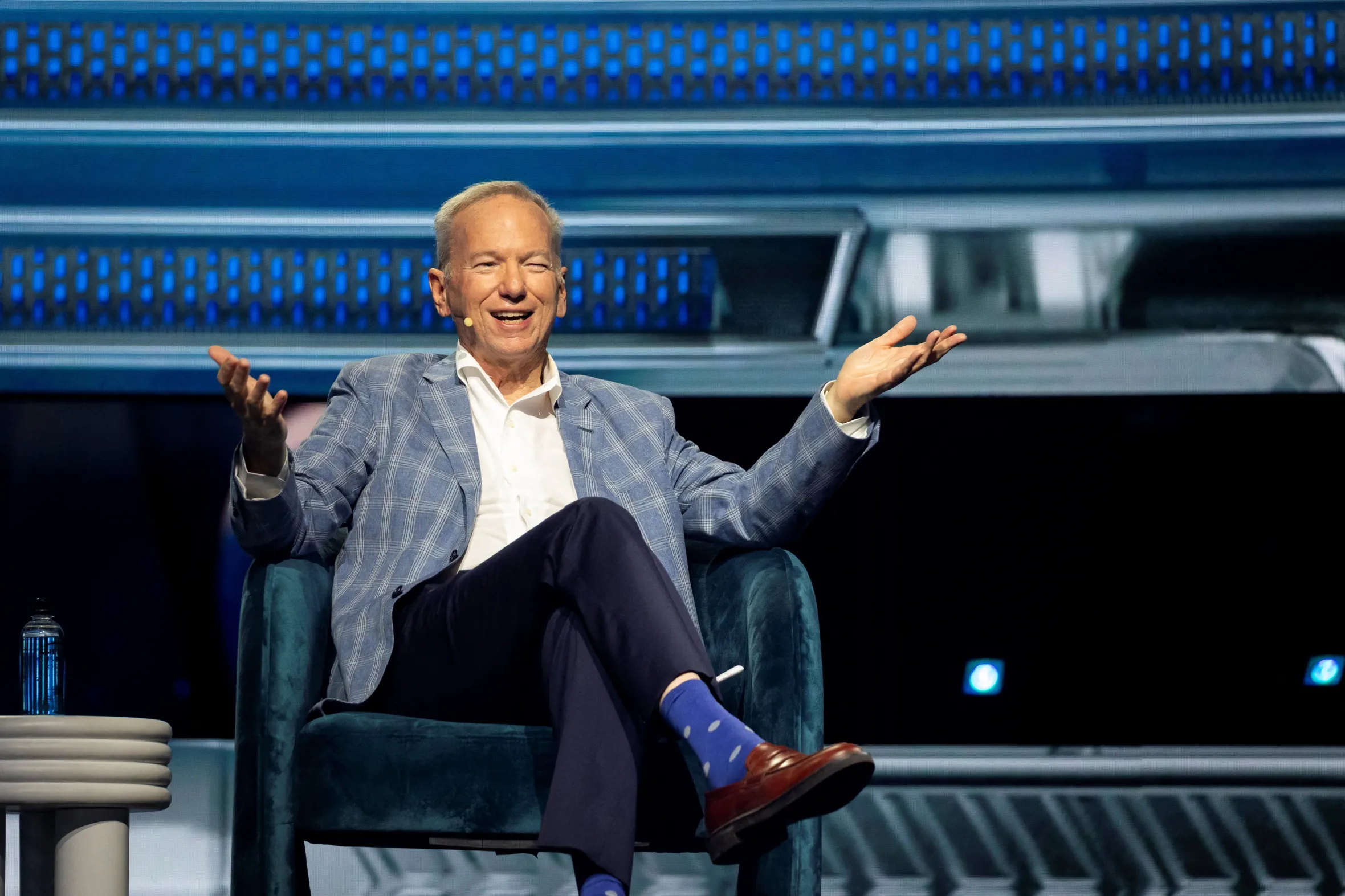 Eric Schmidt MARCO BELLO/REUTERS
“I know what many of you are feeling about that. I can hear you. There is a fear,” he said. “The question is not whether AI will shape the world. It will. The question is whether you will have shaped artificial intelligence.”
Hogarth understands the angst because, from his perspective, it is well-founded. “My co-workers who were impacted, especially the ones that were less interested about this AI stuff, it really sucks for them,” he said. “They were doing a fine job at the Meta of 2024, and now that’s not useful any more.”