
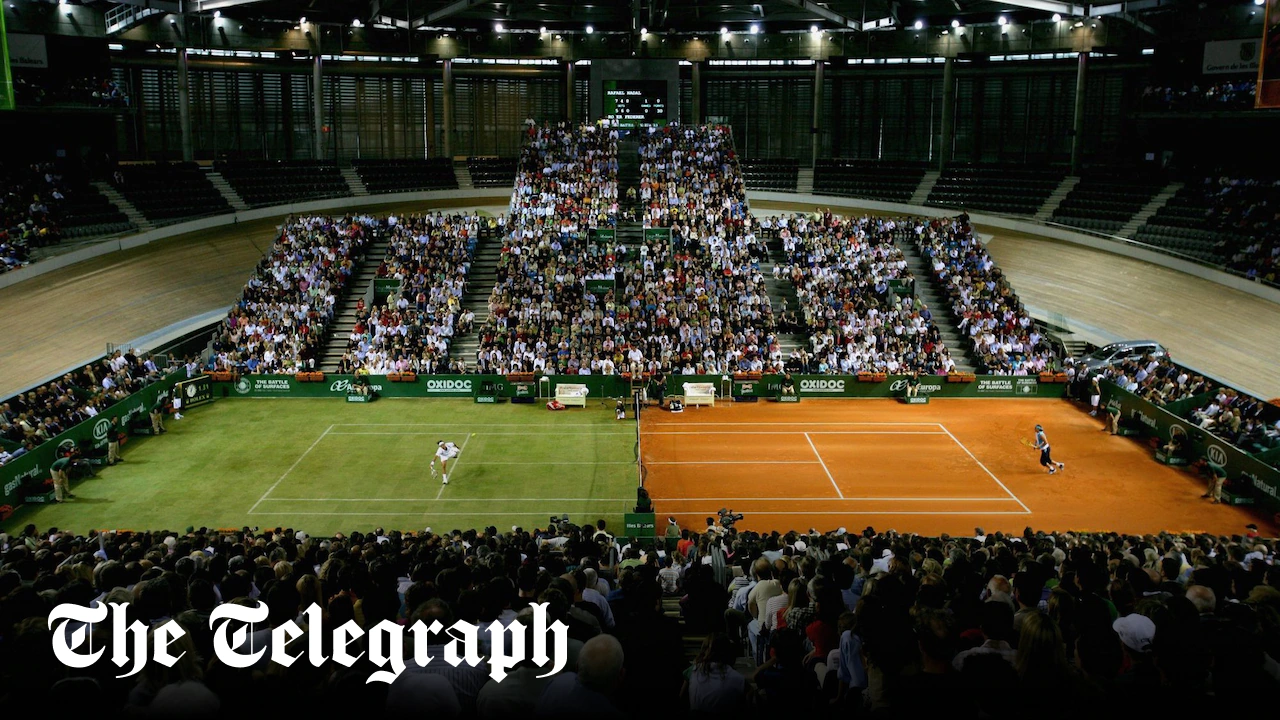
Clay-court tactics
On the face of it, clay court tennis does not look substantially different, but there are key distinctions. A top-spin ball will grip the red surface, causing it to “kick” or bounce higher than grass, which typically keeps balls low and skidding through. Likewise, a player’s movement is different on clay because of the loose surface, leading to more slides to reach the ball compared to a hard court.
The kick serve is used more to push players back to allow the server to gain court position, while players often stand further back than they might on other surfaces, with some even so far back they can be out of camera shot to get the ideal return.
“I think the base thing on a clay court is essentially more of a chess match than other surfaces which are more of a roulette,” Jones explains. “For me with clay it’s all about how you build the point; the construction of the point.
“Because it’s slower than the other surfaces, it’s much easier to open up the court.”
The slower nature of it, particularly when there is moisture in the air, allows those with a strong top-spin forehand to run around the ball and hit to all areas of the court, easier than on a hard or grass court.
What makes playing on clay so hard?
British struggles at Roland Garros are nothing new. There has not been a British singles winner since Sue Barker in 1976, while the last British man to hold the trophy was Fred Perry in 1935.