

“Tsunami” is the most widely used metaphor to describe the impact of AI on the world of work. Humanity, it implies, has no agency over the technology’s progress: people will watch in powerless awe as AI destroys the labour market as we know it and replaces it with goodness knows what.
Sarah O’Connor, a reporter at the Financial Times and columnist on work, points out that the tech companies have an interest in putting it about that AI is too powerful a force to regulate. They want people and governments to believe that it is not only beneficial, in that it will do the boring bits of work and leave the fun bits for people, but also unstoppable. O’Connor is sceptical of both ideas.
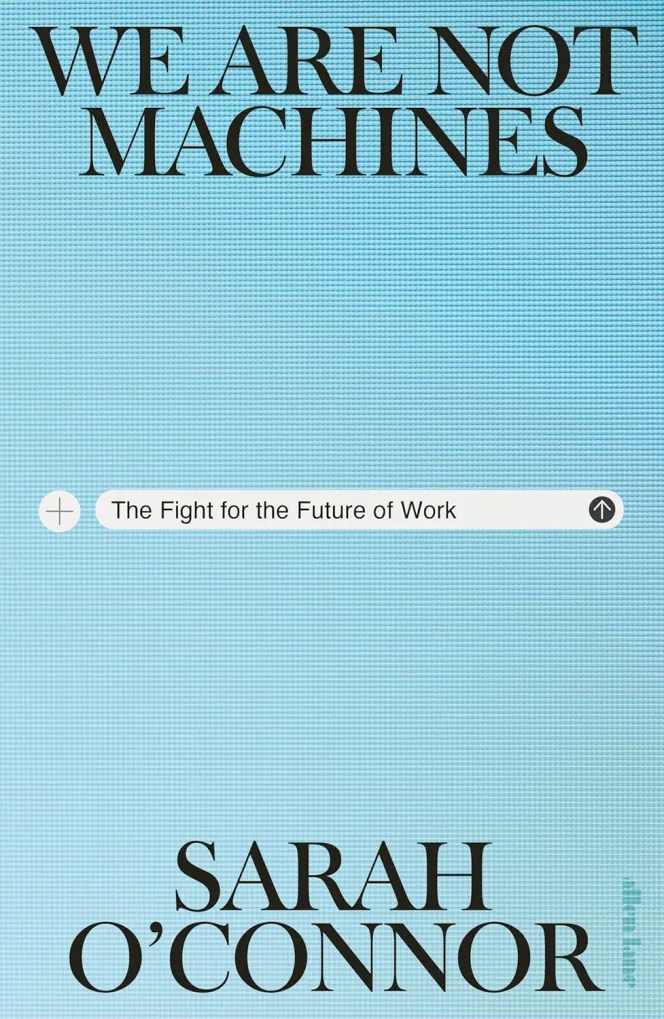
Most writing about AI is done by people sitting at their desks. O’Connor uses an increasingly rare and valuable journalistic technique — the application of shoe-leather to pavements. She talks to miners in Sweden, care workers in the Netherlands, lorry drivers in America and online workers everywhere from Costa Rica to the Himalayas. Out of those stories she creates a remarkable picture of what is happening to people’s jobs.
AI, in O’Connor’s view, is the latest stage in a three-century-long journey that has enriched people as consumers while impoverishing them as producers. She quotes John Ruskin on Adam Smith’s depiction of a pin factory to illustrate how the division of labour works: “It is not, truly speaking, the labour that is divided; but the men — divided into mere segments of men — broken into small fragments and crumbs of life; so that all the little piece of intelligence that is left in a man is not enough to make a pin, or a nail, but exhausts itself in making the point of a pin or the head of a nail.” Hot on the heels of the division of labour came Frederick Winslow Taylor, surveilling workers with his clipboard in pursuit of efficiency to ensure that not a second nor a movement was wasted.
Books newsletter
News, reviews, author interviews and suggested reads from our literary editors.
Sign up with one click
O’Connor uses the contrast between an old-style Amazon warehouse and the newest version to show how these trends have accelerated. Employees in the old one walked seven to fifteen miles a day, picking items off shelves. It was tough work, but at least they were physically active. In the new one, robots bring the shelves to workers who are guided by a light to put items on shelves or pick them off and put them in boxes. They do this for ten hours a day.
Three cameras check that they are placing items correctly. If the video quality is too low for computers to read, humans remotely check the videos. During a nine-hour shift, these workers watch about 1,200 ten-second videos, which they are expected to judge with 99.99 per cent accuracy. O’Connor spoke to one employee, a former journalist in Costa Rica, who was reduced to weeping on her keyboard at the horror of it.
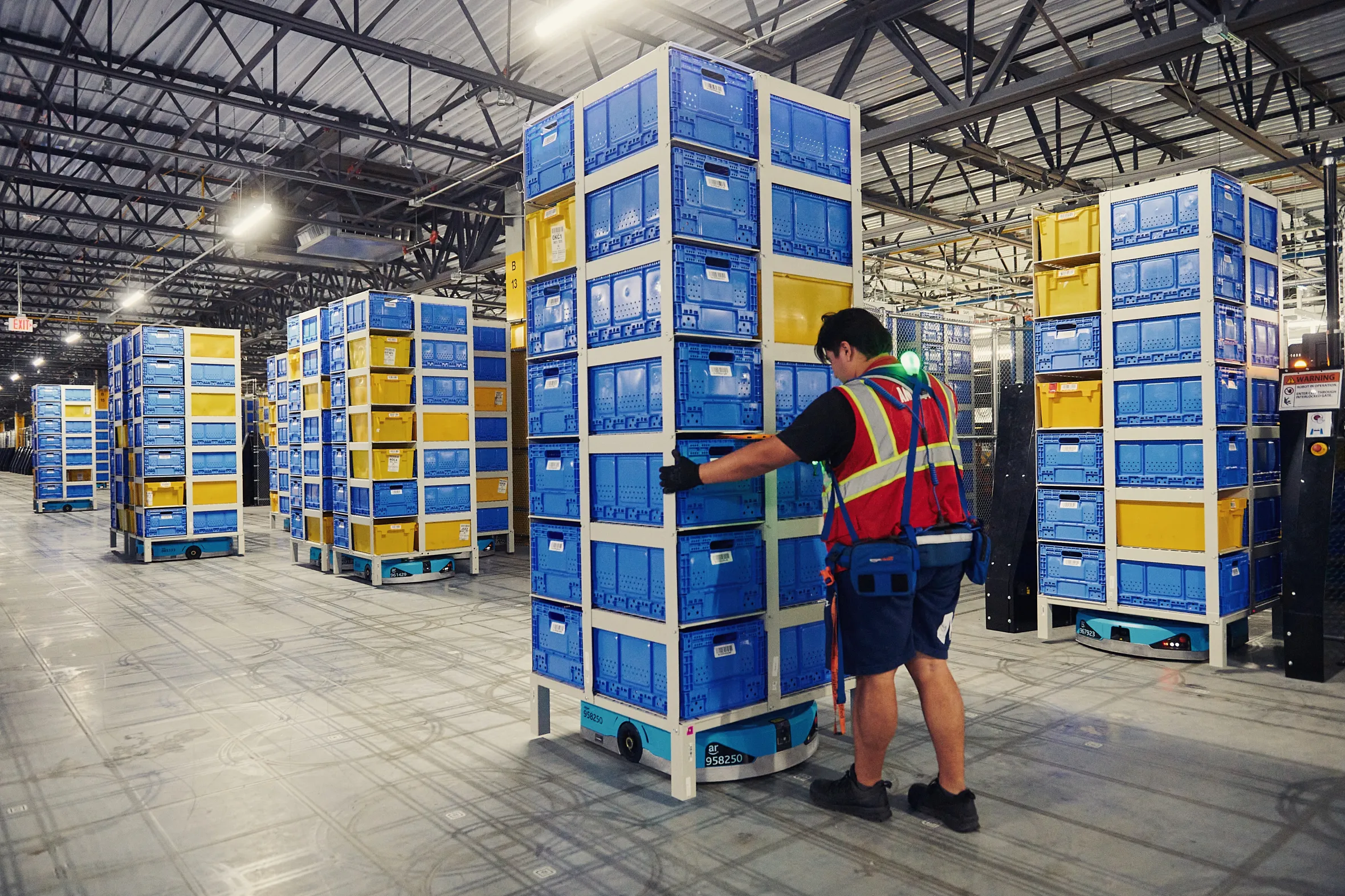 Robots at an Amazon warehouse glide across the floor to bring shelves to a human worker
Some of the developments O’Connor reports are truly bonkers. A woman writing for a biotech company’s website told O’Connor that because Google assigns a lower ranking to articles it judges have been written by AI, her articles are checked by AI to ensure that they have been written by a human. Sometimes the AI gets it wrong and misattributes a human-authored article to AI. So those pieces go through a “humaniser” — AI that inserts typos and grammatical errors to persuade Google’s AI that the piece is generated by a person not a robot.
Yet O’Connor finished the book less pessimistic than when she started. In the course of her reporting, she met people whose jobs have been improved by AI. In a Swedish mine, for instance, the introduction of self-driving trucks, cameras and wifi has made the jobs more productive, safer and pleasanter (the miners can listen to Spotify as they work).
What makes the difference, according to O’Connor, is worker participation in decisions about how the technology is used. In Sweden, powerful unions negotiate with employers. The miners didn’t like the idea of their every movement being recorded on camera, so the surveillance system was anonymised and the miners’ identities revealed only in emergencies. Similarly, in Hollywood, after a painful strike, the writers’ union got a deal with the studios whereby writers would use AI to make the business more productive, but on their own terms.
O’Connor therefore argues that AI is not a force beyond our control. Humanity can influence the way it flows through the economy and how it reshapes the social landscape. If we don’t like the way things are moving, it’s up to us to change the direction of travel. O’Connor quotes CS Lewis: “We all want progress. But progress means getting nearer to the place where you want to be. And if you have taken a wrong turning, then to go forward does not get you any nearer. If you are on the wrong road, progress means doing an about-turn and walking back to the right road.”
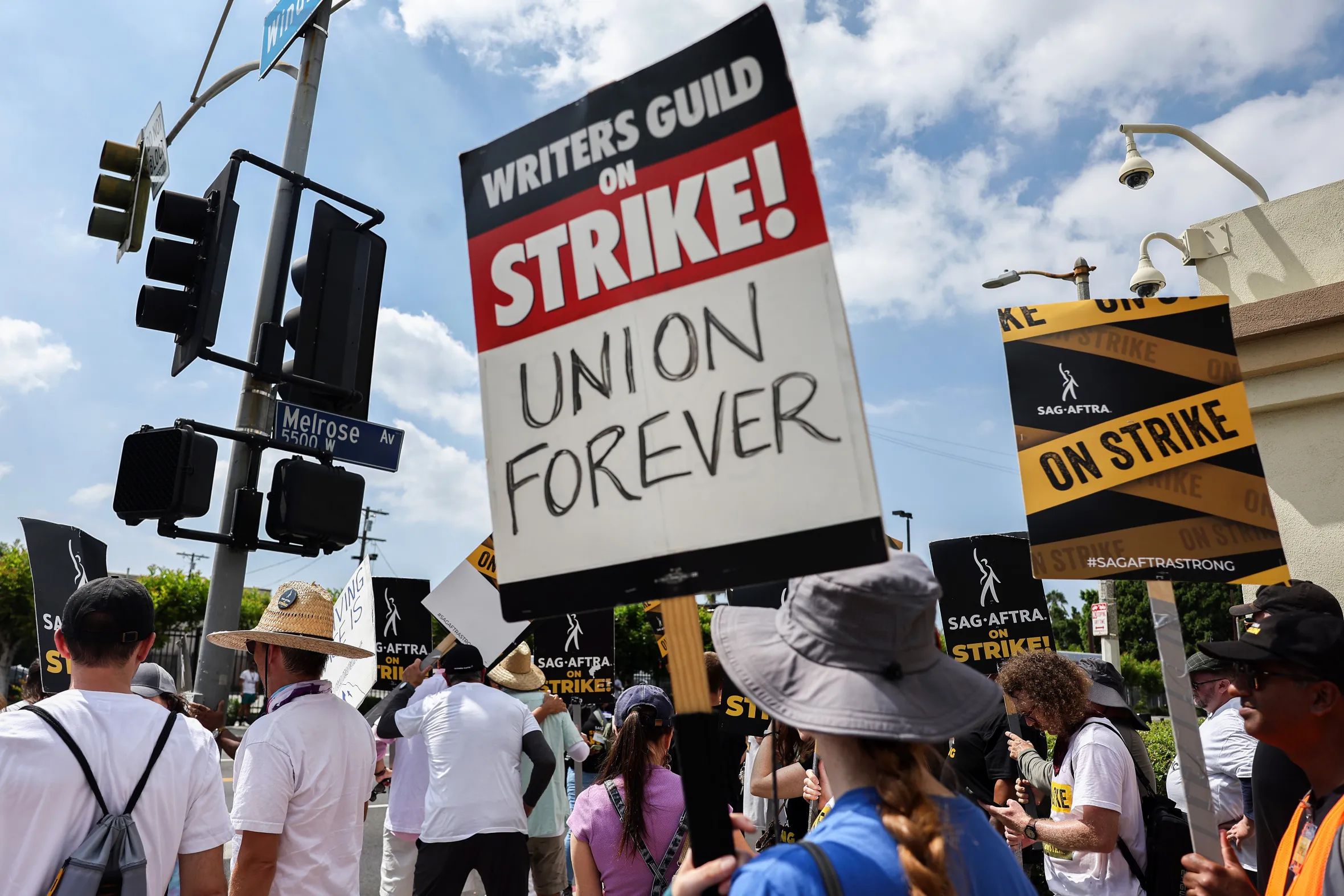 Hollywood writers’ union members picketing in Los Angeles, 2023Mario Tama/Getty Images
At a time when we’re hurtling towards the unknown, that feels like an important nugget of wisdom. But there’s a piece missing from O’Connor’s argument: how we should control or shape the flow. “Be Scandinavian” is one answer, but not widely available. “Have big, powerful unions” is another, but it has downsides. “Regulate” is the most obvious, and O’Connor gestures towards it, but doesn’t engage with the principal difficulty — that regulation encourages firms to move their operations across borders. If Hollywood made its films in India, would the US and British governments ban their people from watching imported films? Could they if they wanted to? And should they?
This is likely to be one of the toughest policy issues that AI raises, and We Are Not Machines does not engage with it. Yet the book is reportage, not policy-wonkery; and in an age when far too many books about social change are written by people sitting at home reading the abstracts of scientific papers, that’s a great virtue. We Are Not Machines is original and enlightening, rooted in reality and populated by people. Not many books about the labour market make you laugh and bring tears to your eyes. This one does. It’s the kind of writing that AI will never replace.
We Are Not Machines: The Fight for the Future of Work by Sarah O’Connor (Allen Lane £20 pp256). To order a copy go to timesbookshop.co.uk. Free UK standard P&P on orders over £25. Special discount available for Times+ members