
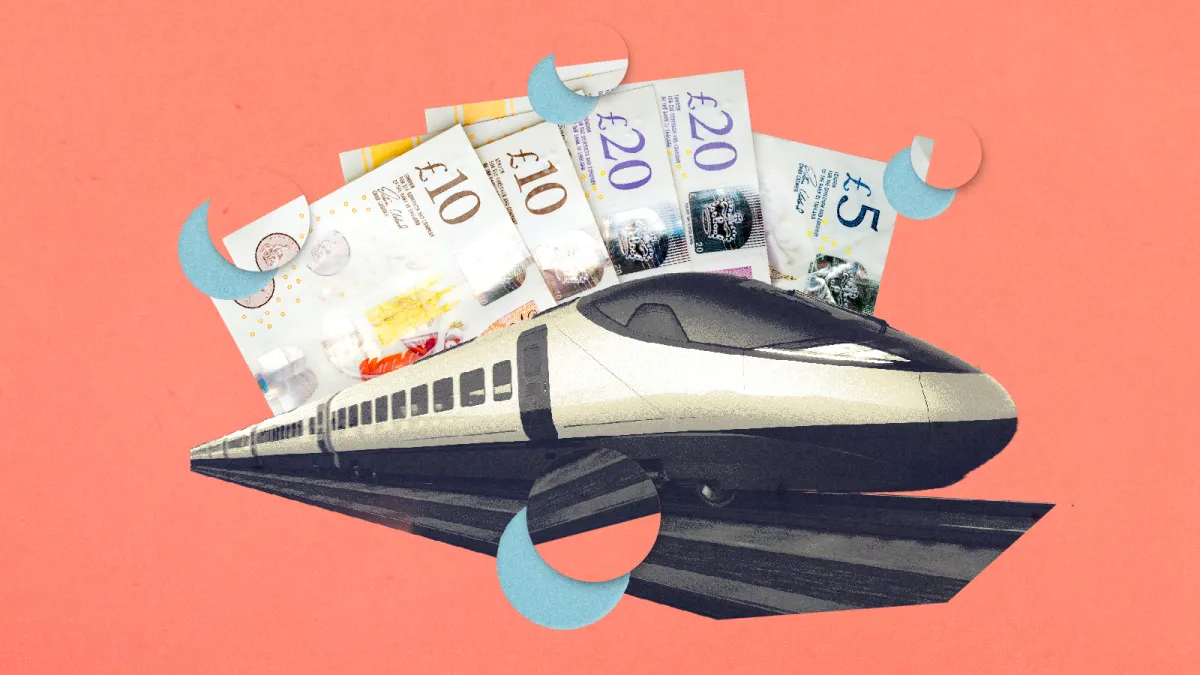
In 2019 Norway finished the longest undersea road tunnel in the world. The Ryfylke tunnel is nine miles long, and cost well under a billion pounds. Or, put another way, at that cost for £100 billion they could get from Land’s End to John o’Groats.
In the past 30 years, Spain has built the largest, and cheapest, high-speed rail network in Europe. For the same cost per mile, if you gave them £100 billion they could happily run a line from London to Inverness.
And in the UK? £100 billion, we learnt this month, is enough to build half of a planned high-speed rail network, stopping at Birmingham — with the first trains running a decade late. On just one section there is a canopy to protect bats that cost more than a tenth of a Ryfylke.
Heidi Alexander, the transport secretary, described HS2 as a “litany of failure”. She said: “If it seems like an obscene increase in time and costs, it is because it is. If it seems like I’m angry, it is because I am.
 Heidi AlexanderJON SANTA CRUZ FOR THE TIMES
A lot of the anger has been, like hers, about the cost. But what about the opportunity cost? What transport projects might we have spent the money on instead?
Roads
“Everything,” says Michael Dnes, “was affected by the cost of HS2.” Until 2024, Dnes was head of future roads technology at the Department for Transport. When he left, the future of roads wasn’t looking great. “The Treasury had been taking all the money associated with other transport, and sucked it into HS2. There was no gas left in the tank.”
Dnes, now head of roads at the consultancy Stonehaven, says the sector had a model for what good transport policy looked like. It was a 2006 government report by Sir Rod Eddington, the former chief executive of British Airways.
Eddington had been asked to plan a future transport strategy, looking ahead to the distant date of 2025. He concluded that much of the UK’s transport infrastructure is there — we didn’t need big new schemes. The biggest gains came from small projects, clearing chokepoints and joining things up.
Dnes thinks this is still the case. There are some easy wins, he says, “filling in gaps”. We could join up Oxford and Milton Keynes. “If you want an Oxford-Cambridge dual carriageway, two thirds of it is already there.”
There are even more obvious projects in the north. Manchester, he notes, is a pretty big conurbation. So too is Sheffield. And if you want to go from one to the other? “Currently there are two lovely scenic routes. One goes over a big mountain pass.” It can be closed by snow. The other, Snake Pass, goes south. It too is subject to closures. “The problem is half the road is falling down the slope.”
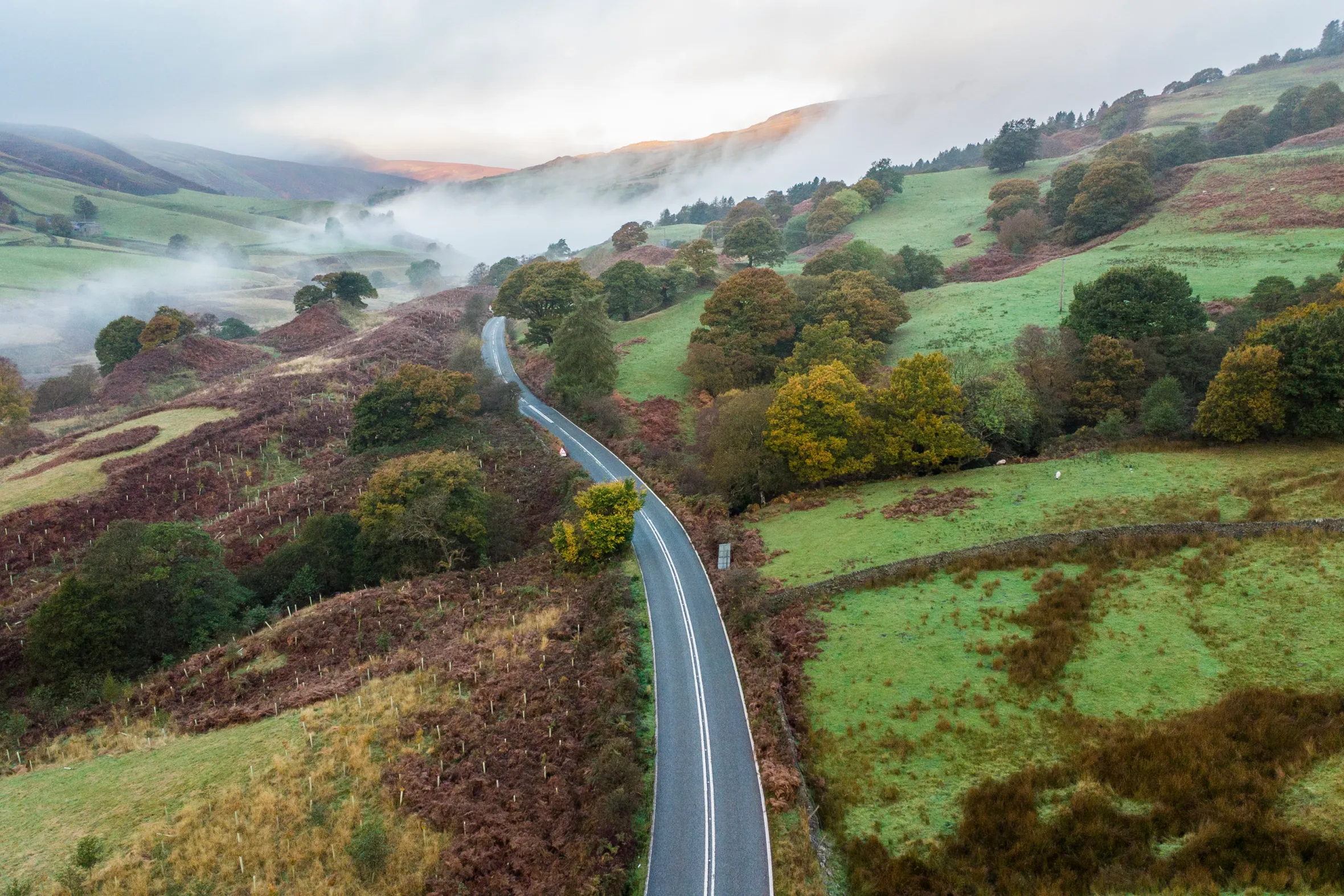 Snake PassAndrew McCaren for The Sunday Times
His preferred solution is not just shoring up the road. “We looked for five years at a tunnel under the Peak District to link the two cities. The benefits were high, but we couldn’t afford it.”
Much of what he would do, though, is bits and pieces here and there. Upgrade junctions. Build more bypasses. Upgrade the A2 to Dover to a dual carriageway. There’s a lot to do. “We stopped building roads at some point,” Dnes says. “They became overloaded, they became tired.”
There is another conclusion of the Eddington report that Dnes thinks is pertinent. “Its primary recommendation,” he says, paraphrasing slightly, “was ‘Don’t you dare build a high-speed railway’.”
Trams
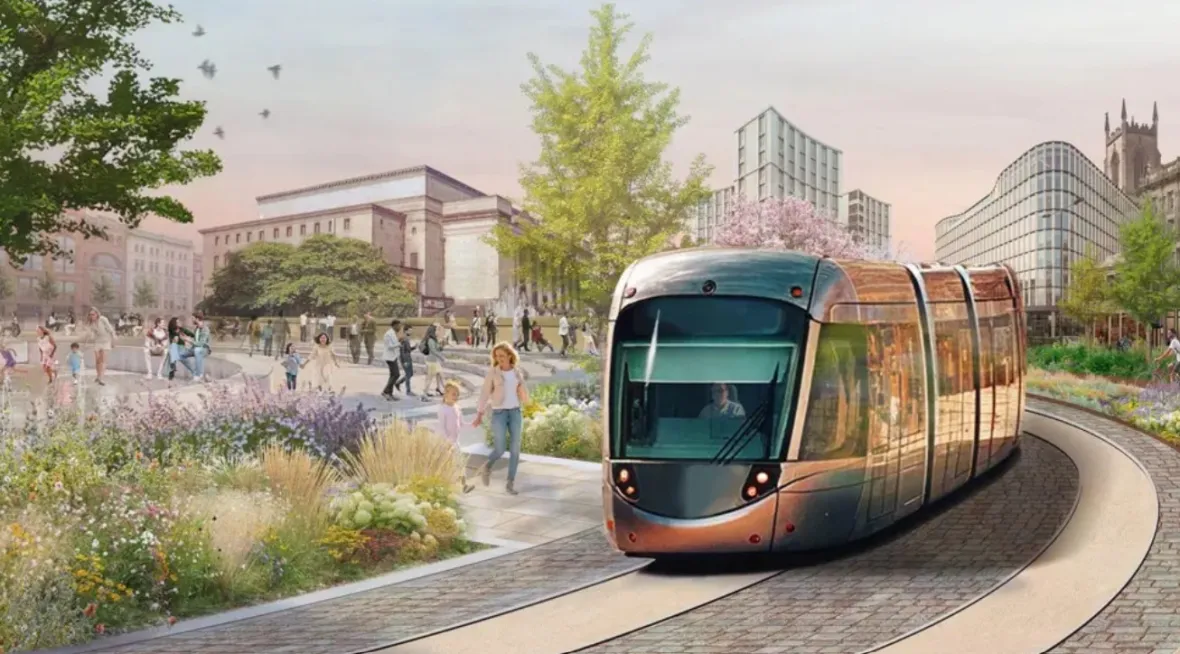 A tram between Leeds and Bradford tram would cost an estimated £2.5 billion
Leeds is the largest city in Europe without mass transit, according to Ben Hopkinson, head of housing and infrastructure at the Centre for Policy Studies. It’s not only Leeds that is missing out: if Reading were in France, he points out, even it would have a tram.
In fact, every French city with more than 150,000 people has a tram network or a metro. In Britain? There are 30 that don’t.
The thing about trams is that you can’t argue with rails. Trams, he says, are a statement: this line is staying. “They can be the catalyst for regeneration. You’re not going to build a shopping centre, office space, flats, off a bus route. But you totally can do it off a tram route — that’s a permanent investment in a city centre.” That’s why Hopkinson, head of housing and infrastructure at the Centre for Policy Studies, likes trams.
Britain used to have a lot of trams. Now, it struggles to build them. Part of the reason for that, Hopkinson has argued, is that unlike in France mayors don’t have the autonomy to allocate funds, and have to repeatedly scrap with Whitehall. Another problem — a familiar one — is that they cost more to build here.
Both problems, though, would be smoothed over rather effectively with £100 billion. “That gets you a lot of tram.” The estimated cost of a Leeds and Bradford tram is £2.5 billion. “Using that cost estimate, if you think there are 30 British cities larger than 150,000, that’s a very comprehensive network for each of them with some money to spare.”
Rail
Take the train from London to Oxford and something happens — although you may well not notice it — at Didcot. The electric wires stop. They weren’t meant to. The whole of the line was meant to be electrified. “Electric trains are faster, more energy-efficient, cleaner,” says Christian Wolmar, a transport commentator.
But here, as on two thirds of our network, you have to switch power source. “It’s quite remarkable that a country that invented railways has such a small proportion electrified,” he says. “And that we cocked things up so badly that it was too expensive to get to Oxford. Just ridiculous.”
Wolmar likes trains. He also likes high-speed trains, in their place — his next book is Fast Track, a history of high-speed railways across the world. The chapter on HS2, a train that spent much of its budget before laying a single track, is not a happy one.
Which is one reason the trains he really likes are the dull ones.
“I’ve just been to Holland. I’ve always admired their network. It’s really boring. All these efficient, unexciting, electric trains go around.” He likes the London Overground for the same reason. Quietly, London joined together old lines and disparate lines to create something bigger than the sum of its parts. That’s what he would like for the north.
“The north has needed a better rail system for decades. It has a higgledy-piggledy bunch of lines that need sorting out.” From Newcastle to Hull, we need something like the Netherlands or the London Overground or — for those who remember it — Network Southeast. “A big chunk of investment to say: this is the north, an exciting region, go-getting and modern.”
And could he do this with change from £100 billion? Almost certainly. In which case, Wolmar has an even more unsexy suggestion: freight. Separate out the goods carriages on a line from Manchester to the Channel Tunnel. More freight would trundle to Dover, fewer passenger trains would get stuck behind it.
Compared with HS2? Not quite so appealing to politicians, but, “It would be so much more useful than a bloody Acton to Aston shuttle.”
Something floral
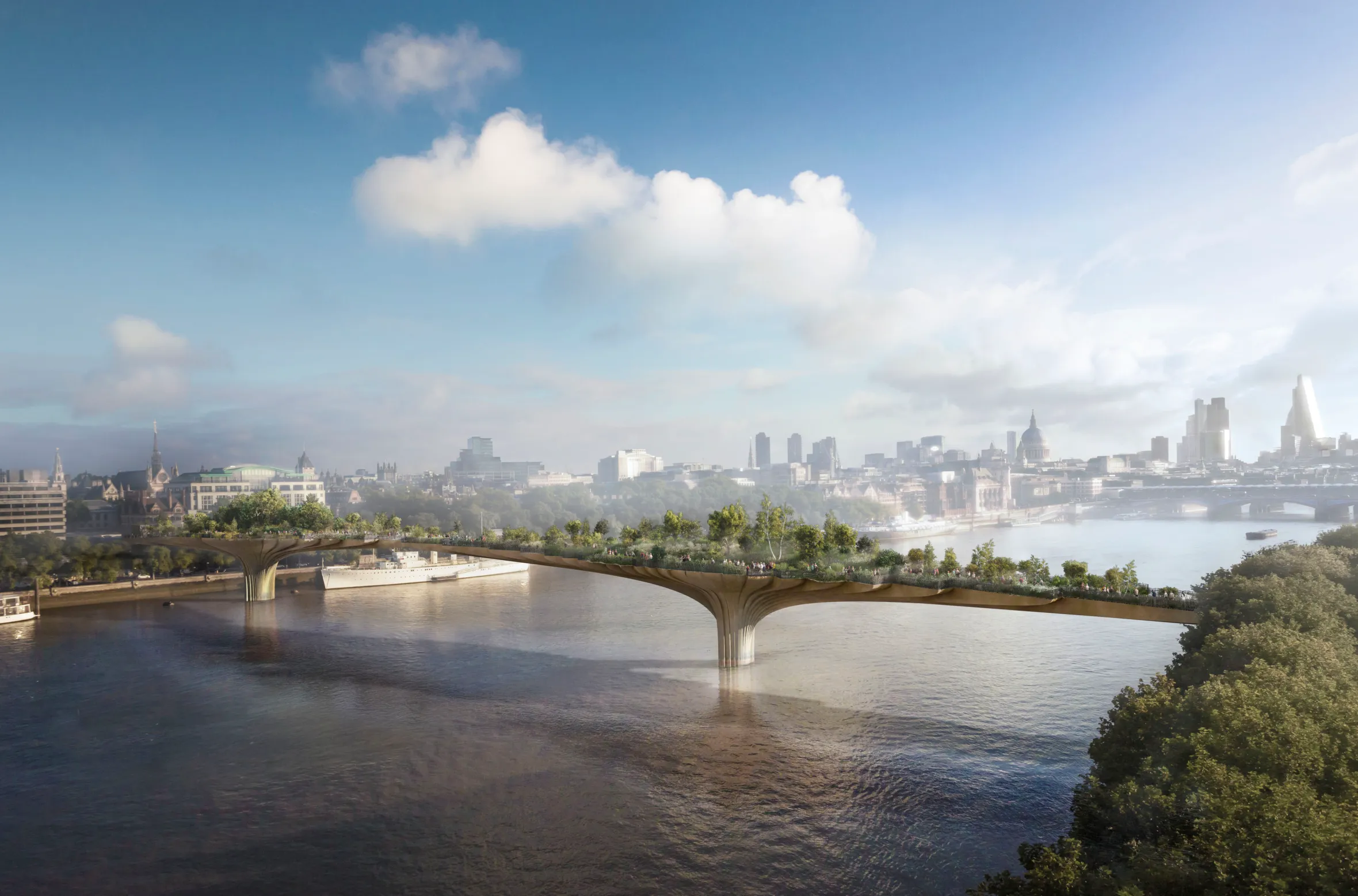 An artist’s impression of the proposed Garden Bridge across the River ThamesPA:Press Association
London’s Garden Bridge — a planned walking route over the Thames — was abandoned when costs spiralled to £200 million.
How does that compare with HS2? Well if, instead of building a rail route to Birmingham we had decided to walk there entirely on Dame Joanna Lumley-endorsed floral bridges, it would cost … a bit over £100 billion.