

The world’s largest music streaming platform is targeting high-spending “super-users” with a suite of new products, including a tool that will allow subscribers to legally remix tracks using artificial intelligence.
Spotify agreed a licensing deal with Universal Music that will enable premium users to create remixes and covers of existing songs using AI. The tool will be offered as a paid add-on for existing Spotify Premium subscribers.
Gustav Gyllenhammar, senior vice-president of markets and subscriptions at Spotify, told The Times that the new product, which will be released in the “near future”, reflected a shift from “personalisation to generation” that was occurring across different forms of media.
Business newsletter
The business editor’s exclusive analysis of all the latest financial and economic news.
Sign up with one click
Gyllenhammar said the company’s unparalleled access to user data gave it an advantage in establishing a “large taste model” that could create a more interactive experience for users. “Our ability to use our proprietary and licence data, combined with the signals that we’re getting from users, means that we can build ground-breaking new AI-based products across the board,” he said.
The music industry has faced challenges in recent years, with remixes going viral on short-form video platforms such as TikTok without generating royalties for the original artists or labels. These problems have only intensified with the rise of AI.
Sir Lucian Grainge, chair and chief executive of Universal, said: “This initiative is firmly artist-centric, rooted in responsible AI, and will drive growth for the entire ecosystem.”
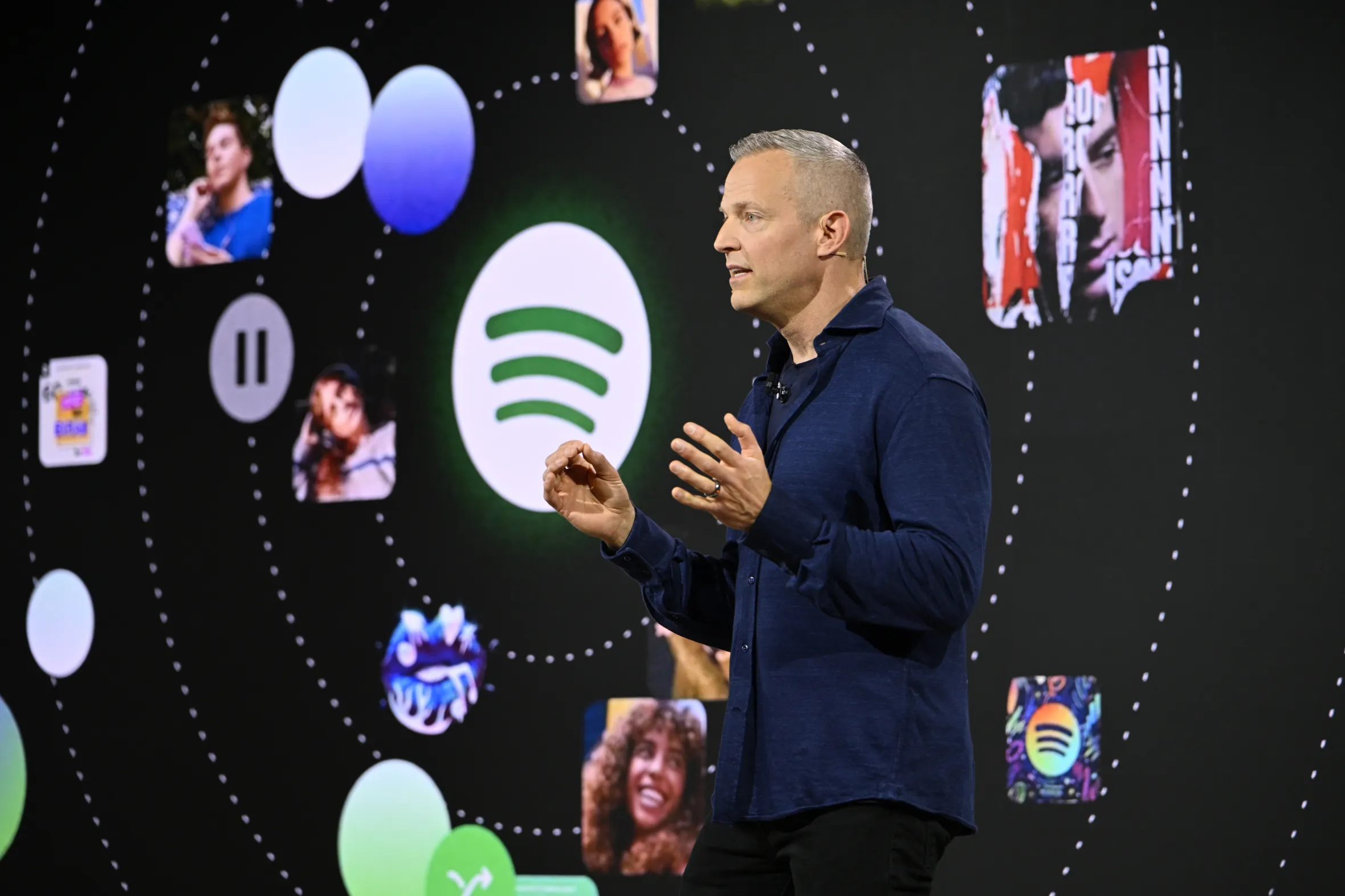 Gustav Soderstrom introduces the new features at an event in New YorkBryan Bedder/Getty Images for Spotify
The new product was announced at Spotify’s investor day, the first since 2022. The presentation marked a crucial test for co-chief executives Alex Norstrom and Gustav Soderstrom, the streamer’s new management team after founder Daniel Ek transitioned to become executive chair at the start of the year.
Although Spotify became profitable in 2024, Norstrom and Soderstrom are under pressure to show how the company can drive growth over the coming years. Spotify faces increasing competition pressures from other streaming platforms, such as Apple Music and Amazon Music, as well as short-form video content.
The company is targeting $100 billion in revenue by the end of the decade, as well as 1 billion global subscribers. Securing greater revenue from super-users is a key part of the company’s plan to meet those targets. “We have super-users across music, podcasts and audiobooks who are willing to pay extra,” Gyllenhammar said.
Alongside the remixing tool, Spotify announced “Reserved”, a new ticketing initiative that will automatically hold two concert tickets for an artist’s most dedicated subscribers. The company also announced add-on tiers for audiobook listeners and “personal podcasts”, which enable users to generate customised audio content by entering prompts.
While the core premium subscription remains the company’s main runway for growth, the company intends to layer these new, high-margin AI features on top of standard accounts to extract more value from their most loyal listeners.