

The chief executive of Oxford University’s spin-out fund has said that UK pension funds are still “way off the pace” when it comes to investing in high-growth tech companies despite years of government-led reform efforts.
The comments reflect frustration with the lack of speed of programmes such as the Mansion House accord, in which domestic pension funds voluntarily committed to invest a share of their assets in private and high-growth companies.
“Everyone’s diagnosed the problem, but the movement towards the solution is just way off the pace in terms of the speed at which we and others are building companies,” Ed Bussey, chief executive of Oxford Science Enterprises (OSE), said.
“We’ve got companies with technology that should be thinking about $100 billion in terms of the scale of opportunity, and that’s reflected in the international capital — and particularly US capital — that is being attracted into these sorts of companies.”
Bussey said that the vast majority of the £300 million in external capital raised by OSE’s portfolio companies last year was driven by US investors rather than domestic backers.
“There’s nothing wrong with US money per se … but the share of UK money, particularly UK pension money, just needs to be dialled up about ten times,” he said. “I think there’s a lack of understanding [within pension funds] of this space, I think there’s a lack of understanding of the opportunity, there’s a lack of understanding of the potential returns.
“The rest of the world scratches its heads when they look at this. One of my Gulf investors says “you are sitting on our equivalent of Gulf oil”, but UK pension funds are largely missing in action from this opportunity,” he continued.
Scale-up companies in the UK get as much as 80 per cent of their funding from overseas investors, according to UK Private Capital. Incentivising domestic pension funds to invest in high-growth UK companies has been a priority for both Conservative and Labour governments.
Last summer, 17 workplace pension firms signed up to the voluntary Mansion House accord, agreeing to invest at least 10 per cent of their funds into private markets by 2030. It followed a similar agreement in 2023, known as the Mansion House compact, which had set a 5 per cent target for investment in private markets.
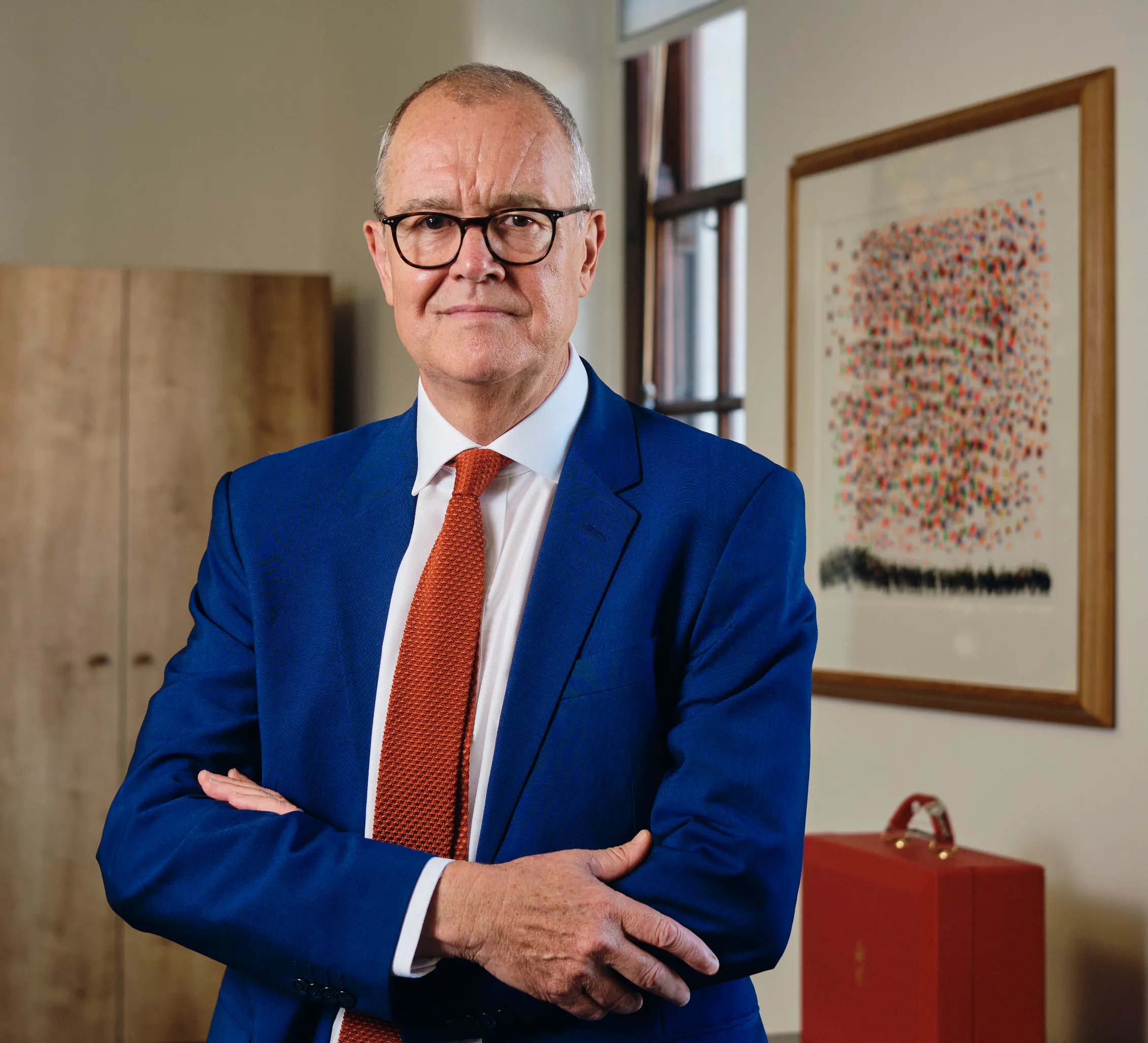 Lord Vallance of Balham, the science ministerChristopher Proctor for the times
Lord Vallance of Balham, the science minister, has said that the Mansion House accord would make a difference to enabling UK companies to raise capital from domestic backers. “Is it as fast as everyone wants? No. But it’s starting and I really believe that’s going to change quite rapidly,” he said at last week’s Times Life Sciences Summit.
Bussey’s comments came alongside OSE’s latest annual report, which showed that the company net asset value increased 17 per cent year-on-year to £1.26 billion, largely thanks to two big exits last year.
The first was the $1.08 billion acquisition of Oxford Ionics by Ion Q in September, the company’s first unicorn exit. Before the year ended, OSE also completed the sale of Dark Blue Therapeutics to Amgen in a deal worth up to $840 million. The two exits returned over £283 million to OSE. Bussey said he anticipated further realisations in the years ahead.
“Within the next two to four years we’re going to hit a phase of regular realisations. We’ve proven that we can take science out of a lab, and create a billion-pound company. What’s more exciting is now we’ve got line of sight to that happening on a consistent basis,” he said.