
The Athletic has live coverage of Day 3 of the 2026 French Open
PARIS — Tucked away from the hustle and bustle of the French Open crowds is a place of serenity. A haven to wander freely and slow down, a peaceful corner of Roland Garros where overcrowded walkways give way to more than 500 plant species. Shrubs like the pistacia terebinthus scale 10 meters, while the deep red flowers of the callistemon rigidus are yet to bloom.
Walk deeper into the 19th-century Auteuil Botanical Gardens, designed by Jean Camille Formigé, and more botanical wonders come into view: Four glass botanical greenhouses, containing the only plant ecosystem of its kind in the world. Within those walls, partially sunken beneath the ground, lies a red clay tennis court.
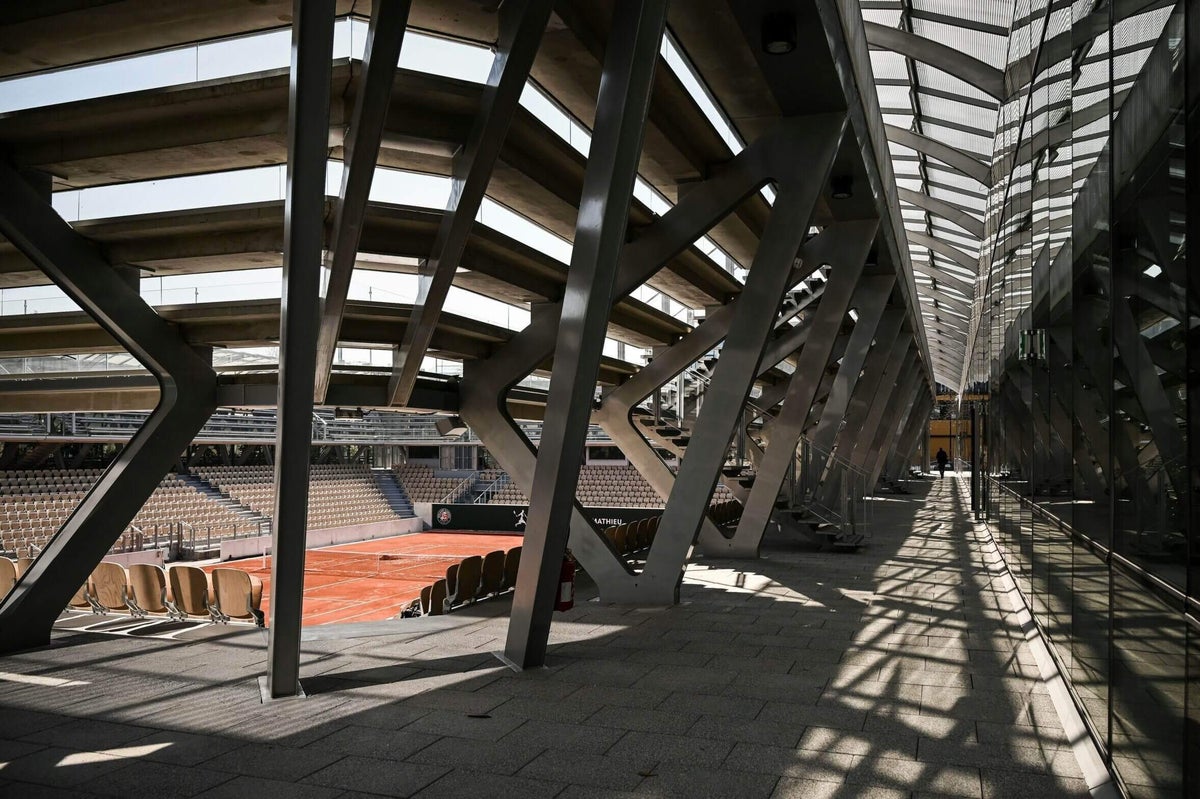
At the French Open, tennis stars and fans saunter through these tranquil gardens to reach Court Simonne-Mathieu, which opened seven years ago to the day on May 26, 2019. Named for the two-time French Open women’s champion and leader of the French Volunteer Corps during World War II, it is a retreat from the main grounds of Roland Garros, a marvel of a court unlike any other at the four Grand Slams.
But the moments of calm can quickly fade. When a home hope walks among the plants and flowers to take their place on the clay — especially at night — it transforms into a bearpit.
The court, the third-largest at Roland Garros with a capacity of 5,261, was part of a $442 million expansion project, designed to forge ahead in the endless arms race for supremacy between the four biggest tournaments in tennis.
The court’s construction was controversial. The build was delayed amid disputes between the French Tennis Federation and environmental campaigners who objected to what they called “a symbol of blind destruction of heritage, biodiversity and landscape” in French newspaper Le Monde. Formigé’s grandchildren also opposed the plans, and after the Paris High Court halted works, it took an intervention from Prime Minister Manuel Valls for the court to be built.
The court, led by architect and engineer Marc Mimram, is built 4.5 meters below ground, to blend in with the surroundings and create the sense of wonder that comes from a sports stadium peeking through the greenhouse glass. In 1,300 square meters of new space, temperature and humidity systems house endangered species from South America, Africa, Southeast Asia and Australia’s tropical regions.
Within one year of its construction, fruit plantations, a Roland Garros rose variety, plant walls and more than 123 trees were planted inside the greenhouses surrounding the court. Fans move around the stands via a continuous concrete walkway, gazing up at the greenhouses, which are closed during the tournament. The adjacent botanical gardens remain open to the public.
When it opened in 2019, some urban planners were unmoved by its design, but Court Simonne-Mathieu has become a jewel in the French Open’s crown for its idiosyncrasy and feeling of being a court that fans discover. “The more vegetation the better,” said Genevieve Bourel during an interview near the court, sitting on a wooden bench and looking at the surrounding flora as she took a break from watching the tennis. “It’s very pleasing.”
Once inside, any sense of peace dissipates in the vociferous shouts from the local crowd, who create a hostile environment for any foreign player. Magnified by the sunken surroundings, the intense greenhouse conditions seem to seep on court. French players can draw energy from the crowd’s passion, but also buckle under the burden of expectations.
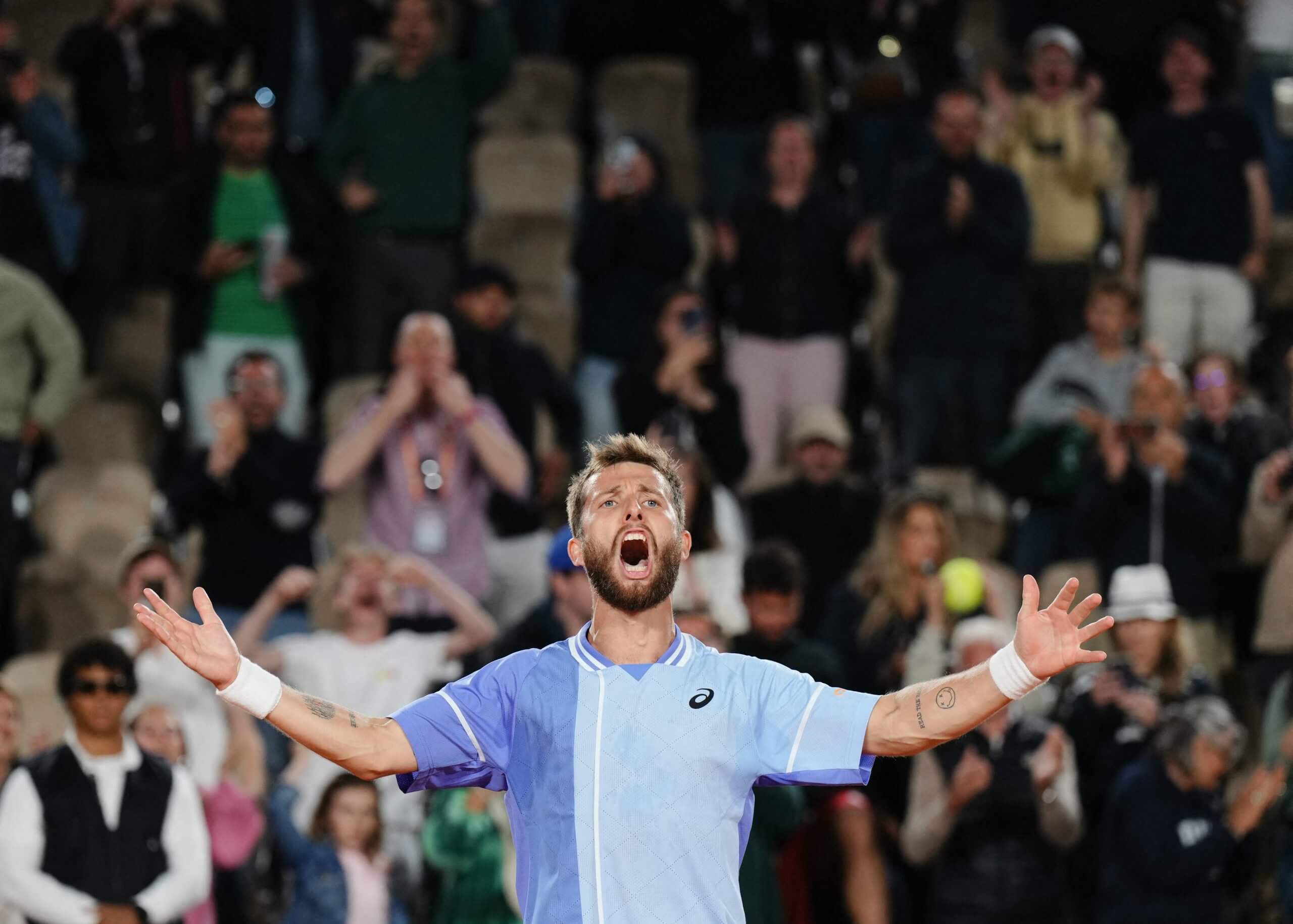
Corentin Moutet is a master of riling the Court Simonne-Mathieu faithful. (Dimitar Dilkoff / AFP via Getty Images)
Sunday, a crowd of blue shirts in the upper corner of the stands held up cardboard cutouts for Titouan Droguet, the world No. 110. Over and over they shouted, “Dro-guet, all-ez!”
Playing against the “home guy” made it “even tougher mentally,” No. 26 seed Jakub Menšík said after his first-round, straight-sets victory against Droguet. It was the Frenchman who was full of nerves, and his unforced errors showed it.
“I’m really disappointed,” he told reporters after his defeat. “I simply didn’t rise to the occasion. There was a lot of tension. I let the stress get the better of me a bit. I felt a lot of pressure.”
He said the local support is “what drives me to keep fighting.”
“It makes me want to play well, to hit winners so I can hear the noise. Even when I have cramps, it helps me to keep trying. … Keep trying.
“It’s a real disappointment not to be able to give them what they deserve. I think they were all hoping the match would really take off and we’d have a proper contest. As the match went on, I felt like I was letting everyone down.”
Menšík lapped up the ambience even when his aces were met with silence.
“It’s a good feeling because I know the ball was in,” he said, smiling. “The atmosphere the French people are giving. … It’s unbelievable how many of the fans are coming for the first day.”
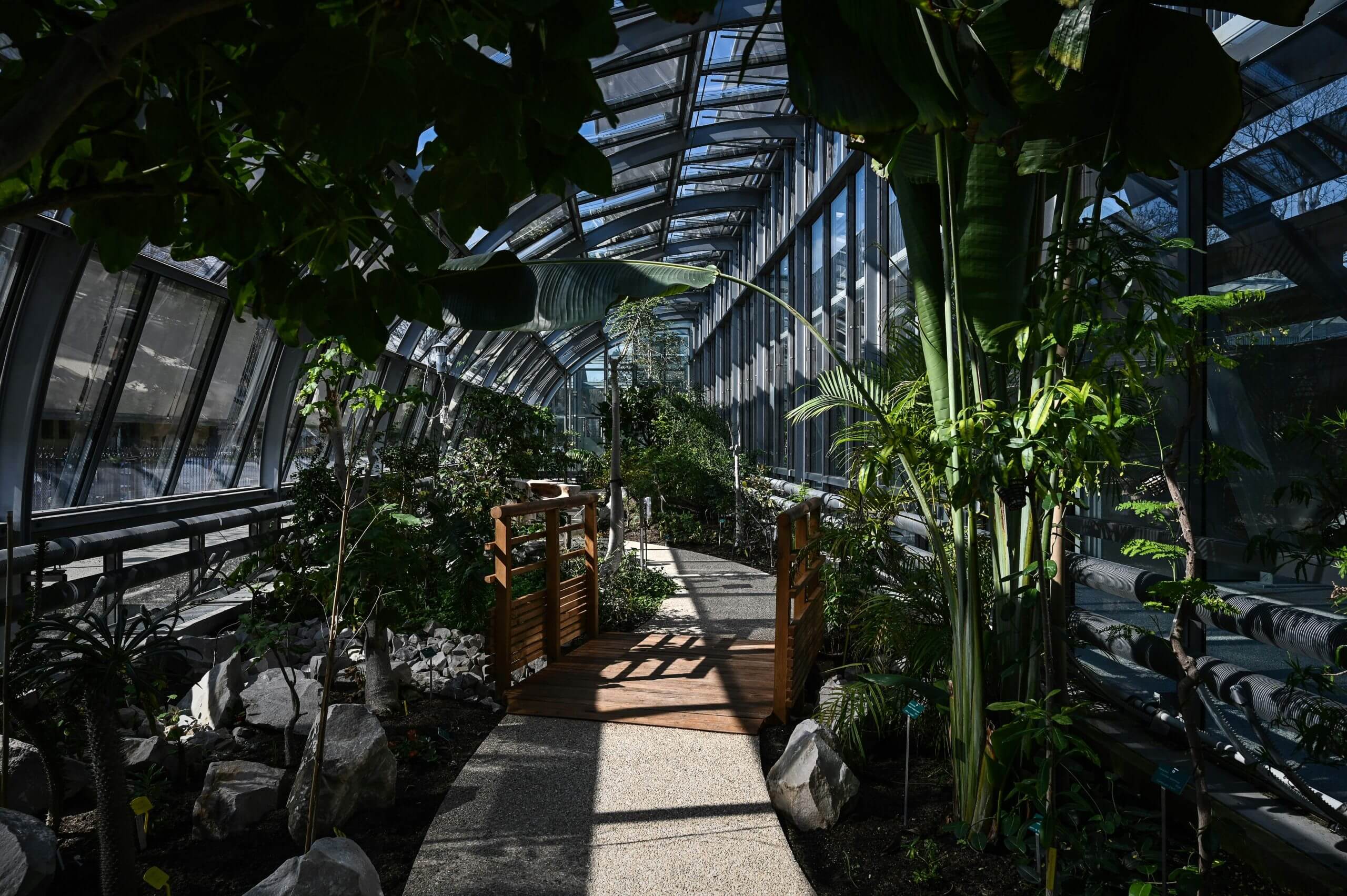
The Court Simonne-Mathieu greenhouses make for a unique setting. (Philippe Lopez / AFP via Getty Images)
While there is usually a distinct home advantage on Court Simonne-Mathieu, French fans backing their countryman Luka Pavlovic met their match Sunday evening. Brazilians turned up in their droves to support 19-year-old João Fonseca.
The French responded to the chants of “Joo-aa-oo, Fon-sec-a” with “All-ez, Lu-ka!” but as the match went on, with Pavlovic trailing by two sets, the home crowd’s cries became more desperate. As Fonseca closed out the match 7-6(6), 6-4, 6-2, fans waved the luminescent colors of the Brazilian flag.
“It’s like Brazil today,” said Fonseca during his on-court interview. “It’s crazy, even though we are in France, playing a French guy. … Thank you!”
Fonseca said he did not notice the greenhouses while playing, but took in the surrounding greenery during his walk to the arena. On its seventh anniversary, Court Simonne-Mathieu will welcome Corentin Moutet, the French master of whipping up fans. But before then, its quiet greenhouses will provide players and fans with a rare moment of serenity.