
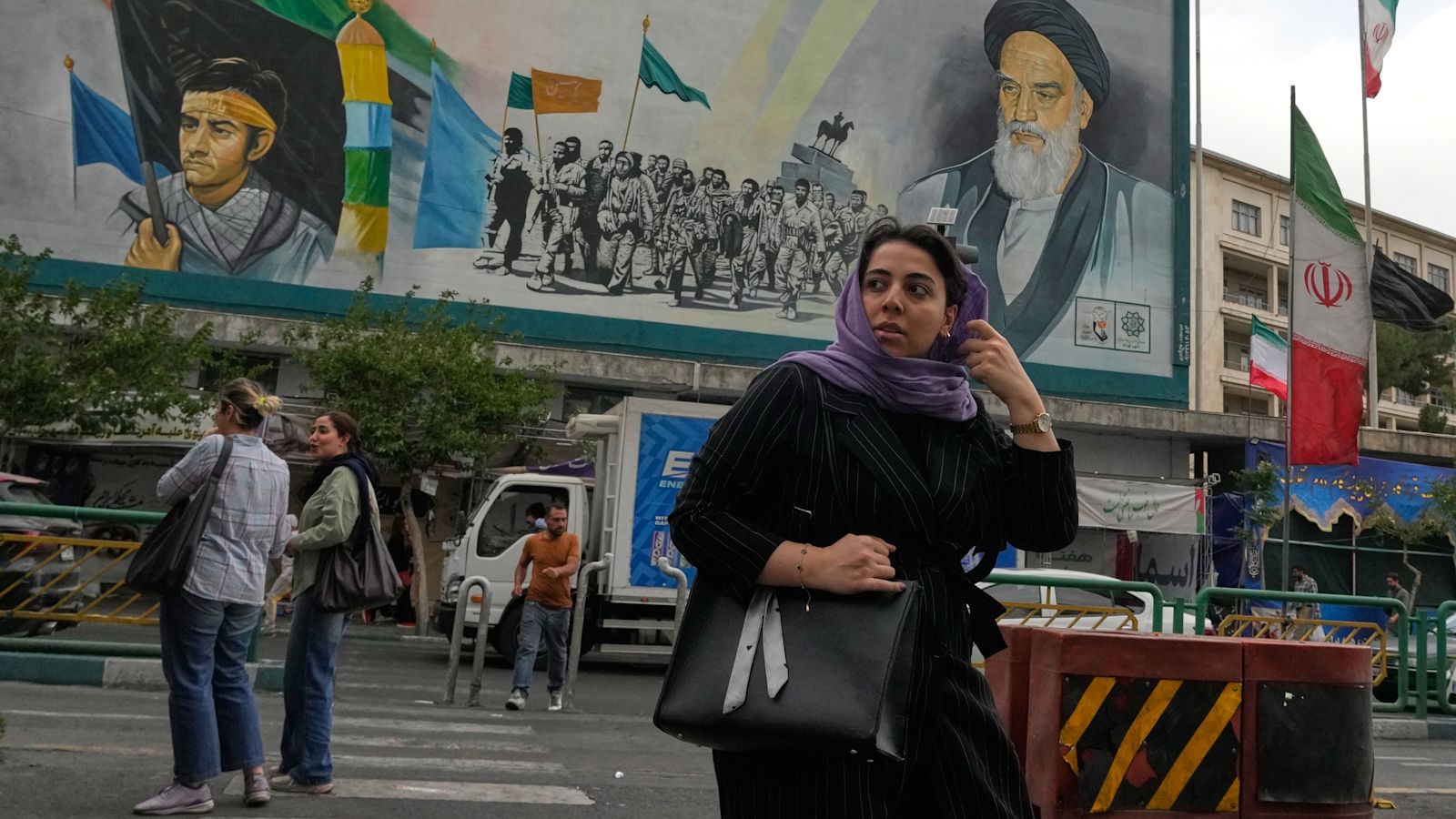
Iran has denounced US strikes against it as a sign of “bad faith and unreliability” as negotiations to end the war continue.
The US military has described Monday’s strikes in southern Iran as defensive, saying the targets included missile launch sites and boats allegedly laying mines.
It said the action was taken to protect US forces and carried out with “restraint” in light of the weeklong ceasefire.
Iran’s foreign ministry called the strikes a violation of the ceasefire and warned that Washington would bear responsibility for “all consequences”, without giving further details.
Rubio has met with Quad foreign ministers in India Credit: AP
“The Islamic Republic of Iran will leave no act of aggression unanswered,” it added in a statement.
Iran’s Revolutionary Guard on Tuesday said it had shot down and discouraged drones and a fighter jet that entered its airspace, Iran’s official Mizan news agency said.
It wasn’t immediately clear what the developments would mean for negotiations.
The strikes came after Iranian parliament speaker Mohammad Bagher Qalibaf went to Qatar as part of ongoing talks.
US President Donald Trump said on Monday that the negotiations were “proceeding nicely”.
The strikes were the latest flare-up in the fragile ceasefire that began April 7 and has largely held.
Negotiations centred in part on the Strait of Hormuz, the crucial waterway off southern Iran through which a fifth of the world’s crude oil and natural gas passed before the war began with US-Israeli strikes in February.
Tehran retaliated by effectively closing the strait, stranding hundreds of ships and shocking the global economy.
The UK Maritime Trade Operations Centre said an explosion was reported on Tuesday morning aboard a tanker in the Gulf of Oman, which lies near the strait.
No one was injured in the blast, and there was no immediate information on the cause.
Besides disrupting energy markets, the strait’s closure is also squeezing fertiliser supplies worldwide.
The full impact might not become clear until harvests that are months away.
Subscribe free to our weekly newsletter for exclusive and original coverage from ITV News. Direct to your inbox every Friday morning.
UN Food and Agriculture Organisation Director-General Qu Dongyu warned at an event in Rome on Tuesday that “the decisions we make now will determine whether this remains a manageable shock or evolves into a deeper global food security crisis in 2026 and 2027 and beyond.”
The strait has become a powerful lever for Tehran in talks, joining the long-running issue of Iran’s nuclear program and highly enriched uranium.
Iran, in turn, wants the US to lift its military blockade of Iranian ports that began on April 17.
“What we are witnessing today is not only a geopolitical crisis, it is a systemic shock to the global agrifood system,” Qu said on Tuesday.
Trump has introduced a new angle in negotiations, saying any agreement to end the war should include a requirement for several additional countries – including Saudi Arabia and Pakistan – to join the Abraham Accords, a series of US-brokered diplomatic, economic and security agreements aimed at normalising relations with Israel.
Reporting History sees journalists join News At Ten anchor Tom Bradby to revisit their remarkable on-the-day reports of the defining events of the modern age. Listen to the episodes below…