
Her mum was ‘furious and sickened’ when she found out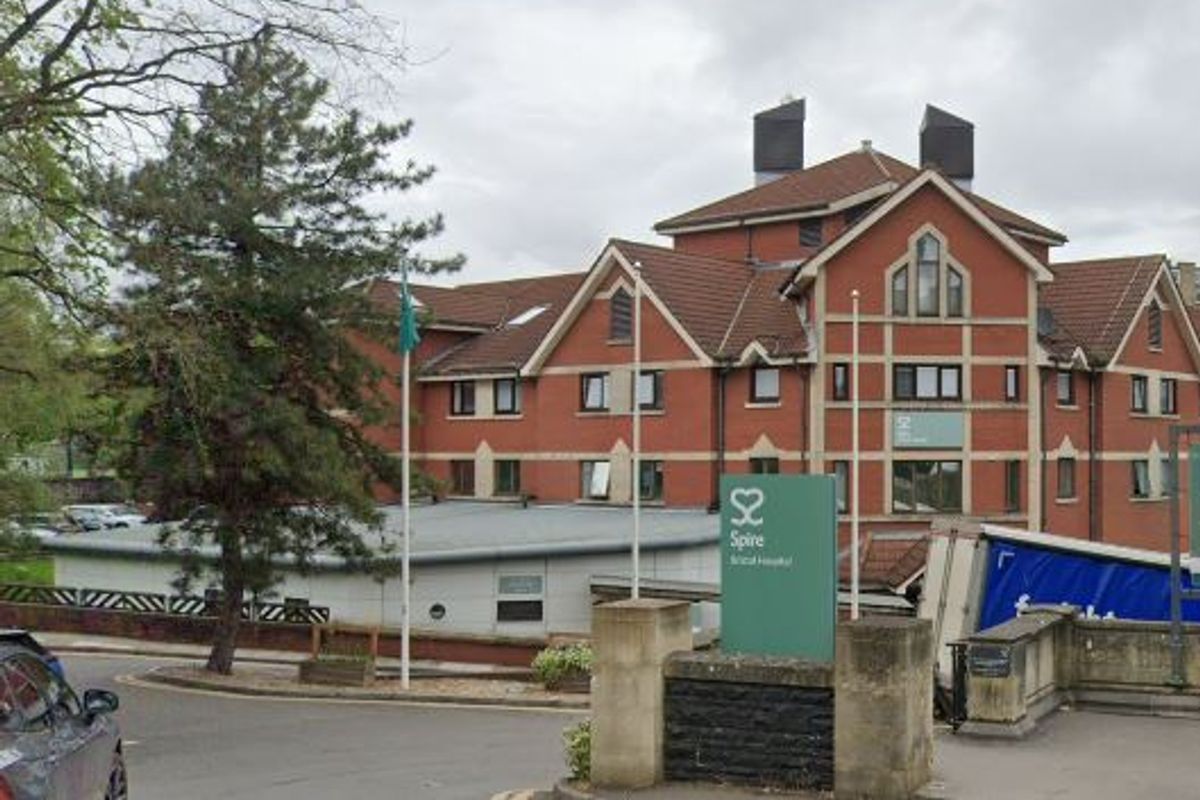
Spire Hospital, Bristol (Image: Google )
A mother says she was ‘furious and sickened’ when she discovered bone from a dead body was used to treat her daughter without her consent.
The girl, now 12, was referred to the Spire Hospital in Bristol, a private facility, for surgery related to her cleft palate in December 2024. She had been waiting over 18 months to get the work done through the NHS ’s South West Cleft Service, after a first bone graft failed in May 2022.
Unbeknownst to the young girl or her mother, the procedure was carried out using material containing cadaveric bone. The pair only found out during a follow-up months later at the Bristol Children’s Hospital to find out why the second surgery had also failed.
“I found the whole incident with the cadaver bone utterly shocking, really sickening,” said her mother, from Somerset.
“When my daughter and I were in a meeting where we found out the second bone graft had also failed, the way the surgeon looked when she was looking through the medical notes was really concerning, she looked horrified. I had to ask what was going on, and when she told me, I was utterly shocked.”
“My daughter was there so I didn’t want to react too much, but I was furious, sickened, I just couldn’t believe it. We had not given consent for this, we knew nothing about it.”
A spokesperson for the Spire Hospital said they had apologised to the family but did not provide further comment, citing patient confidentiality.
“We are sorry for any distress caused to the girl and a formal apology has been made to her family,” they said.
“Due to patient confidentiality, we are unable to comment on individual patient details. Any patients who have concerns about the South West Cleft Service (SWCS) should contact the University Hospitals Bristol and Weston NHS Foundation Trust.”
A cleft is a gap or split in the upper lip and/or roof of the mouth – also known as the palate. Clefts are present from birth.
The size of the cleft palate varies from child to child – some children may only have a tiny notch whereas in others, the cleft may stretch from the front of the mouth to the back. Cleft palate is a relatively common condition, affecting around one in 700 babies, according to Great Ormond Street Hospital for Children.
The procedure was carried out by a surgeon who had temporarily come out of retirement; according to lawyers now representing the girl’s family, more than ten other children were possibly treated by the same surgeon at The Spire, although it is unclear whether the same procedure was carried out in those cases. The operation was performed using Grafton, a bone augment that contains demineralised bone fibre which is made from cadaveric bone.
Grafton is used as a type of filler when there are gaps that require repair. Its structure resembles cotton wool and is used to pack any gaps.
According to the mother, her daughter had only been referred to the Spire because the South West Cleft Service feared the gap in time since the first bone graft, in May 2022, was bordering on negligence.
Delays are common in the service; 118 young people were found to have suffered harm, or were at risk of harm, between 2020 and 2022 due to significant backlogs – in an area of healthcare where prompt treatment can make huge differences to longer-term outcomes in a child’s speech, ability to eat and physical appearance.
The SWCS is run by the University Hospitals Bristol and Weston NHS Foundation Trust.
“We absolutely recognise our failure to clearly explain decisions around the surgery which were made in good faith with the best interests of this young person at heart, and we are sincerely sorry for any distress caused,” Dr Rebecca Maxwell, UHBW medical director, said.
“We understand that it can be difficult for any family whose child requires hospital care and acknowledge we could have done more to support this family through this challenging time. We would like to reiterate our apology for the concern caused to the family and will continue to work with them through their treatment journey.”
A UHBW spokesperson confirmed pieces of cadaveric bone were not used in cleft palate surgery carried out within the SWCS. They declined to comment on the potential for other families to have experienced the same issue as the girl.
The mother has lost her faith in the ability of the SWCS to give her daughter the right treatment moving forward. She said a surgeon within the Service had suggested a third graft procedure, shocking independent experts who said it had little chance of success.
“From what was a fantastic service, which supported me so well from when I found out during my first pregnancy that my baby would be born with a cleft palate, there are now clearly really big problems,” she said.
“It doesn’t feel like it’s a really specialist service anymore, and you find yourself seeing medical professionals who can’t answer your questions, they can’t give you the level of advice you used to rely on and trust.”
Her daughter now faces the prospect of entering her teenage years with the situation with her cleft palate still unresolved. The mother said her younger daughter, who suffers from a similar condition, was also undergoing serious delays in her own treatment in part because the South West Dental Service was severely limited in how often it could perform children’s cleft surgeries and related dental procedures.
“The problems that exist in this service have been reported on for a number of years now, and this family’s experience shows that delays and poor standards of care unfortunately appear to be systemic,” lawyer Owen Lake from firm Slater and Gordon, who is representing the family, said.
“This is really devastating in a service where early intervention is proven to lead to better outcomes for children with cleft lips and palates.”