
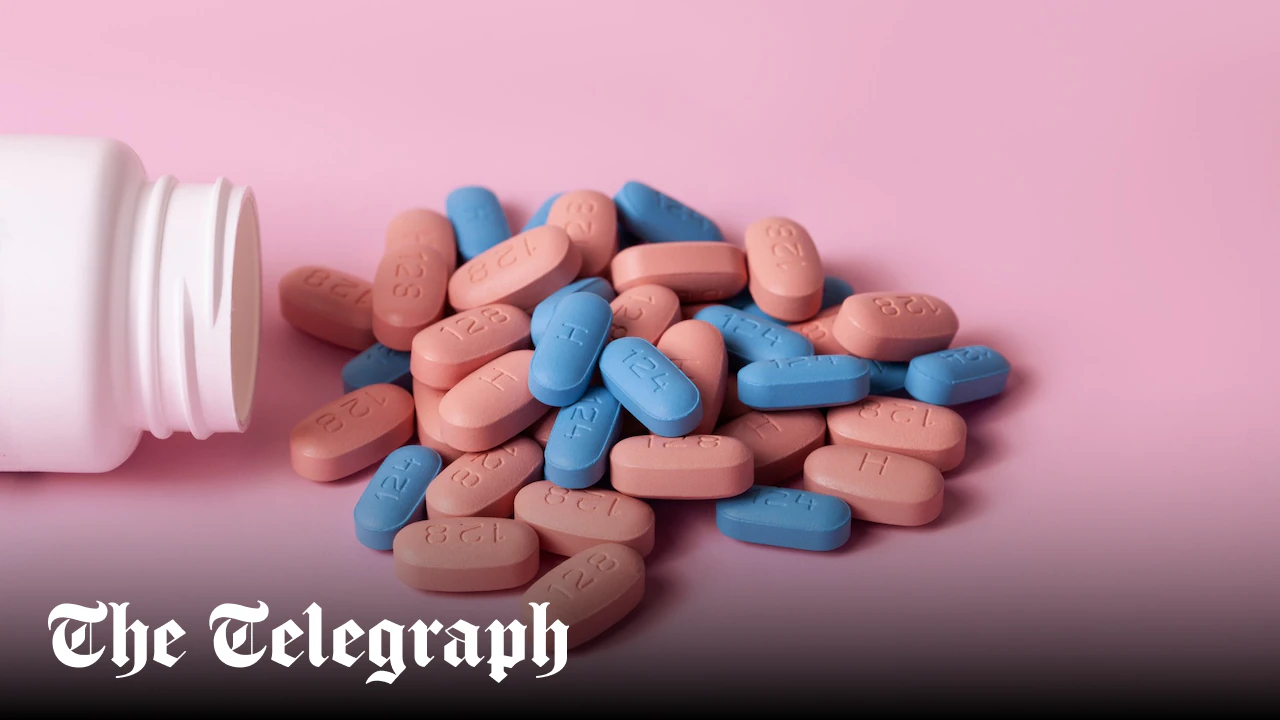
HIV patients can be drug-free for up to two years under a treatment that ends the need for daily pills.
A new antibody cocktail has been shown to successfully suppress the virus in a trial led by Imperial College London.
Currently, people with HIV must take antiretroviral therapy (ART), which is not a cure but stops the virus from making copies of itself, allowing the immune system to repair and preventing the progression to Aids.
The new treatment is a mixture of two broadly neutralising antibodies (bNAbs) – specialised immune proteins that latch on to viruses or bacteria, acting like a physical shield to stop them entering cells.
In a randomised controlled trial involving 68 people, 75 per cent of participants were able to stop their ART for at least five months, while about half maintained viral control for one year and a quarter for two years.
The team now wants to study the people who lasted the longest to see if they can replicate – or even extend – the effects for everyone.
‘New possibilities’
Prof Sarah Fidler, of Imperial College London, said: “This is the first time a bNAb-based therapy has demonstrated viral load control of this duration and magnitude in a randomised placebo-controlled trial.
“These results open new possibilities for HIV treatment and bring us closer to our goal of finding a cure.”
About 113,500 people are living with HIV in Britain and the cost of antiviral medications is more than £400m each year.
Antiretroviral Therapy has transformed the survival rates of people living with HIV and is safe and highly effective at preventing HIV-related complications.
However, it must be taken for life, which places a significant burden on patients and healthcare systems.
If it is stopped, HIV viral load rapidly rebounds to detectable levels and can cause serious health problems and risks passing the virus on to partners and infants.
ART cannot eliminate the virus, so scientists are looking for longer-term ways to suppress HIV or stamp it out.
The trial, which also involved Oxford University and Rockefeller University in New York, recruited participants from across sites in Britain and Denmark between 2021-2024. They were randomly assigned to receive a drip containing either bNAb infusions or a saline placebo.
Experts said the findings suggested that bNAb-based therapies were much more effective than a placebo, and could offer a new approach to controlling HIV.