
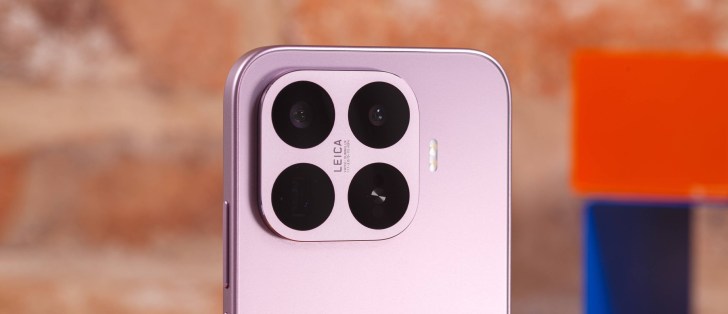
HyperOS 3 on top of Android 16
The Xiaomi 17T ships with the company’s latest HyperOS 3 OS, running on top of the current Android 16 base. In particular, our review unit is running HyperOS 3.0.301.0.
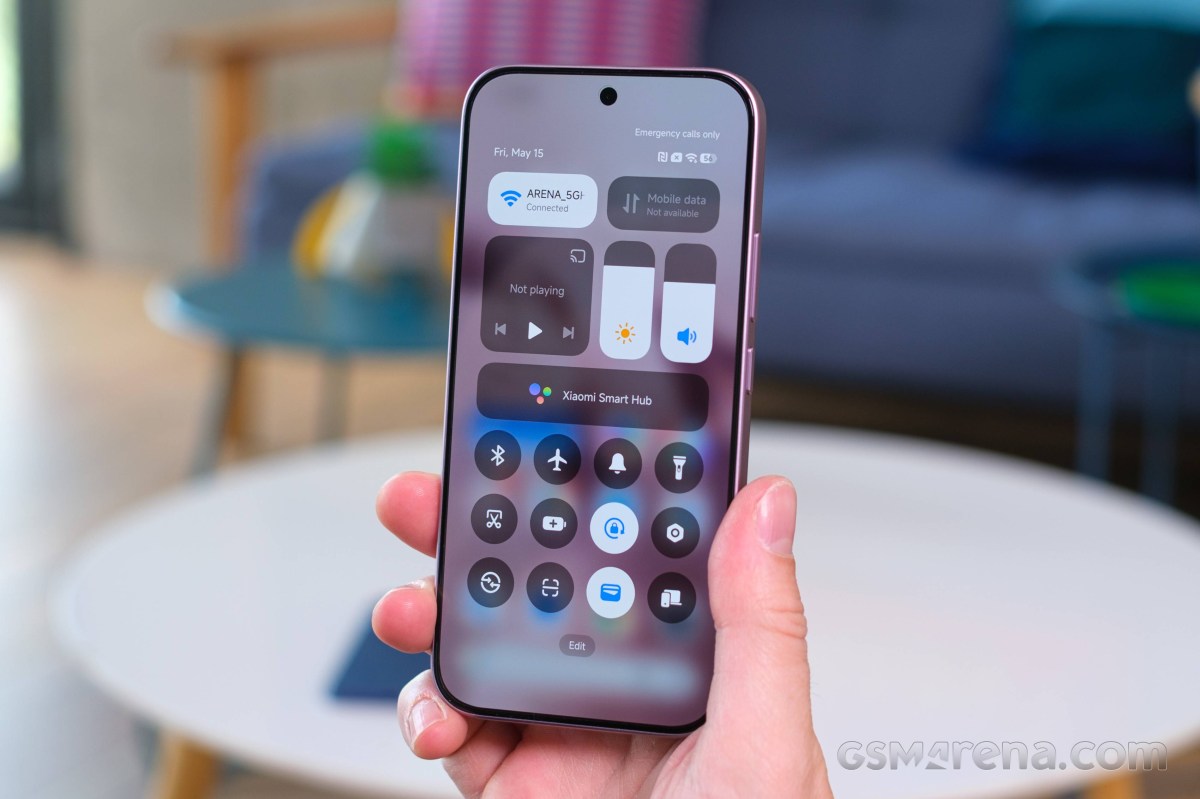
The company is now offering extended software support with the Xiaomi 17 series of devices. These are eligible for five years of major OS updates and an additional sixth year of security patches. Far from industry-leading, but still pretty great in the grand scheme of things.

Anyone coming from the past couple of iterations of HyperOS will feel instantly familiar here, as the visual tweaks are minimal at best. Xiaomi does claim to have refined the system animations further, aiming for an even snappier and smoother overall experience, though we can’t say responsiveness or fluidity have been an issue on recent versions to begin with.
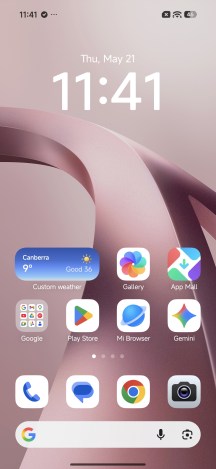
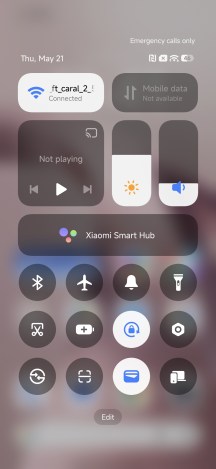
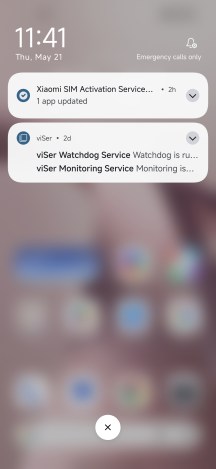
Home screen • Quick toggles • Notification shade
The most prominent new addition to the interface is Hyper Island – Xiaomi’s take on Apple’s Dynamic Island concept in iOS. It serves up contextual information and quick shortcuts for supported background activities, showing things like ongoing timers, incoming calls, current calendar events or media playback controls for apps such as Spotify.
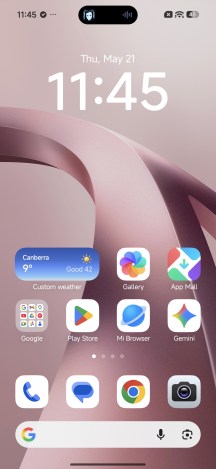
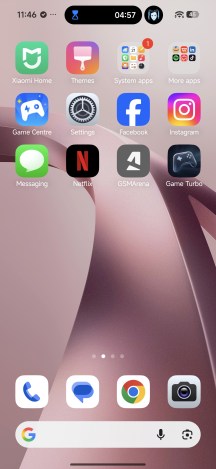
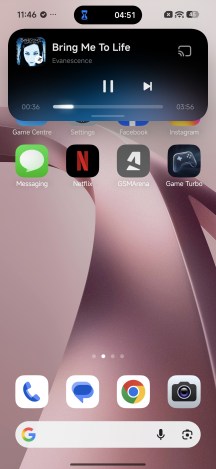
Hyper Island
System icons are also slightly redesigned – they appear flatter and simpler by default.
The main focus of HyperOS 3.0 seems to be connectivity and AI. In China, Xiaomi has its homegrown XiaoAI assistant, but in international units like ours, Google Gemini is at the helm. The rest of the AI features are the same as before – wallpaper generation, live subtitles, transcription, translator, writing, AI search, etc.
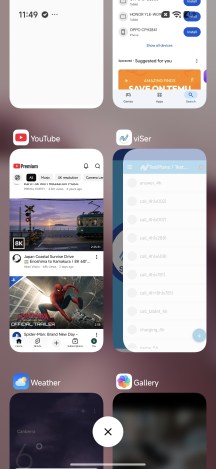
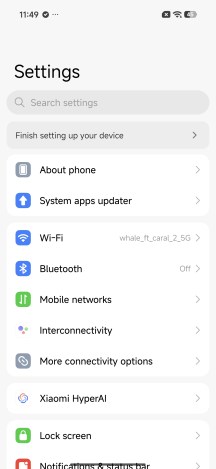
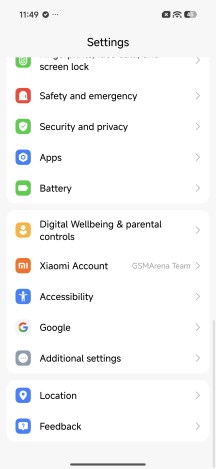
Recent apps • Settings menu • Settings menu
Most of the AI-powered features are grouped under the dedicated Xiaomi HyperAI menu. This is also where you’ll find the options for configuring Gemini – Google’s AI assistant – including how it can be invoked throughout the system.
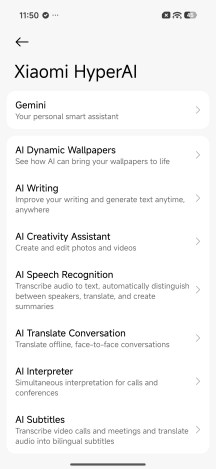
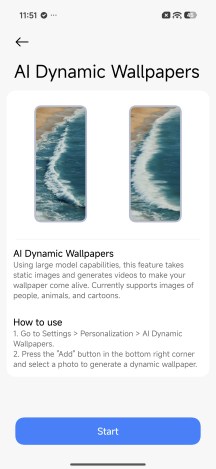
Xiaomi HyperAI features
On the connectivity front, Xiaomi is continuing to expand its Interconnectivity ecosystem. Previously limited mostly to Xiaomi devices signed into the same Xiaomi Account, the feature allowed sharing of things like Wi-Fi passwords, files, notifications, calls and screen mirroring. With HyperOS 3.0, Xiaomi is opening things up further, adding support for select cross-device features with non-Xiaomi Android devices, as well as Apple hardware like iPhones and iPads. Pairing and integration with both Windows PCs and Mac computers is supported, too.
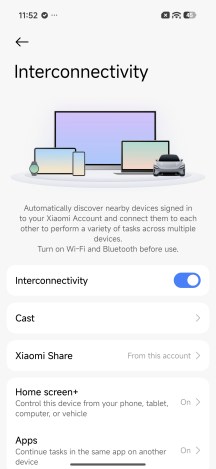
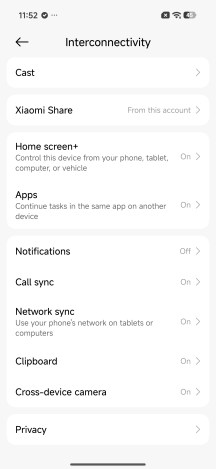
Connectivity features
Interestingly, Xiaomi says it’s possible to read notifications and answer calls directly from your iPad, Mac or iPhone, but we have not tried that.
The Xiaomi 17T runs a MediaTek Dimensity 8500-Ultra chipset. It is not a flagship chip, but it is still a very capable upper-midrange one that hardly skimps on any modern extras. It is a very current chip too – only announced in the Q1 2026 and based on an efficient 4nm TSMC N4P manufacturing process.
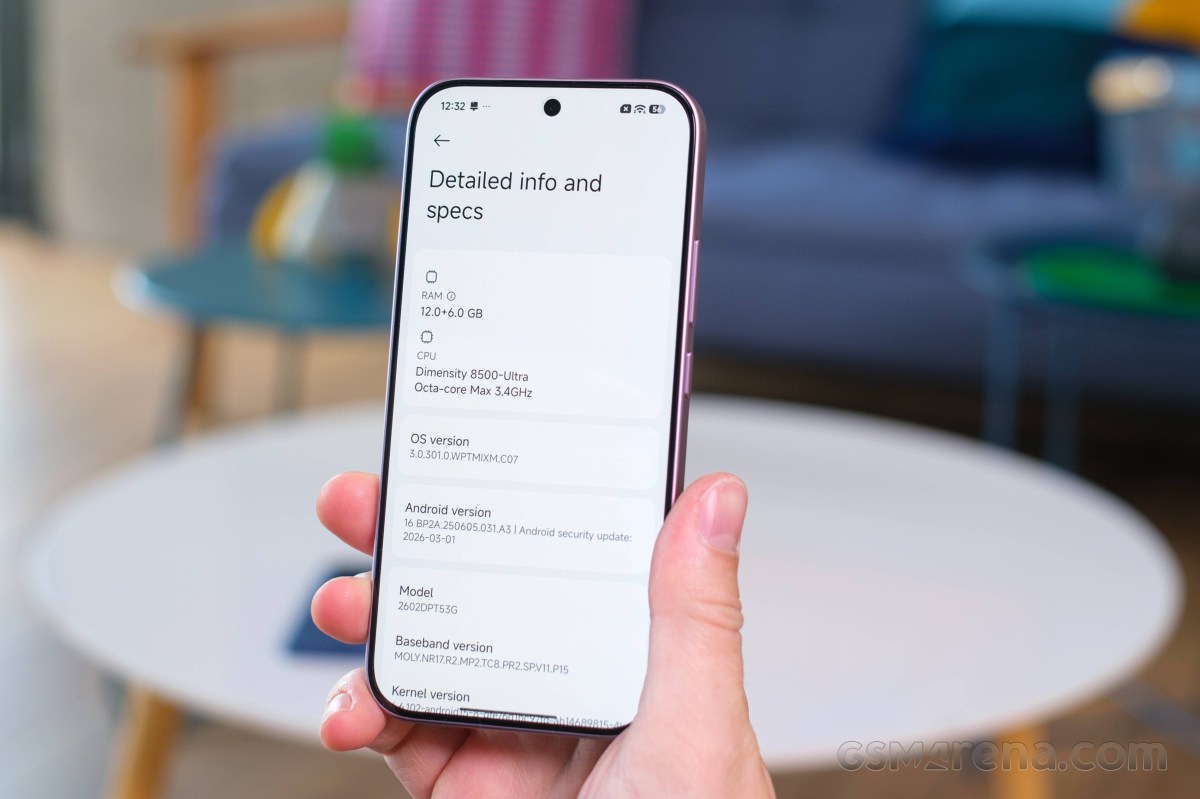
In the CPU department, you are looking at one prime ARM Cortex-A725 core, clocked at up to 3.4 GHz, another three Cortex-A725 units, working at up to 3.2 GHz and then another four Cortex-A725 cores, with a max frequency of 2.2 GHz. There is a MediaTek NPU 880 onboard, and the onboard GPU is an 8-core Mali-G720 unit.
The chipset is paired with quad-channel 9600 Mbps LPDDR5X fast RAM and fast UFS 4.1 storage. You can either get the Xiaomi 17T with 256GB of storage or 512GB of storage. In both cases, you get the same 12GB of RAM. Our review unit is the larger 512GB one.
Looking at some actual benchmark numbers, starting with the CPU, the MediaTek Dimensity 8500 Ultra definitely holds its own well. As expected, it doesn’t offer full modern flagship performance, but it still has plenty of power to throw around. It is about the same level of CPU performance as the Xiaomi 15T with its Dimensity 8400 Ultra chipset, which was also expected. It is, however, interesting to see that the Xiaomi 17T appears to extract a bit more CPU performance from the Dimensity 8500 Ultra than the Poco X8 Pro, which is based on the same chip and running the same HyperOS 3. We aren’t sure quite why that is.
There is another weird situation with the GPU scores. By all accounts, the Dimensity 8500 Ultra inside the Xiaomi 17T should perform better in the GPU department than the Dimensity 8400 Ultra inside the Xiaomi 15T since it has one more GPU core. However, the Xiaomi 17T does notably worse in 3Dmark runs (and we did do multiples to make sure). It does worse than the Poco X8 Pro with the same Dimensity 8500 Ultra chipset as well. Again, we have no explanation to offer. This is just what we are observing.
At least the compound AnTuTu test results are exactly as expected, effectively putting the Xiaomi 17T right alongside the Poco X8 Pro and Xiaomi 15T.
Thermal-throttling
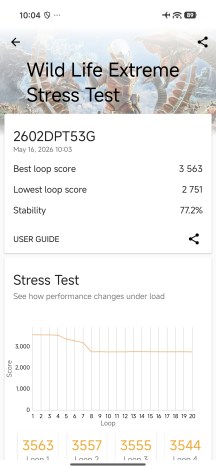
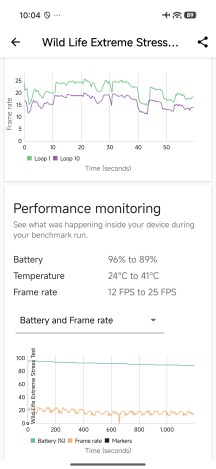
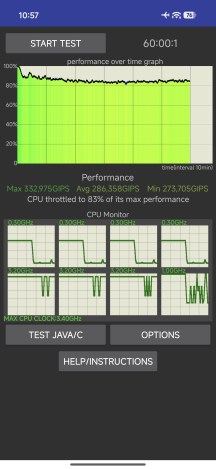
We’ve already seen the Dimensity 8500 Ultra perform great in terms of thermals inside the Poco X8 Pro. This is the case with the Xiaomi 17T as well. The chipset hardly thermal throttles and maintains most of its performance even under torturous conditions.
Thermal-throttling
The phone’s surface does get a bit toasty, but it remains perfectly tolerable to hold.