

The Ministry of Energy and Infrastructure is to present a new National Strategic Plan for Renewable Energy to the president and his climate forum on Wednesday.
Published for public comment until June 18, it sets a target of 26 gigawatts of installed renewable energy capacity, most of it solar, by 2035. Of that figure, just eight gigawatts have been installed to date, with a further four gigawatts under construction.
By the end of last year, only 16 percent of the nation’s electricity came from renewables, missing the 20% target for 2025 and placing Israel second-to-last in the OECD ranking for renewable production. The national goal for 2030 is 30%.
The report says that while there is ample technical potential (25 gigawatts) and no shortage of willing entrepreneurs with approved plans, the main problem is not a lack of interest — it is the electricity grid itself. It has run out of room.
The Israel Electric Corporation (IEC) has secured a NIS 40-billion ($14 billion) loan, repayable over 45 years, to finance grid expansion through 2030.
Get The Times of Israel’s Daily Edition
by email and never miss our top stories
By signing up, you agree to the terms
Full implementation will enable the grid to accommodate enough additional power to meet the 30% target by the end of the decade, or a couple of years beyond that.

Electricity distribution lines, January 28, 2026. (Yossi Aloni/FLASH90)
But time-consuming planning, complex regulations, and other issues could significantly derail implementation.
Furthermore, there is no coordination among the relevant government bodies. Despite the country’s limited land resources, the Israel Lands Authority favors large solar fields because it makes money by selling the plots. The planning authorities and the Environmental Protection Ministry want solar panels on existing facilities, such as roofs and sports grounds, to preserve as much open space as possible. The Finance Ministry opposes this so-called dual-use option because it is partly subsidized by the public. The Agriculture Ministry backs agro-voltaics (which generate power while also providing shade for crops) but wants more time to assess and develop the new technology.
The plan weighs the pros and cons of different combinations of land-based and dual-use facilities and proposes a breakdown that reflects what the ministry considers the best balance among cost, feasibility, efficient land use, and proximity to consumers.
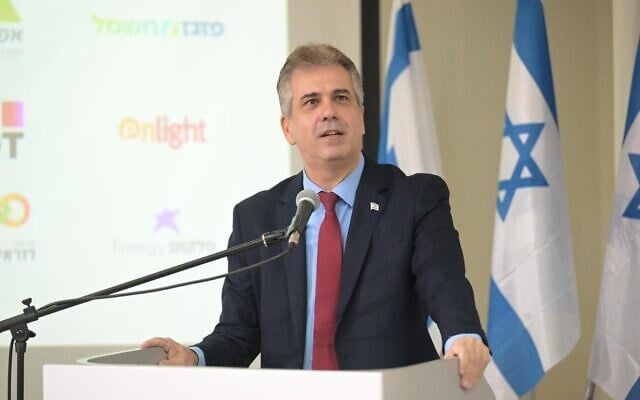
Energy Minister Eli Cohen. (Shlomi Amsalem, Government Press Office)
The 14 gigawatts that still need to be built by 2035 would come from agro-voltaics (5 gigawatts), solar fields (4.5 gigawatts), dual-use facilities (4 gigawatts), and innovation and niche technologies, such as wave energy (0.5 Gigawatts ).
Beyond setting targets, the strategy outlines concrete steps to streamline planning and remove implementation obstacles. It requires a NIS 15.5 billion ($5.4 billion) investment to reach the 35% goal, with some of the funding already baked into the NIS 40 billion national grid expansion budget.
Energy Minister Eli Cohen said, “Generating electricity from renewable energies strengthens the energy security of the Israeli economy, contributes to the diversification of energy sources and the reduction of air pollution, and is necessary to meet the growing demands following the AI revolution.”
Which gorgeous bird do you prefer?

THIS MONTH ONLY: Join our reader support group for as little as $6/month and receive an exclusive tote bag featuring one of Israel’s native birds.
Choose between the Duchifat (orange), Israel’s national bird, or the Shaldag (blue), a beloved symbol of the Israeli landscape.
As a member of the Times of Israel Community, you’ll also enjoy:
An ad-free experience of our site and podcasts.
Exclusive access to award-winning films via DocuNation.
Weekly letters from founding editor David Horovitz.
Join ToI Community & claim my bag
Already a member? Sign in to stop seeing this
You’re a dedicated reader

That’s why we started the Times of Israel – to provide discerning readers like you with must-read coverage of Israel and the Jewish world.
So now we have a request. Unlike other news outlets, we haven’t put up a paywall. But as the journalism we do is costly, we invite readers for whom The Times of Israel has become important to help support our work by joining The Times of Israel Community.
For as little as $6 a month you can help support our quality journalism while enjoying The Times of Israel AD-FREE, as well as accessing exclusive content available only to Times of Israel Community members.
Thank you,
David Horovitz, Founding Editor of The Times of Israel