
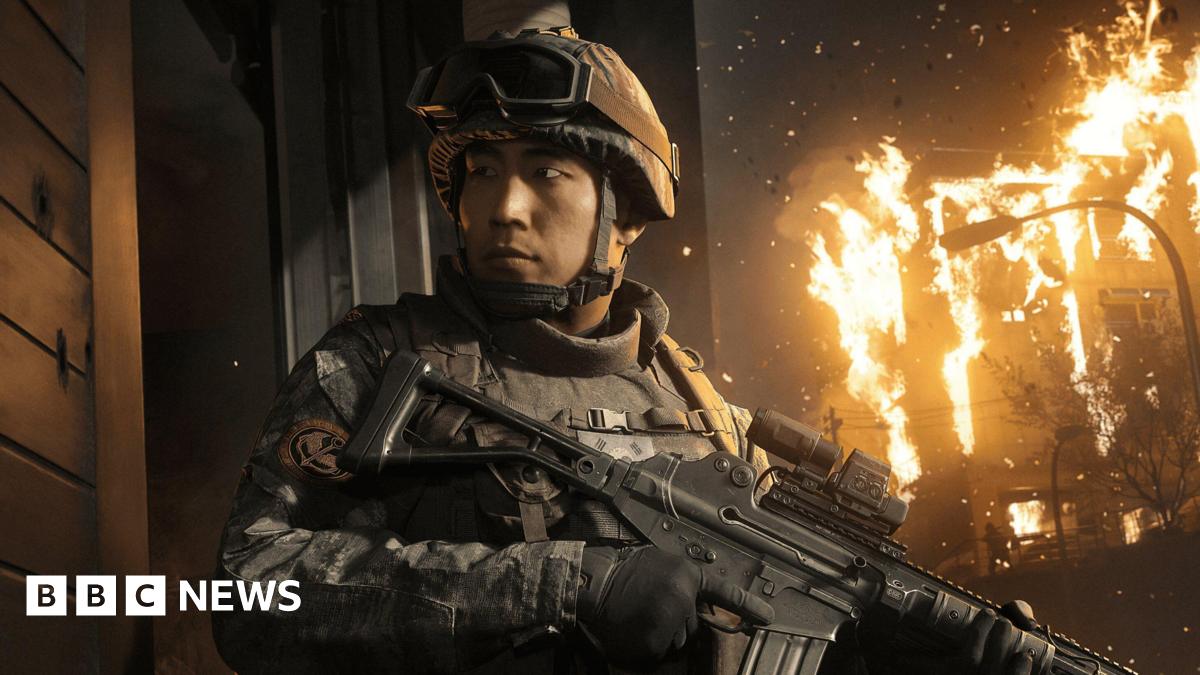
Modern Warfare has previously courted controversy through storylines inspired by real-world events and conflicts.
Missions such as “No Russian”, where players had the option to shoot civilians in an airport in Moscow, and later depictions of war crimes and terrorism have prompted debate about how far games should go in portraying realistic warfare.
Dr Son said while the idea of a renewed inter-Korean conflict is “not unheard of” in Korean popular culture, these stories were often told “from a South Korean perspective”.
“A global gaming franchise might be judged differently,” she said.
The Korean War ended in an armistice rather than a peace treaty in 1953, meaning North and South Korea remain technically at war.
George Osborn, author of “Power Play: Video Games, Politics and the Battle for Global Influence” told the BBC the setting was “likely to attract scrutiny” in the territory and pointed to previous games, such as Homefront, which depicted a unified Korea under northern control and which had received bans in South Korea.
“The studio will have to show that it has handled possible conflict in the country with great care, or face significant backlash – and possible challenges selling the game – in South Korea specifically,” he added.