
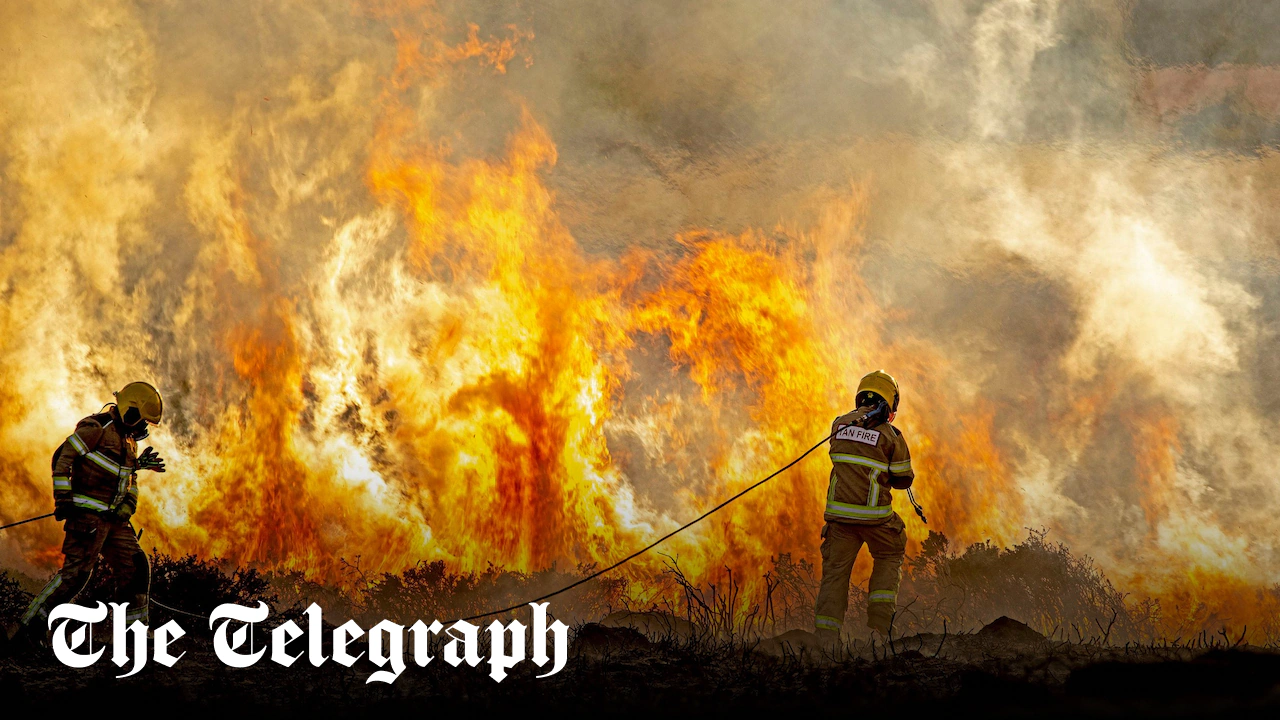
Natural England prefers a practice known as “cutting” to burning, which relies on mowers being pulled behind tractors and “rewetting” the land.
But land managers argue that cutting still leaves a large fuel load and they also believe that rewetting is largely ineffective if a proper blaze tears through.
“We panic and want a zero risk – but not doing anything has a risk too. Other nations can see this; why can’t the UK?” says Gilruth.
Some suggest opposition to burning in the uplands is simply an assault on gamekeepers and grouse moor management.
“Nobody makes a murmur of concern if the National Trust are burning vegetation down in Dorset. Winter burning is used to reduce the wildfire risk in the New Forest by Forestry England and nobody’s got any problems.”
Natural England says 68pc of wildfires start with controlled burns that have got out of hand, although they say only 10pc of fires in the uplands have a known cause. This means little is known about what starts most conflagrations. So it would be wrong to suggest, as some people do, that 68pc of wildfires are causes by controlled burns that have become out of control.
Mr Gilruth disputes Natural England’s figures, saying that the “UK falls within international standards”.
He is not alone in supporting the burn. The National Fire Chiefs Council hit out at the Government last year when responding to its consultation on heather and grass burning, which paved the way for their ban.
“Restricting land managers’ ability to use prescribed burning as a wildfire prevention tool could compromise the fire and rescue service’s preparedness and response, increasing the danger to firefighters and the public,” the Council said.
The process of burning itself is a bit of an art.
Teams of gamekeepers and shepherds wait until the wind is blowing in the desired direction, usually away from towns and villages. After they’ve lit a fire, they use rubber paddles to beat back the flames as desired.
They will also burn buffer zones with smaller fires so that if the larger main fire later reaches them, there is no fuel and the blaze extinguishes.
Richard Bailey, a retired gamekeeper, is well versed in the intentional burning of heather on moorlands, known in the industry as a “muirburn.”
Bailey says the fire service will often send people out onto the hill with gamekeepers to learn how to manage wildfires.
“We get them coming out where we still can burn and they’ll burn with the keepers. They learn how to do it and it’s an invaluable tool,” he says. “Greater Manchester Fire Service has a tactical burns team and they have only got that because they go out with gamekeepers.”