
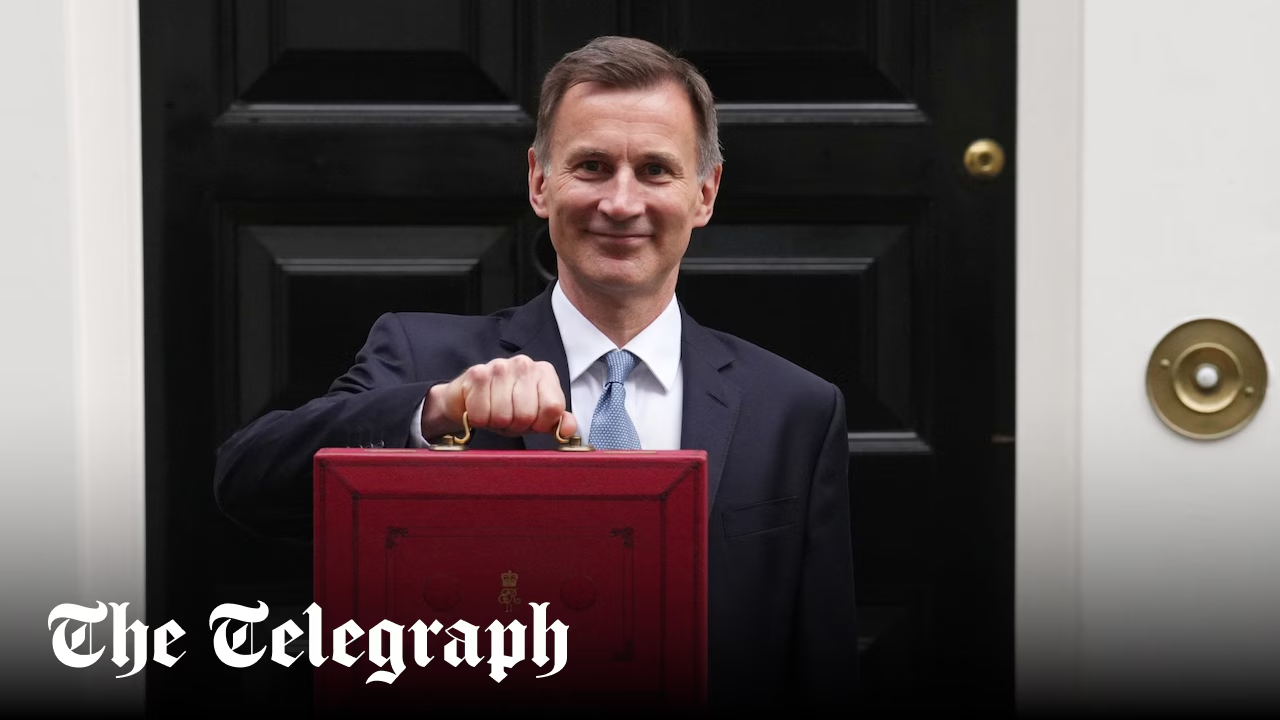
Sure, it isn’t hard to quibble with some of the details. AI may not be all that it’s cracked up to be, and politicians have been trying to improve vocational training for a hundred years without much success. More seriously, Sir Jeremy remains a centrist, pragmatic Tory; he instinctively plays down the scale of the opposition that a genuinely radical, reforming chancellor will face, or the extent to which “the Blob”, that shadowy network of judges, quangos and civil servants, will try to block any genuine change. What Liz Truss, the woman who appointed him her chancellor, used to call “the anti-growth coalition” is stronger than ever, and after five years of a Labour government, it will be even more powerful and arrogant.
But those are minor flaws. Sir Jeremy isn’t likely to be in office again, and the book is not a detailed blueprint. Its greatest virtue is that it brilliantly pulls together all the ways in which growth can be kick-started again, backs it up with detailed analysis, and forcefully makes the argument that there’s nothing particularly difficult about it.