

Last year, London lost around 128,000 people to the rest of the country, according to ONS estimated data on internal UK migration. Places like Manchester have become increasingly attractive to architects who face spiralling living costs and stagnating wages.
One such ex-Londoner, Emily Percival, 35, an associate architect at WW+P Architects, made the decision last summer to ditch the Big Smoke for the capital of the north, having moved down south as a Part 2 student 10 years earlier.
She now argues vociferously that early-career architects should seriously consider all that Manchester has to offer before succumbing to what might still be seen as a default decision to move to London.
‘It feels more dynamic, young, exciting and less predictable here. It’s not as obvious to go to London anymore,’ says Percival, who switched to Manchester specifically because she saw the city offering more of the kind of projects that excited her.
Outside of the capital, there are more qualified architects in Manchester (1,082) than in any other city in England. According to the ARB, it has the third largest number of architects on the register, tracked by postcode, anywhere in the UK – only a handful short of the 1,124 in Glasgow.

Emily Percival, 35, an associate architect at WW+P Architects
Even so, London remains the beating heart of the industry with more than 11,300 architects registered in the capital.
Percival, who has previously lived in Sheffield and Nottingham, tells the AJ that a decade ago she too had initially been attracted to London, primarily by work on the Elizabeth Line and Crossrail stations.
But she returned to the north to keep pursuing her interest in designing transport hubs and connection links.
What made the choice a no-brainer was Manchester’s comparative affordability and convenience. This made putting down roots and achieving a better balance of work, life and finances an achievable goal rather than the pipedream it is for many in the capital.
‘I was just getting priced out of London,’ she says. ‘My commute was over an hour, which makes your days longer and your ability to connect with a community and feel a part of something more difficult.
‘I moved to Manchester, and I just love it. I’m door to door in less than half an hour for a fraction of the price, and that’s from my own place rather than a house share.’
Percival doesn’t believe that being regionally based means she is missing out on the capital’s cultural and professional discourse. In fact, she argues that the conversation often feels more stimulating and inclusive in a city that is newer, younger and more dynamic.
‘The creativity is really woven through the streets, you see it everywhere’
‘There is a perception that London is the intellectual hub of the profession, but I’ve been so much more involved since moving here.
‘It’s a smaller community, so when a practice has a talk, it’s only a five-minute walk. That makes the community so much tighter, and the creativity is really woven through the streets, you see it everywhere.’
A similar story was told by some of the young people who are making Manchester their home from the very outset of their careers and already urging others to do the same.
The AJ hears from four of them.
Aquiles Roman, 31, Part 2 assistant at BDP
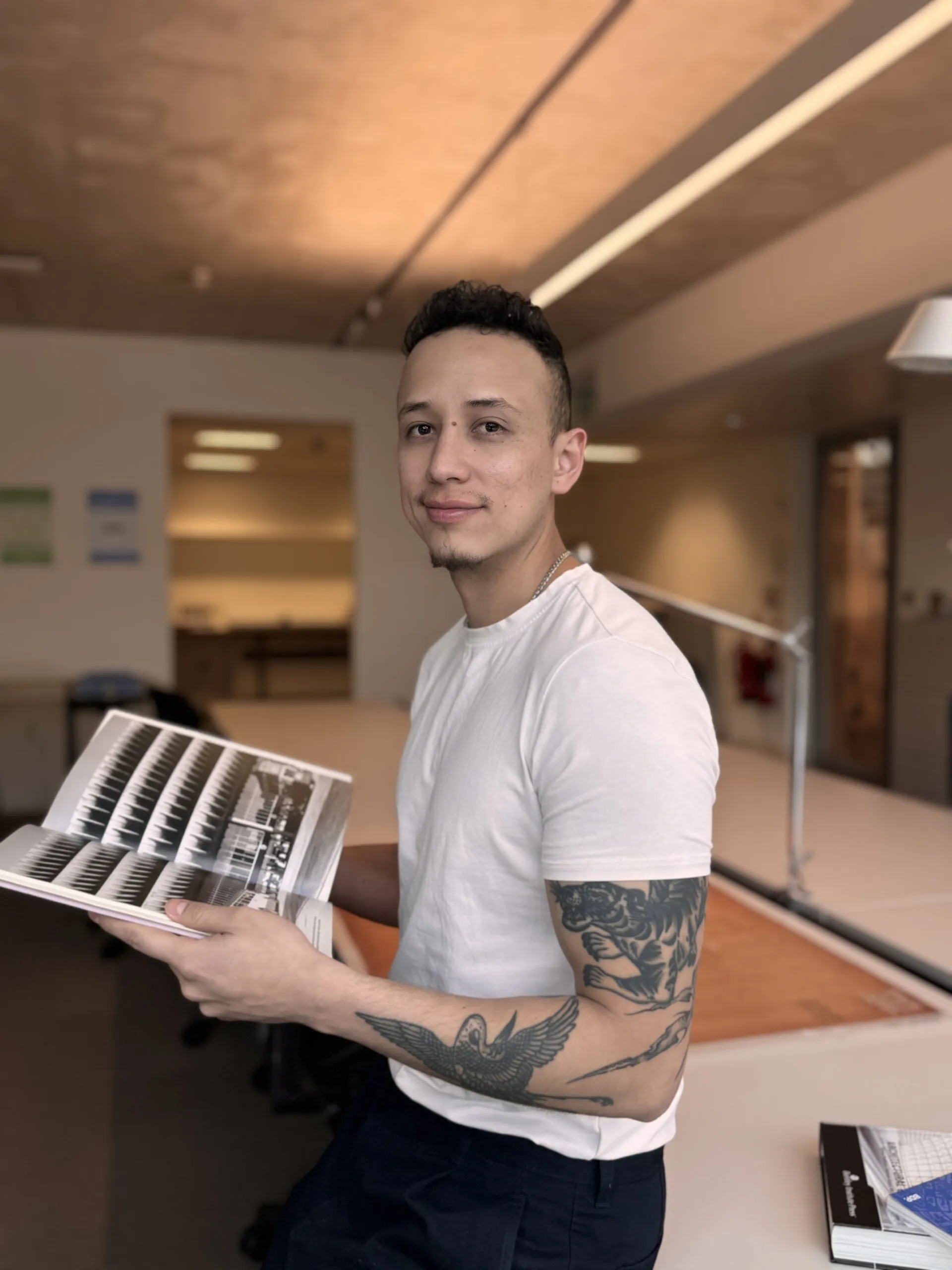
Aquiles Roman, 31, Part 2 assistant at BDP
I started my career in Mexico City, having grown up there. I graduated and began to work as an architect. Then I wanted to explore the world. We always learn in school about British architects, and I was always fascinated by that.
So, I wanted to experience the education people have here and ended up doing my master’s in Belfast. I really loved it and then decided that I wasn’t going back to Mexico because I enjoy how everything works here.
‘For the first time in my life I felt like I belong somewhere’
Belfast was a shock, it’s a very small city, but it made me realise I liked elements of that lifestyle. I moved to Manchester as a middle ground between the extremes of a big metropolis and somewhere that feels a bit [smaller]. It seemed like the best of both worlds.
The main thing I enjoy about Manchester is that for the first time in my life, I felt like I belonged somewhere. It’s a place where you can feel comfortable being who you are.
Finding a position at BDP was a fairly straightforward process. I came to the office for my interview and thought: Right, I’m moving to Manchester.
I’ve been there for two and a half years now and have worked on a great diversity of projects, from masterplans to town centre schemes to work in the Middle East.
Compared with some of my friends working in London, I feel like I have been able to get more experience on a wider range of projects.
I know someone who has been working on one scheme for more than two years in London, and another who had to do overtime on the day they started with [one of the UK’s largest practices].
That’s another thing. The corporate culture in London can be a bit more cutthroat than it is here, where it’s definitely friendly and more human.
There is also the lifestyle. It’s so easy to get out of the city and into nature, and being able to walk to work gives you so much more time; I felt like I spent most of my life commuting in Mexico City.
My life has improved a lot here. I’ve found people I now consider my best friends, and I am considering settling down here for good.
Kirstin Leong, 27, Part 2 assistant at shedkm
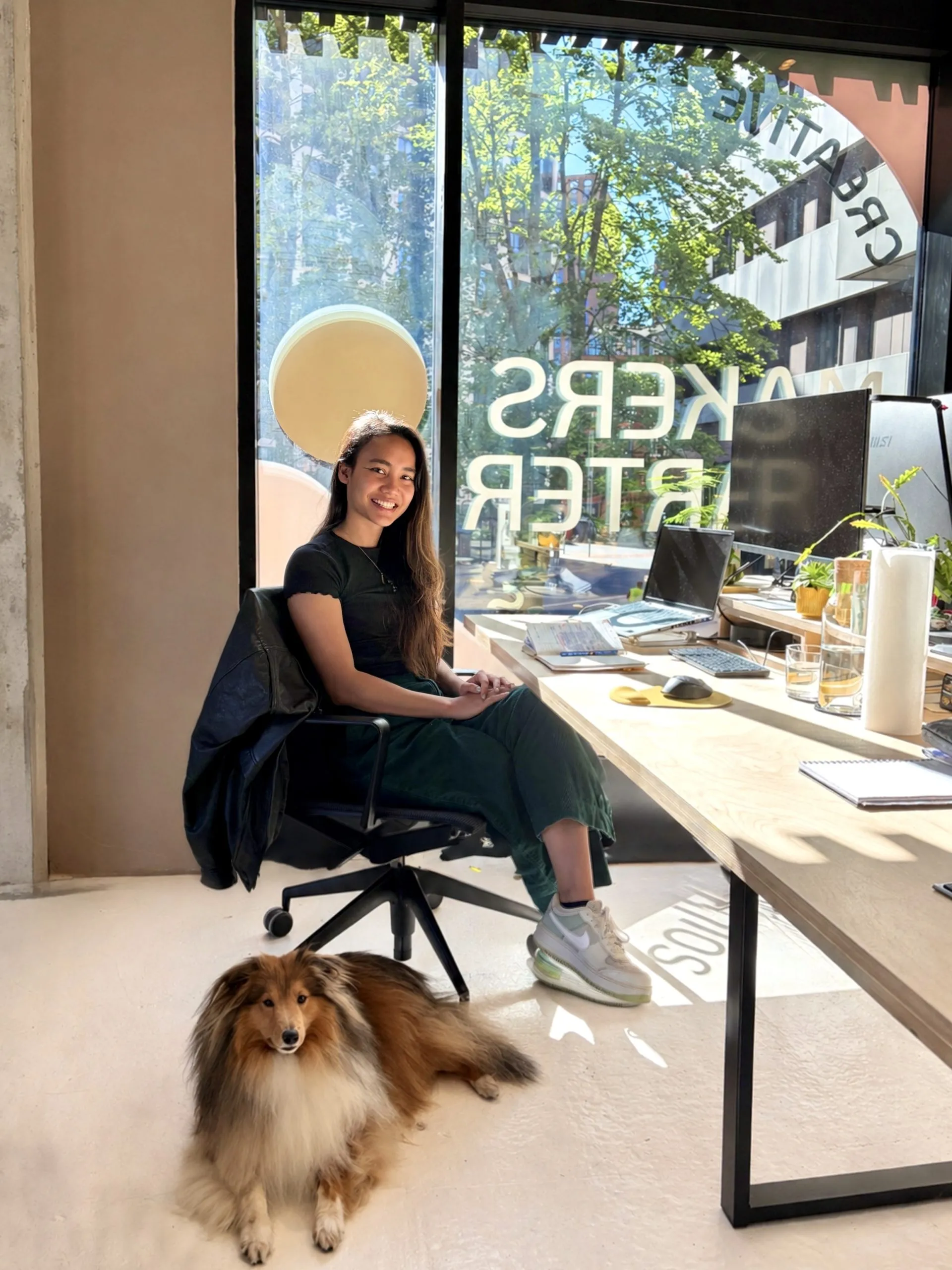
Kirstin Leong, 27, Part 2 assistant at shedkm
I was born and grew up in Malaysia. I moved to the UK in 2018 for my undergraduate studies and have lived here since. I went to university in Sheffield for three years.
After graduating, I wanted to move somewhere bigger and with more going on, but I was just never a fan of London.
The obvious choice was Manchester; it felt like a good step up. Since moving here, I really don’t feel I need to leave. I have everything I need.
After university, I had my eye on shedkm, partly because they were working on Mayfield, a big Manchester project that I used as my master’s thesis.
I approached someone from shedkm and just asked whether they had a Manchester office, she said ‘no, but we’re thinking of setting one up’.
So now I’m working in a small office, with just four of us, and I’m the only architectural assistant, but it’s a really nice cosy team.
Being in such a small office, I think I have naturally been given more responsibility, more than I was expecting, but in a good way.
‘It feels like Manchester has a more forward-thinking attitude to development’
When comparing my experience with those working in our London studio, it’s clear there is a difference. We have a joke in the office that when we work with London clients, we work at London pace, and everything is just faster and more stressful.
I think that might be a consequence of there being more guidance for schemes in London. Everything has to be very much done to the letter, whereas on regional schemes we can move more at our own pace.
It also feels like Manchester has a more forward-thinking attitude to development, which extends to regulations and local authority decisions. This allows larger-scale, more ambitious projects to come through, and that can be exciting.
I live with my partner in a house we bought together in the city centre, and I am not planning to leave anytime soon. My lifestyle would definitely not be possible in London.
I always say to my juniors that if they want somewhere big and exciting, but don’t feel like London is for them, then Manchester can offer the same activities and events, but all without having to travel as far and cheaper.
Jake Vizard, 26, Part 2 assistant at Chapman Taylor

Jake Vizard, 26, Part 2 assistant at Chapman Taylor
I’m from north Wales and moved to Liverpool for my undergraduate course, before going to Manchester University for my master’s and joining Chapman Taylor around eight months ago.
‘I get almost all the benefits that I would in London without the additional cost’
I live in the city centre and plan to remain in Manchester because I don’t have any reason to move. I think I get almost all the benefits that I would in London without having to bear the additional cost.
While in the past, and still in some practices, you might focus on just regional work when in Manchester, now you can be on almost anywhere and contribute to projects on the other side of the world.
I particularly wanted to work on international projects, and that’s why I initially considered going to London, but Chapman Taylor gave me the opportunity to do overseas work from Manchester, and that’s mainly what I’m doing now.
It also helps that Chapman Taylor has offices in different parts of the country, which means that if work dries up in one region, it’s easy to pick up projects from other studios.
It isn’t hard to get involved in the architecture community in Manchester. I myself am the treasurer of the Manchester Society of Architects, and we run loads of different events, including annual awards, dinners and lectures. Manchester is very strong with this kind of engagement.
Being a two-hour train away from London, I can always travel down to attend an event that I don’t want to miss. I go down occasionally to work in the London office and it’s no bother.
I’ll go to an event in the evening or a conference during the day in London, and stay overnight to work in the office the next day to make the trip worthwhile, but the fact that you can get there so easily is a big benefit you might not get from other cities.
London is great; this is not a dig at London at all. If I felt like I was missing out on opportunities, events or anything by not being there, then I would consider moving, but I’m not in that position at the moment, and hopefully I never will be.
Considering the benefits you feel to the cost of living and convenience, I wouldn’t be surprised if more people start choosing Manchester over London.
Dominic Edwards, 30, Part 2 assistant at Stride Treglown
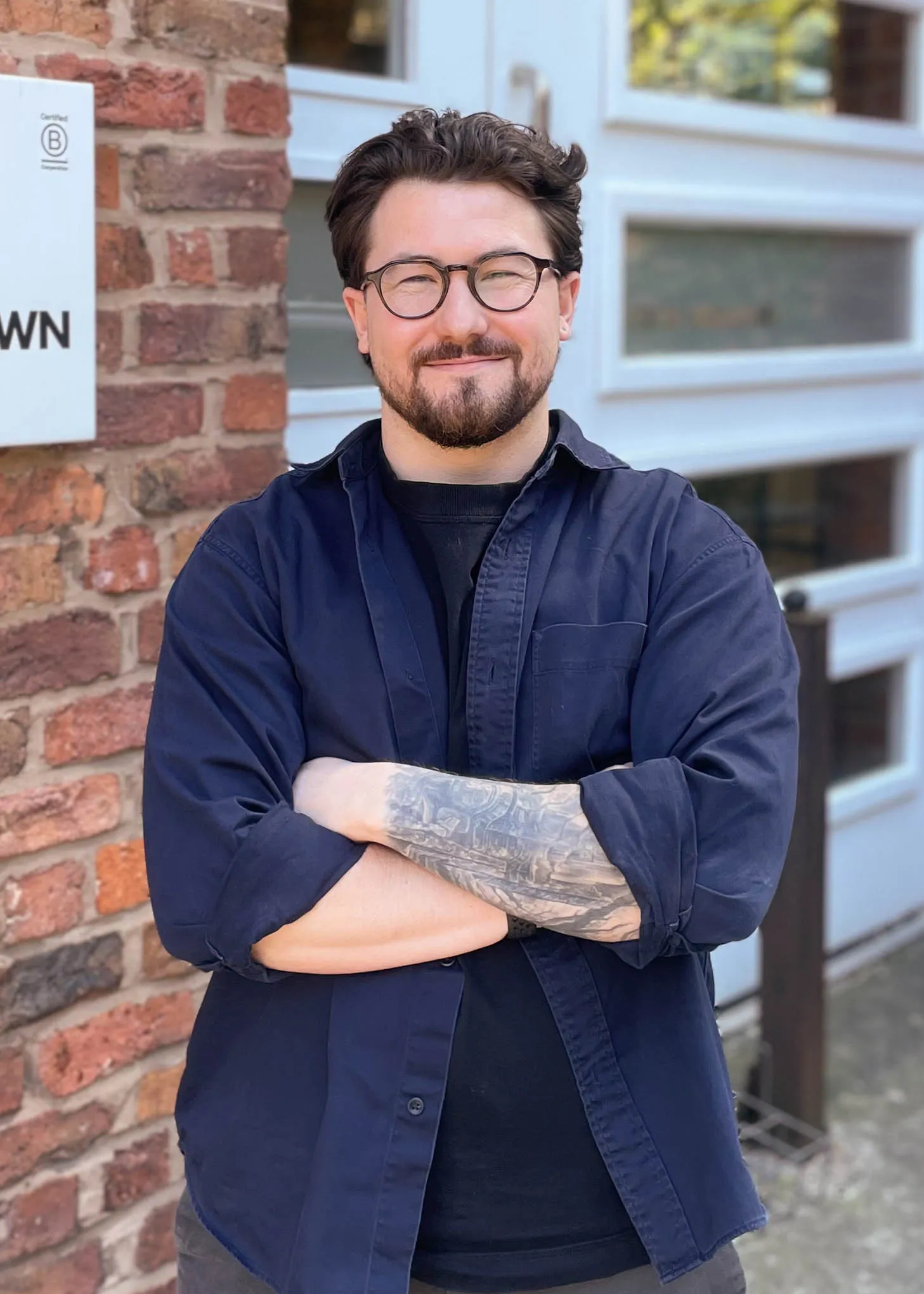
Dominic Edwards, 30, Part II assistant at Stride Treglown
I had a non-standard start in architecture. After leaving college, I worked as a labourer and had the opportunity to learn steel detailing. This led me to a more design-focused role, which was something I really enjoyed.
I thought, well, I’m already doing architecture in a sense, so I should try to get qualified as one. This meant going to Cardiff for a year so I could get on the course in Manchester. I did that, got my Part 1, and have now been at Stride Treglown for a year and a half.
‘There is not a chance I would consider moving away’
I never considered London. I decided to stay in Manchester after my degree because I already knew the city, and knew that I loved it.
I come from a small town called Hereford, and I wanted that big city experience. The beauty of Manchester for me is that you still get that feeling – great music scene, food, nightlife – but I can hop on a tram and be home in 30 minutes.
My partner and I have our own house, with a dog and garden, only a short distance from the city centre and with a massive public park on our doorstep.
There is not a chance I would consider moving away, not with what we’ve got and where we’ve got it. I feel quite happy here. I don’t see any particular draw to anywhere else.
When it comes to my work, Stride Treglown has been really good at letting me take on more responsibility, and the projects I’m contributing to are really diverse and interesting – I got to do a feasibility study on one of my old university lecture buildings, which was cool.
The shift to remote working and Teams meetings means you can work on projects all over the country and it doesn’t really make a difference that we are in a small studio in Manchester. You get the benefit of being in a big company with lots of people to learn from without actually being in the main office.
There is industry-wide frustration in the profession at present, and I think that has an effect wherever you are; there are just a lot of forces acting on architecture.
But when you go out in Manchester and look at the skyline, and you see that new towers are being thrown up constantly, it does give you some confidence and that feeling of being part of something dynamic and exciting, which is important.