
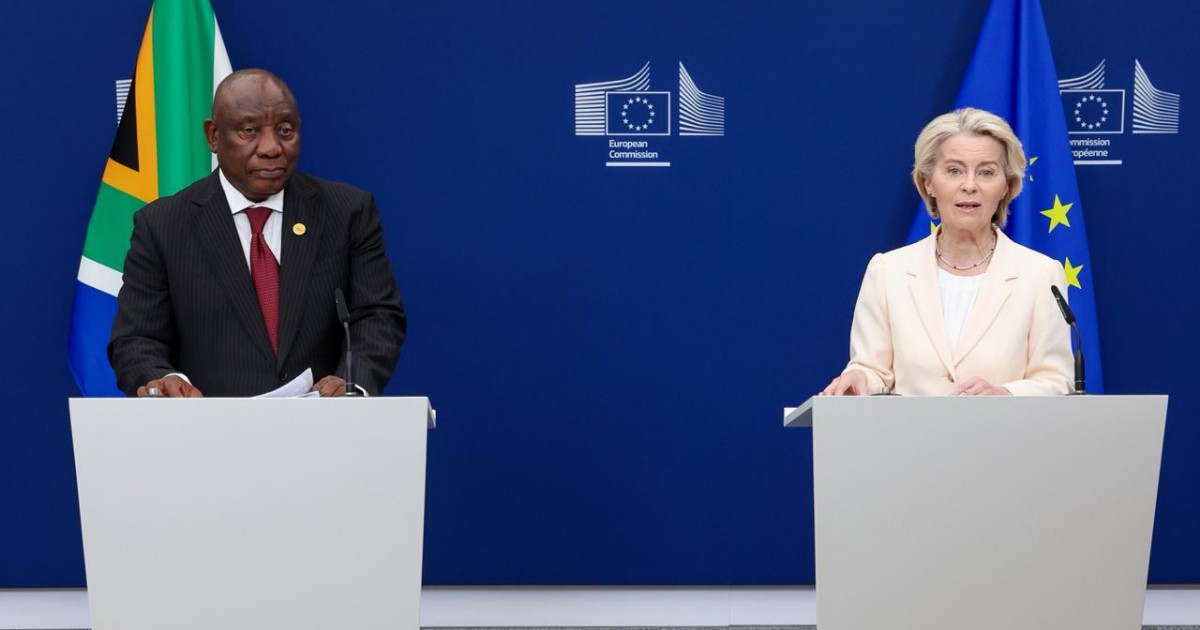
Hosted at the Johannesburg Stock Exchange, the event marks the EU’s first major effort to mobilise private capital under the 2025 EU-South Africa Clean Trade and Investment Partnership, a framework designed to deepen economic ties while securing access to minerals critical for clean energy technologies, artificial intelligence, and defence industries.
But South Africa is making clear that access to its mineral wealth will come with conditions.
“Our objective is not to export raw minerals. Our objective is beneficiation, processing, and industrial development,” South African Trade Minister Parks Tau said.
The stance reflects a growing trend among resource-rich African countries seeking to capture more value from their natural resources instead of exporting unprocessed commodities.
The EU’s interest comes amid mounting concerns over supply-chain vulnerabilities following China’s export restrictions on certain minerals with potential military applications. European policymakers say the bloc is determined to avoid repeating its previous dependence on Russian energy supplies.
“The best way to decrease dependencies is to diversify, and South Africa plays an important role,” David McAllister, chairman of the European Parliament’s foreign affairs committee, told Reuters.
Several large-scale projects are already underway. A €600 million framework loan to the Development Bank of Southern Africa is expected to support 1,200 megawatts of green energy capacity while reducing carbon emissions by an estimated 3.6 million tonnes.
In parallel, a €1.48 billion financing facility for state-owned freight operator Transnet will help modernise South Africa’s rail and port infrastructure, strengthening export capacity and supporting the country’s energy transition ambitions.
The EU remains South Africa’s largest trade and investment partner, accounting for €46 billion in bilateral trade in 2025 and more than 1,700 European companies operating in the country.
“We’ve moved from development thinking to investment thinking,” EU Ambassador Sandra Kramer said, signalling a broader shift in Europe’s engagement with Africa’s largest industrial economy.